Can I mix two coolants, or top up with a different fluid?
Mixing is prohibited across most Glacier families for a reason. See what blending does to inhibitor packages and what a correct top-up looks like.
THE SHORT ANSWER
What you need to know.
Mixing with other secondary refrigerants is prohibited across most of the range, using wording that ranges from 'strictly forbidden' to 'strictly prohibited' depending on the grade. The prohibition exists because inhibitor packages are formulated as complete systems: blending two can deplete both, and combining an aqueous coolant with an anhydrous one creates a second immiscible phase. Top up with the fluid that is already in the loop, or drain and change over properly — do not blend.
- Mixing is prohibited across most families, and the wording is explicit rather than advisory.
- Two finished coolants are two inhibitor systems. Blending can leave both under-dosed for the wetted area.
- A top-up is not a changeover: adding fluid to an existing charge and replacing a charge have different rules.
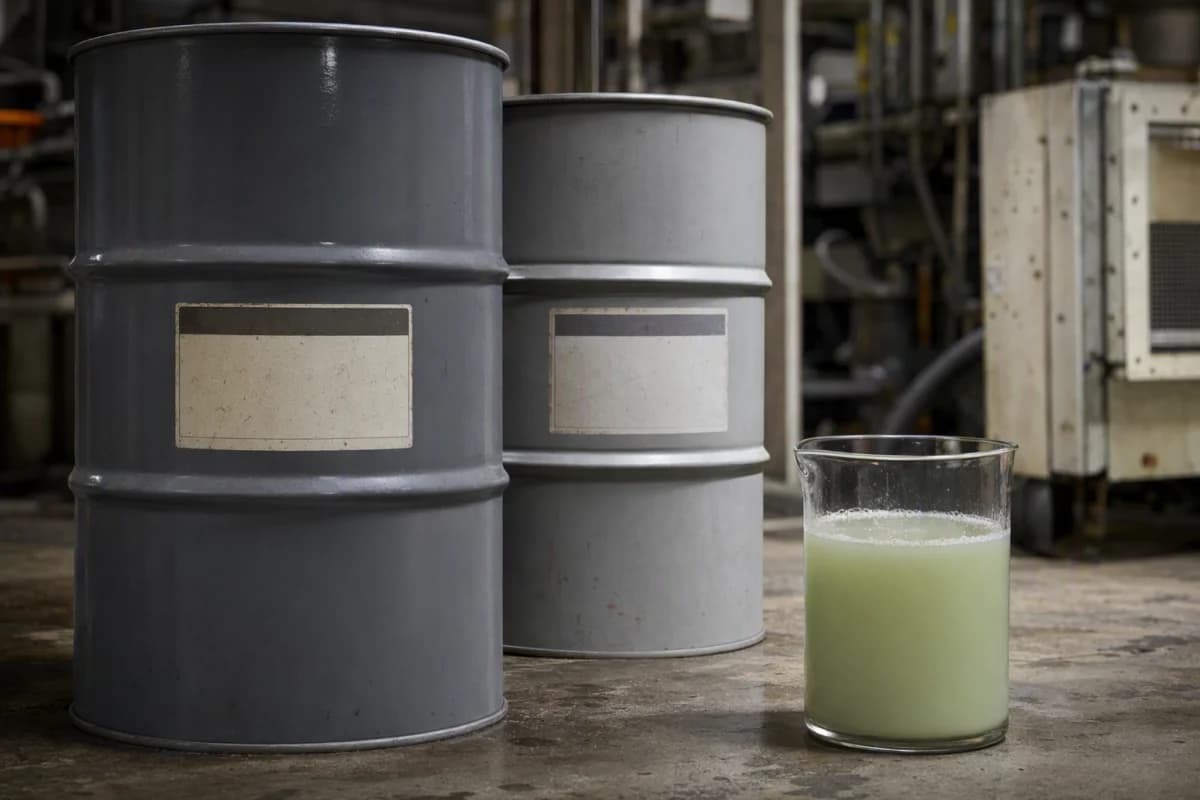
Two drums, one loop
The situation is common. A loop is low, the correct fluid is not on the shelf, and there is a part-used drum of something similar in the store. The temptation is to treat coolants as interchangeable fluids that can be blended to make up a volume.
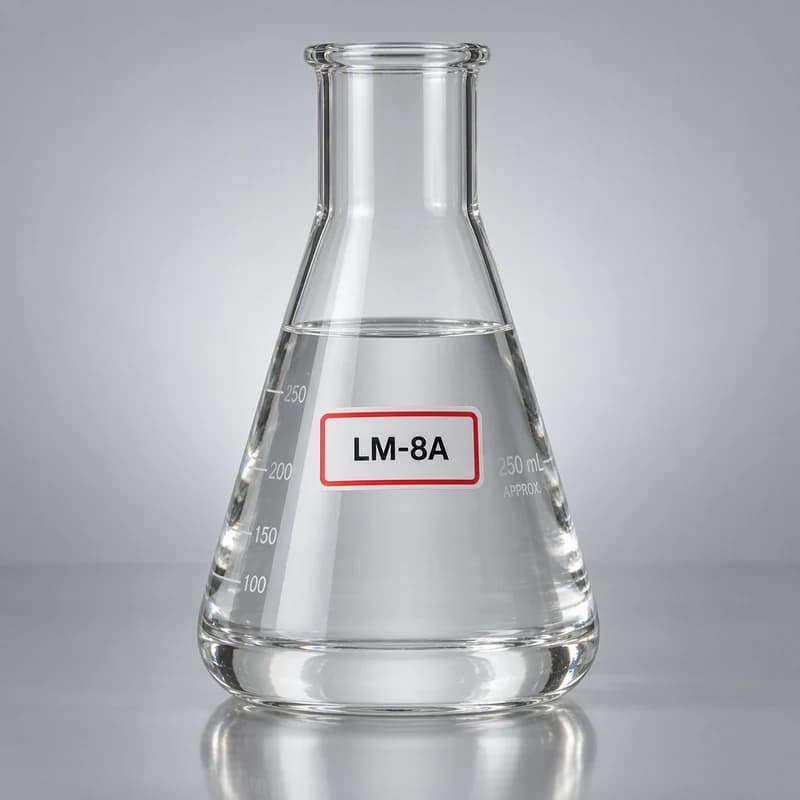
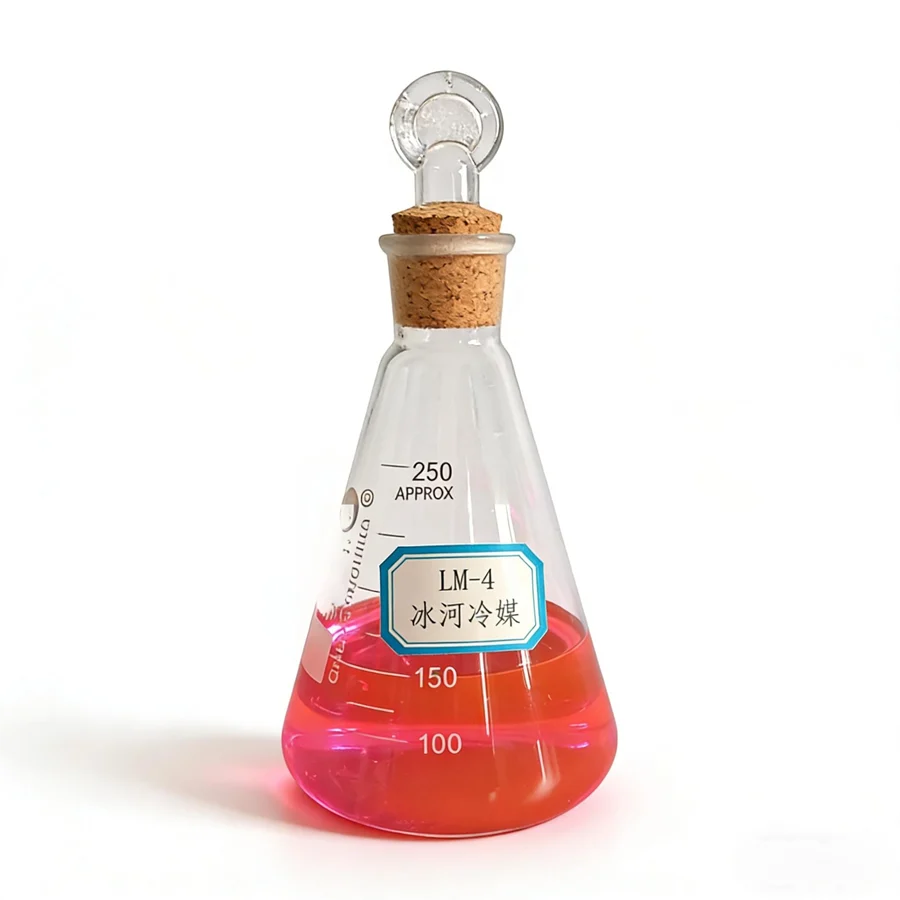
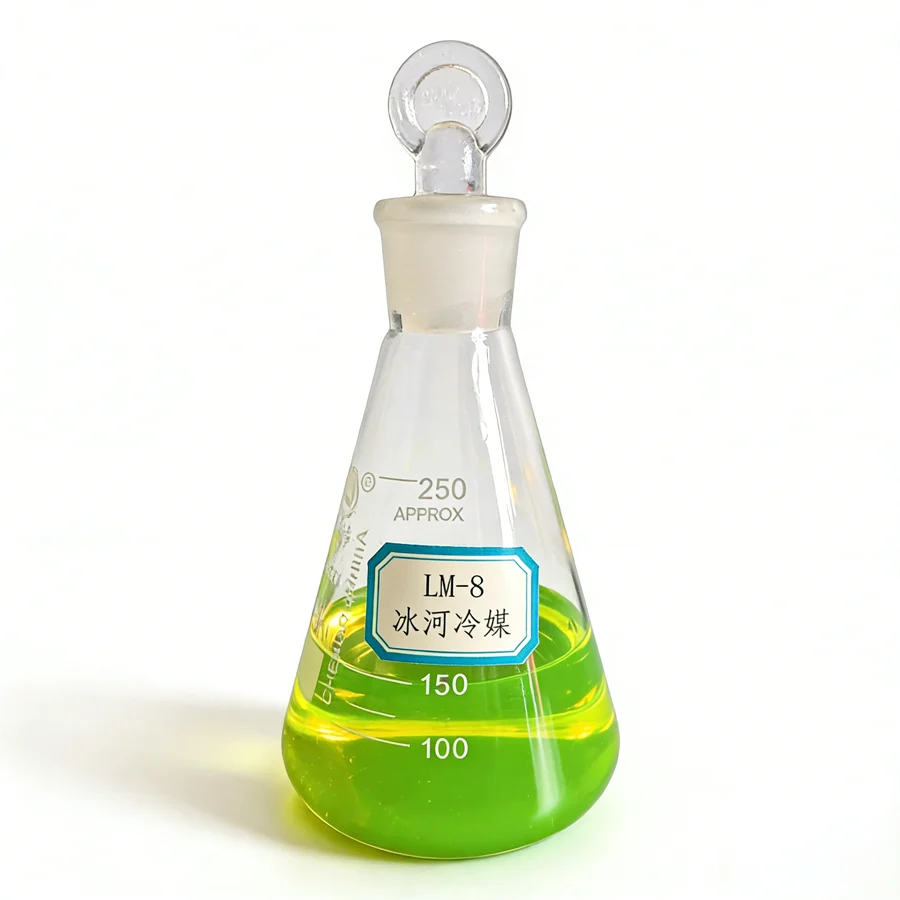
Treating coolants as interchangeable is the opposite of what the instructions allow. Mixing with other secondary refrigerants is prohibited — LM-4D and LM-4D-YE are the low-conductivity diol grades, LM-6 and LM-7 are anhydrous, LM-8A is a salt solution, and LM-11 and LM-15 are alkane and silicone fluids — and the wording is not hedged:
| Family | Stated instruction |
|---|---|
| LM-4D, LM-4D-YE | "strictly forbidden to mix with other secondary refrigerants" |
| LM-6 series, LM-7 | "forbidden to be mixed with other secondary refrigerants" |
| LM-8A | "forbidden to mix it with other secondary refrigerants" |
| LM-11 series, LM-15 series | "strictly prohibited to mix with other secondary refrigerants" |
That is a manufacturer statement, not a warranty condition buried in small print. It is worth understanding what it is protecting against.
A coolant is a formulated system, not a fluid
It helps to stop thinking of a coolant as a liquid with an additive, and start thinking of it as several systems that were formulated together.
An inhibited aqueous coolant contains a corrosion-inhibitor package, a biocide or mould inhibitor, a solubiliser that keeps the organic components dispersed, a stabiliser, and often a pH buffer. Those components were selected to work with each other at a defined concentration range. The inhibitor depends on the buffer to hold the pH where the inhibitor film forms. The solubiliser depends on the concentration to keep everything in one phase.
Blend two finished coolants and you create a mixture whose combined behaviour nobody has characterised:
- Buffers can fight. Two pH control systems can pull against each other, leaving the blended fluid outside the window either inhibitor package was designed for.
- Biocides can be diluted or antagonised. Blending halves the effective dose of each biocide.
- Solubilisers can be overwhelmed. A component that was held in solution at 40% may drop out at a blended 25%.
- Inhibitor performance may not be additive. Two packages at half dose each are not equivalent to one package at full dose; the resulting protection is not predictable from either datasheet.
None of that shows up immediately. A blended charge can look fine for months and then produce exactly the corrosion and fouling the inhibitor was there to prevent — the failure mode described in what corrosion protection actually means.
The aqueous-into-anhydrous case is worse
There is a version of this mistake with a harder consequence than unpredictable inhibition.
The anhydrous families — LM-6, LM-7, LM-11 and the silicone LM-15 range — are water-insoluble and specified for dry, closed loops. Adding an aqueous coolant to one does not dilute it. It introduces a second phase that never mixes in.
The result is water sitting as droplets, films in low points and ice at the coldest surfaces, in a system that was specified and commissioned to exclude water. Commissioning those families properly requires drying the loop, filling directly and holding a nitrogen-closed atmosphere, as set out in why anhydrous coolants need a dry loop.
Top-up is a different operation from changeover
Most of the confusion comes from treating these as one thing. They are not.
A top-up adds fluid to an existing charge. The question is only what is compatible with what is already in the loop. The safest answer is the same fluid, from a documented source; the second-safest is a fluid the supplier has confirmed in writing for that loop.
A changeover replaces the charge. The questions are different and larger: material compatibility between the old and new fluids, cleaning the system of the old charge, and what the first monitoring window looks like. Those are covered in the changeover checklist.
Getting these the wrong way round is how a changeover becomes a blend — draining incompletely and refilling with a different fluid leaves a mixture in the low points and dead legs.
If you cannot get the same fluid
The practical routes, in order of preference:
- Obtain the same product in the same grade. Confirm the model designation, not just the family, since variants within one family differ in aluminium compatibility and temperature range.
- Partial drain and refill with a documented fluid. Replacing a defined fraction of the charge is more predictable than topping up with an unknown, though it does not remove the incompatibility question — confirm it with the supplier first.
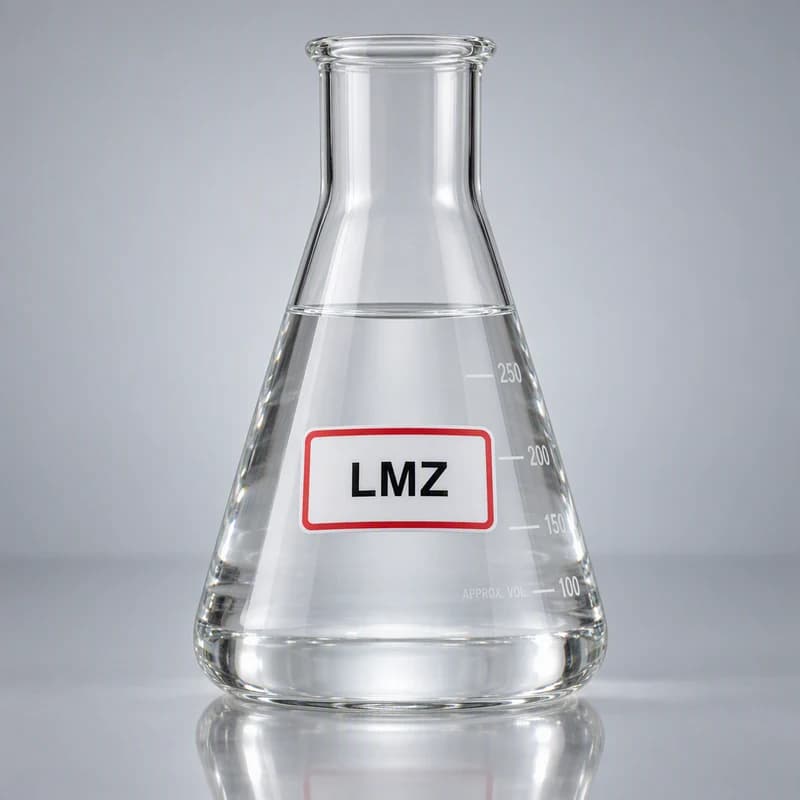
- Inhibit the existing charge if the situation matches a documented programme. This is what the LMH brine inhibitor and LMZ synergist are for: specific additions to specific existing fluid systems, at stated dosages, not general-purpose blending agents. The system protection programmes cover the additive routes for existing brine, alcohol-water and circulating-water charges.
- Full changeover when the existing charge cannot be maintained and the replacement is incompatible.
What you should not do is improvise a blend and document it as a top-up.
Record what went in
Whatever route you take, the loop's history is the asset. Record the fluid identity, its source, the volume added and the date. If a concentration or pH reading looks wrong a year later, that record is what tells you whether the cause is make-up water, a top-up, or gradual inhibitor depletion — the same baseline principle that makes a commissioning sample worth taking.
Getting compatibility confirmed
Whether a specific alternative fluid is compatible with your loop is a determination for the supplier of the fluid in the loop and the supplier of the candidate, against your wetted-material list, concentration and operating window — and it should be in writing, for the exact model, before anything is poured.
QUICK CLARIFICATIONS
Common questions.
The levels are low and I have the right fluid on site. Is a small top-up of a different brand acceptable?
Treat it as unapproved unless the supplier confirms it in writing for your loop. The concern is not the volume ratio but the chemistry: two finished coolants carry two inhibitor packages, two biocide systems and potentially different solubilisers, and the result of blending them is not something either supplier has tested. If you cannot obtain the fluid that is in the loop, the safer route is a partial drain and refill with a fluid you can document.
What happens if I add a glycol coolant to an anhydrous loop?
You introduce water and a second, immiscible phase. The anhydrous families such as the LM-6 series are water-insoluble and prohibit mixing; a glycol top-up puts water into a loop that was specified to keep it out. The consequence is not dilution — it is droplets, films in low points and ice at the coldest surfaces, which is the failure mode described in the anhydrous commissioning guide.
There is an LMZ synergist. Is that not a mixing additive?
It is a specific, documented addition for a specific situation: systems already running a large volume of an alcohol-based secondary refrigerant, where a full replacement is impractical. LMZ is added to that existing charge at a stated dosage. That is different from blending two finished Glacier products, which the family instructions prohibit.
How do I top up if the concentration is low but the level is fine?
Add concentrate, not water, and re-measure afterwards. The level being correct tells you nothing about the glycol fraction — a loop loses concentration through make-up water and small leaks without necessarily dropping in level. Measure concentration first, decide the direction of correction, then add in steps and confirm by measurement. The sequence is set out in the concentration guide.
CHECK THE SOURCE
References & scope.
- Glacier catalogue — LM-4D mixing prohibition and ultrapure dilution (printed page 14)
- Glacier catalogue — LM-6 and LM-7 anhydrous families, dry-fill instruction and mixing prohibition (printed pages 19–20)
- Glacier catalogue — LM-8A mixing prohibition and LMH replenishment (printed page 23)
- Glacier catalogue — LMZ synergist for existing alcohol-based charges (printed page 31)
Obtain the relevant TDS, SDS and technical approval before use.
How we prepare our content