
Review circulation and system exposure
The manufacturer highlights circulation, keeping wetted metal parts covered by fluid, and avoiding unintended water ingress. Confirm these requirements for the actual system before commissioning.
Heat transfer fluids
A ready-to-use, non-combustible salt solution for industrial secondary refrigeration. Its maintenance programme includes periodic LMH corrosion-inhibitor replenishment.
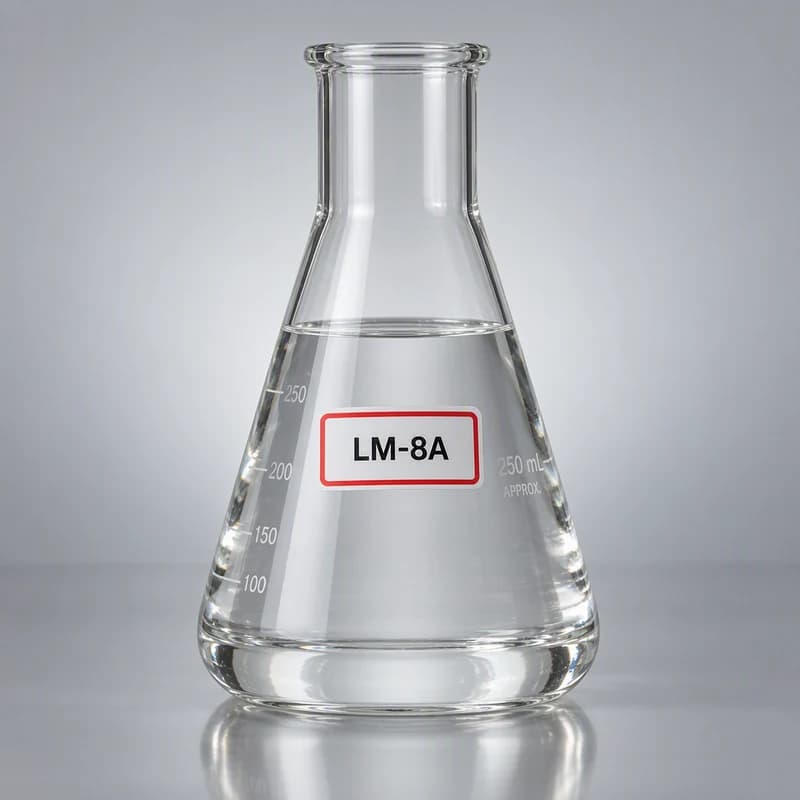
Modified inorganic acid salt solution
| Property | Value |
|---|---|
| Density at 20°C | 1.260–1.275 g/cm³ |
| Viscosity at 20°C | 3.60 mPa·s (cP) |
| Specific heat at 20°C | 0.670 |
| Thermal conductivity at 20°C | 0.48 W/m·K |
| Boiling point | +110°C |
| Freezing point | −50°C |
| Packaging | 30 kg / 250 kg / 1,300 kg; bulk tanker |
Stock-solution values. Maintain the recommended inhibitor programme; three-monthly checks are advised.
Reference values from the Chaoyang Guangda LM catalogue — typical figures rather than guaranteed limits. Confirm the exact model and concentration on the current model TDS before specifying.
View source: catalogue p.22 (PDF p.26)Clean the circulation system before filling. Do not mix with other coolants. Monitor and replenish inhibitors according to the agreed technical programme.
FROM FORMULATION TO APPLICATION
The LM-8A product reference adds application guidance for indirectly cooled chemical, pharmaceutical and cold-storage systems. The supplied catalogue describes a modified inorganic acid salt solution.
The manufacturer highlights circulation, keeping wetted metal parts covered by fluid, and avoiding unintended water ingress. Confirm these requirements for the actual system before commissioning.
Agree on pH and specific-gravity monitoring, sampling and replenishment with the technical team. The original reference calls for three-month checks and prohibits unapproved mixing.
LM-8A
Application notes are adapted from Glacier’s original product information. Unless a table states otherwise, numeric specifications follow the supplied catalogue. For the confirmed specification, obtain the current model-specific TDS and SDS. Links below point to the original source pages, not new technical documents.
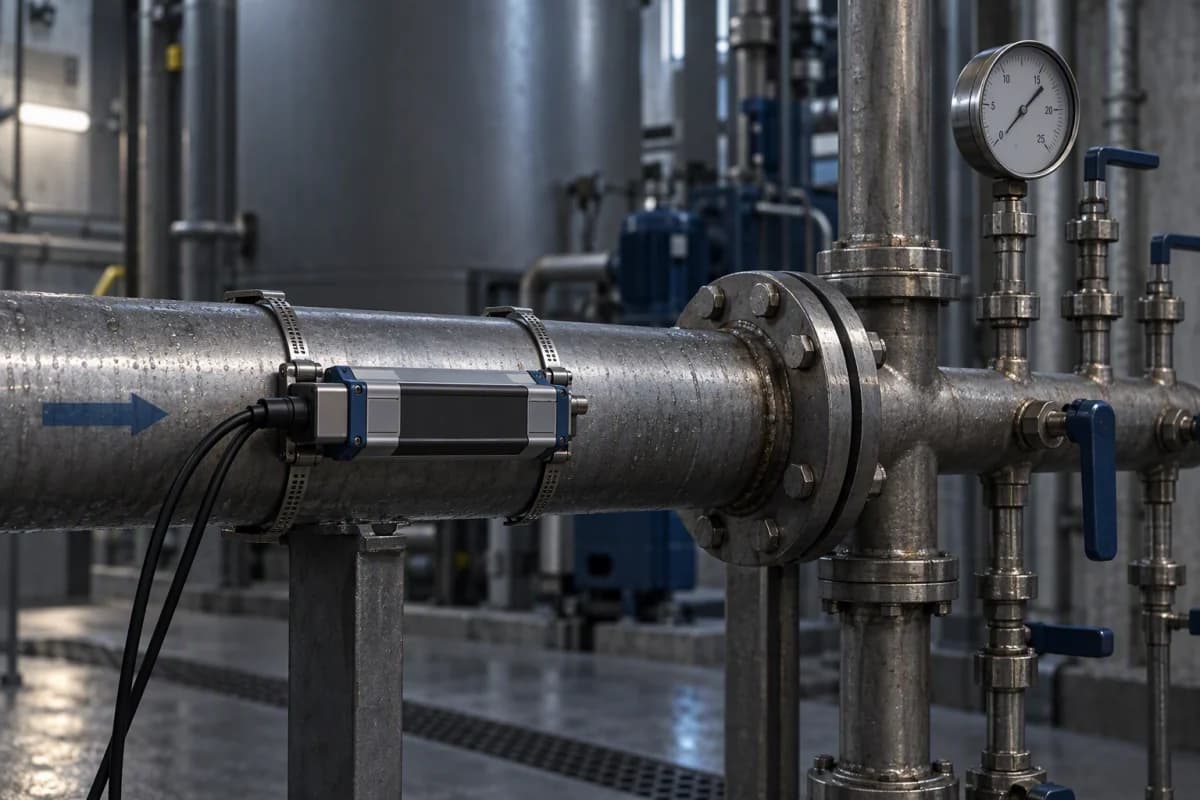
Sizing a loop needs the cooling load, the fluid's specific heat and the temperature rise you allow. See how they relate, and why fluid choice barely moves it.
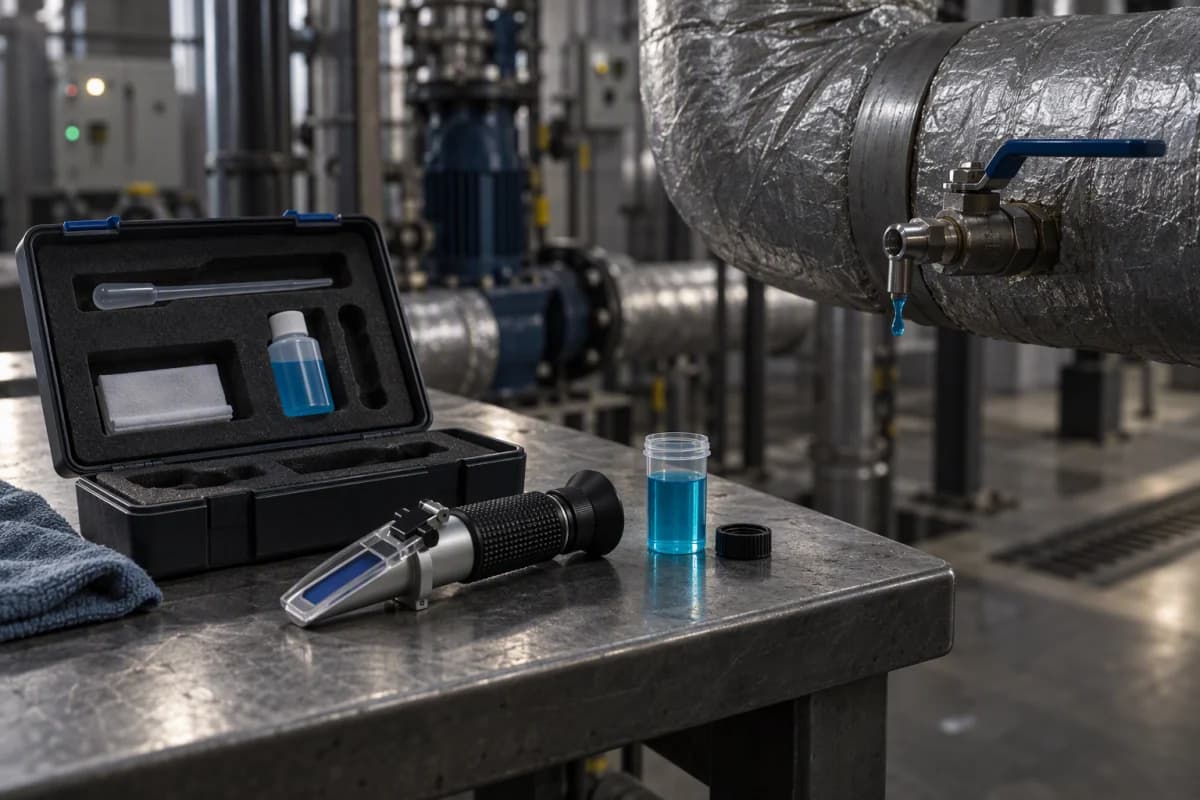
A worked analysis of concentration, freezing point and viscosity in a glycol loop, with the pumping-energy penalty of over-concentrating expressed as a range.
CONTINUE EXPLORING
Low-temperature, alcohol-based coolant
Low-temperature coolant for mixed-metal systems
Application-specific alcohol coolants