
Technical data sheet
Request operating limits, concentration-dependent properties and handling requirements for your chosen model.
Request documentKNOWLEDGE IN CIRCULATION
Build your understanding. Check the source.
Specify with the right technical information.
THE COMPLETE PRODUCT PORTFOLIO
Product families, model comparisons, reference properties, corrosion-test summaries and handling information.
ENGLISH / 46 PAGES / AUGUST 21, 2026 EDITIONNEED MODEL-SPECIFIC DOCUMENTATION?
The catalogue is the reference. Published model sheets download directly below; an SDS or a sheet for another model is requested against your application details.
MODEL-SPECIFIC DOCUMENTATION
The catalogue is a starting point. Sheets published for a model are listed above; anything else — an SDS, or a model without a published sheet — comes by request against your application details.
Request operating limits, concentration-dependent properties and handling requirements for your chosen model.
Request documentRequest the current SDS for composition, hazards, storage, handling and transport information.
Request documentTesting through our manufacturer’s laboratory, down to −80 °C — including a sample of the fluid you run now, or a competing product. We arrange it and report the numbers.
Request documentPUBLISHED DOCUMENTS
Manufacturer data sheets released for publication. Each opens as a PDF and states the model, page count and issue date.
Inhibited propylene glycol-based heat transfer fluid for secondary heating and cooling, food-grade process duty, and pipe freeze and burst protection. Carries the recommended use range of −20 °C to +100 °C, typical properties at 95.6 wt% as supplied, and freezing and boiling points by concentration.
Heat transfer medium with thermal stability for closed-loop process heating. States the use range of +20 °C to +350 °C, an open-cup flash point of not less than +207 °C, an average boiling point of +370 °C, a pour point at or below −30 °C, and reference properties from 20 °C to 350 °C.
A PRACTICAL STARTING POINT
Understand what to discuss before selecting a heat transfer fluid.
LABORATORY DATA
Four accredited-laboratory reports on the LM fluids, each with its report number and standard.
READING THE CODES
What LM-4D-YE and LM-XL actually mean, and plain definitions of the terms used in industrial refrigeration.
COMMON QUESTIONS
No. In an indirect system, the coolant circulates in a separate loop and exchanges heat with the refrigeration system. These products must not be substituted into a compressor refrigerant circuit without an explicitly approved design.
No. Portfolio and family ranges combine different products or models. The exact fluid, concentration and system conditions determine the approved operating window.
Several families prohibit mixing. Some alcohol-based applications can use defined additive programmes, but only after technical confirmation.
In the usual food-plant arrangement the fluid stays inside a closed secondary circuit and never touches the product. For a process that needs direct food-contact approval, the documentation for the exact grade and intended use is what applies — tell us the grade and we will confirm in writing.
We quote per application: price depends on grade, volume, packaging and destination. Send the model or application, your estimated quantity, your packaging preference and the destination port, and you will receive the price, the Incoterms we can quote and an indicative lead time in a single reply.

A coolant quote is only comparable when the model, concentration, quantity, packaging, delivery basis and technical documents match. Use this checklist before choosing on price.
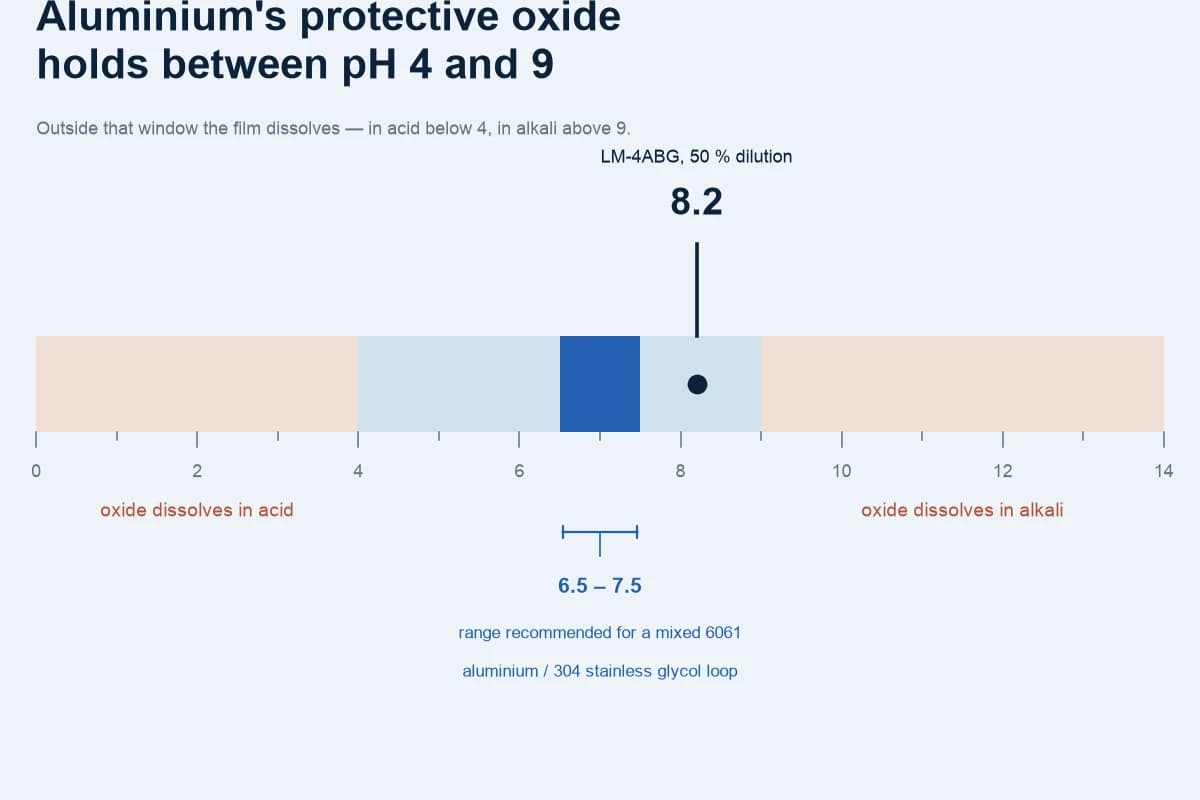
Aluminium's protective oxide is stable only between pH 4 and 9. What that means for choosing a secondary coolant, and why some model codes carry a trailing L.
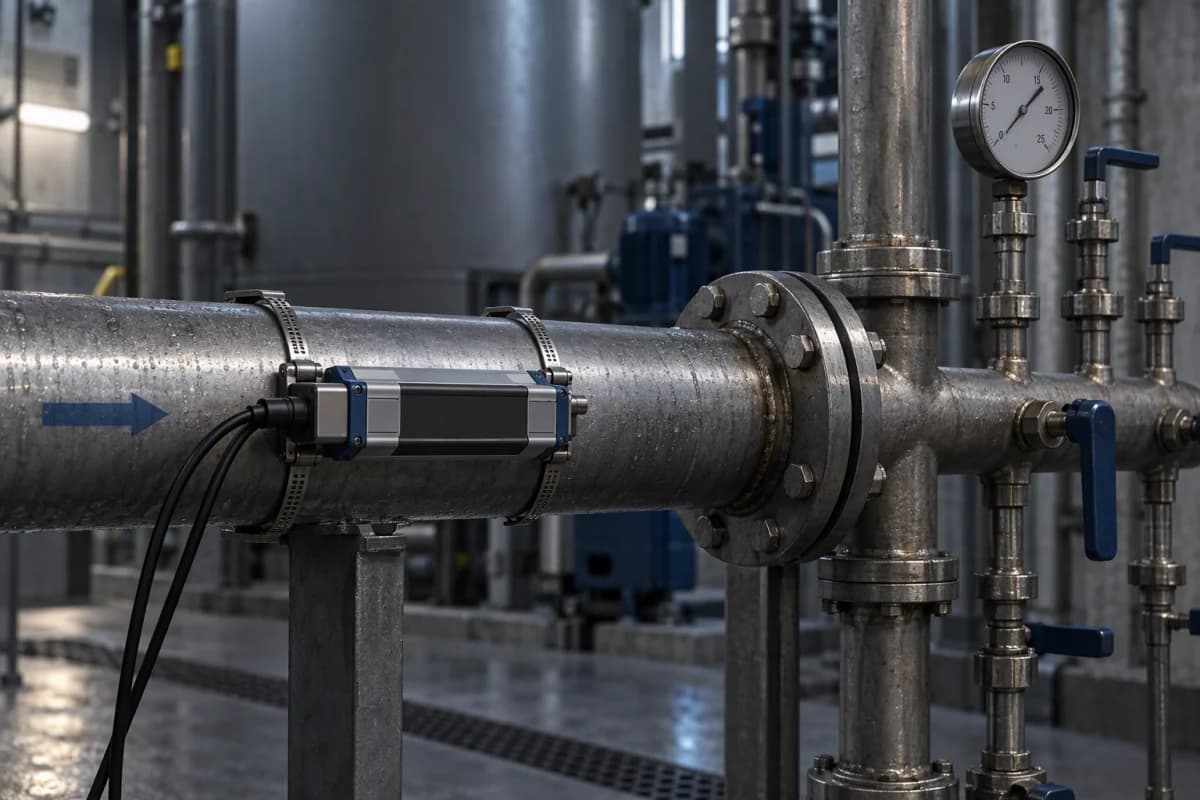
Sizing a loop needs the cooling load, the fluid's specific heat and the temperature rise you allow. See how they relate, and why fluid choice barely moves it.