
Brine cooling systems: why chloride attacks the loop, and how to control it
Calcium chloride brine is efficient and severely corrosive. Compare it with modern secondary coolants at the same freezing point, and see how inhibitor programmes work.
Additives
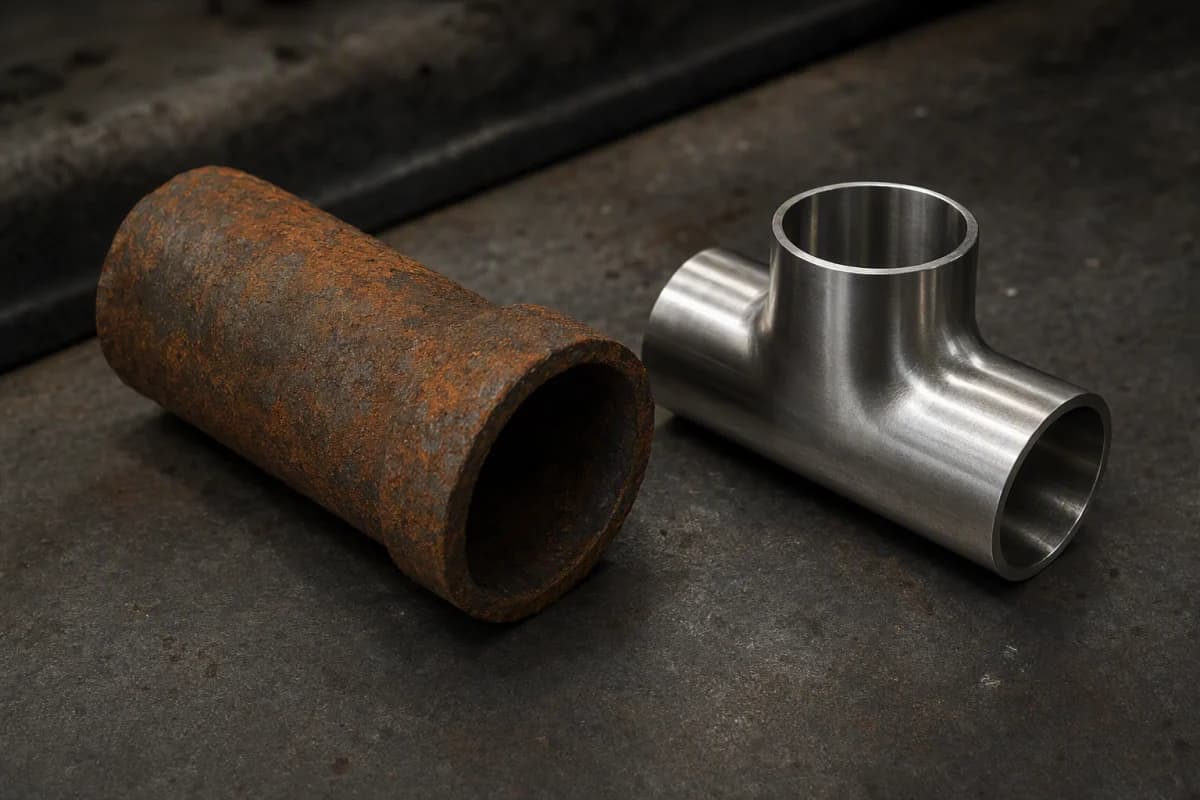
An additive for calcium chloride and sodium chloride secondary-refrigeration systems, developed to reduce chloride-related corrosion of metal components.

Film-forming corrosion-inhibitor package
| Property | Value |
|---|---|
| Appearance | Light-coloured liquid |
| Odour | No special odour |
| pH | 7–11 |
| Density | 1.020–1.080 g/cm³ |
| Application | Calcium chloride and sodium chloride brine systems |
| Initial reference dosage | Approximately 1 % of total brine |
| Monitoring interval | Every three months, per catalogue |
| Packaging | 25 kg plastic drums; bulk available |
Reference values from the Chaoyang Guangda LM catalogue — typical figures rather than guaranteed limits. Confirm the exact model and concentration on the current model TDS before specifying.
View source: catalogue p.29 (PDF p.33)The catalogue classifies LMH as a hazardous chemical. Dosage and replenishment require a technical programme; do not treat reference figures as universal instructions.