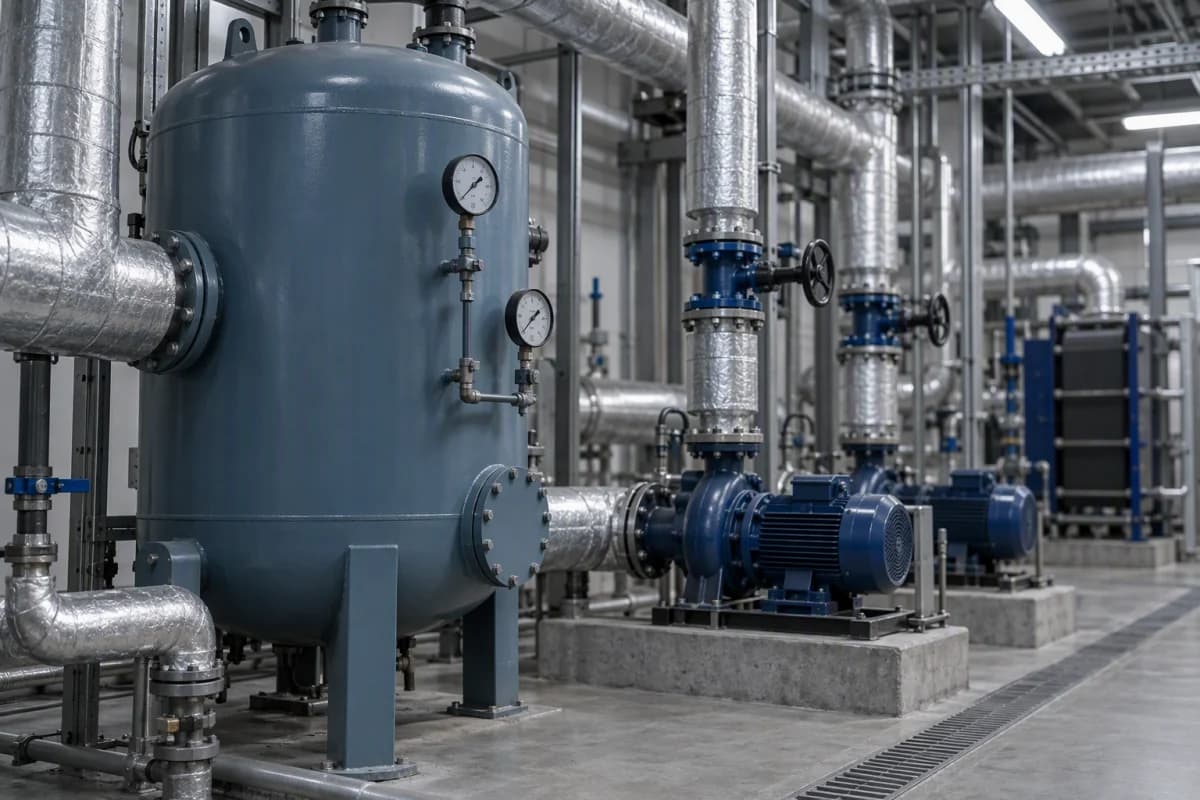
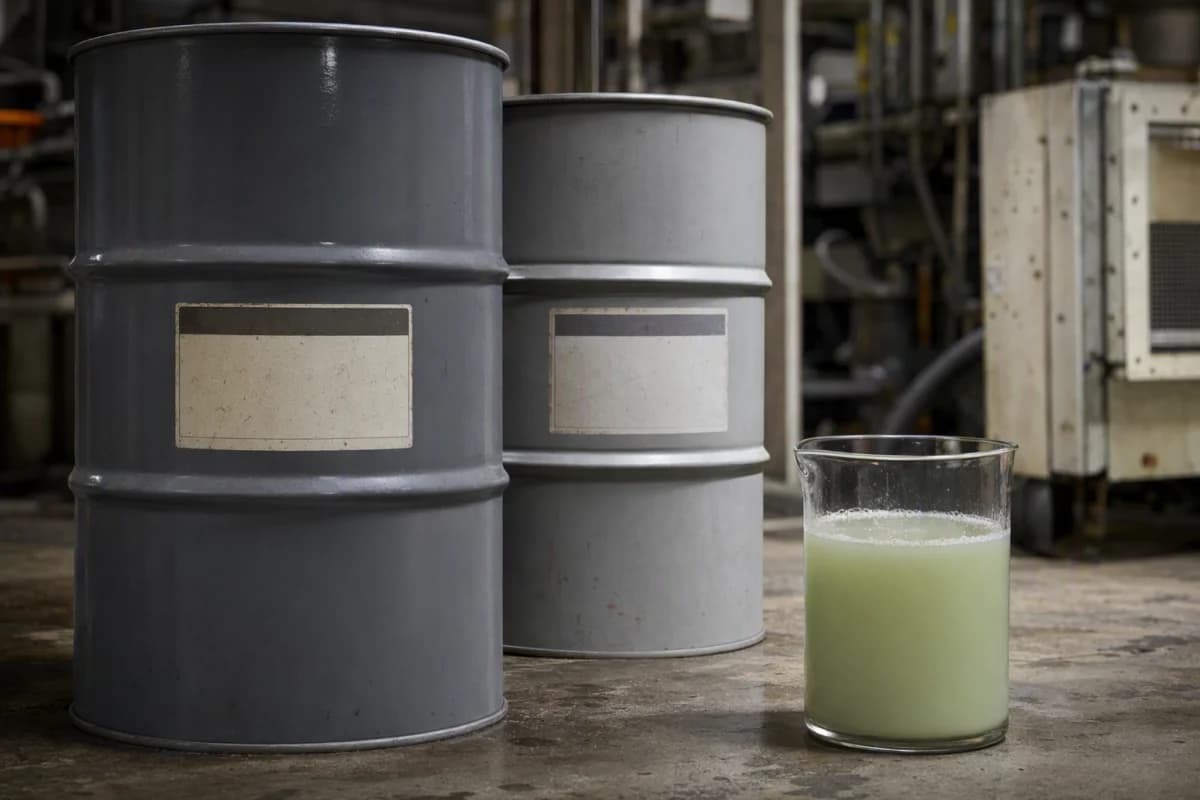
Brine cooling systems: why chloride attacks the loop, and how to control it
Calcium chloride brine is efficient and severely corrosive. Compare it with modern secondary coolants at the same freezing point, and see how inhibitor programmes work.
THE SHORT ANSWER
What you need to know.
Brine loops using calcium chloride or sodium chloride remain common in older cold storage, and they work well thermally — but chloride is aggressively corrosive to steel and stainless, and it attacks by pitting rather than general thinning. The practical choice is between maintaining the brine with a documented inhibitor programme and replacing it with a modern secondary coolant. The two routes can be compared at the same freezing point, where brine is severely corrosive and the Glacier fluids are not.
- Chloride pitting is localised and penetrating: a brine loop can fail at a tube before any general corrosion is visible.
- At the same freezing point, calcium chloride is severely corrosive while LM-1 and LM-4 are not.
- Inhibitor programmes are maintenance commitments, not one-off doses: pH and performance are re-tested and the inhibitor replenished.
The efficient fluid with an expensive habit
Calcium chloride brine has a lot going for it. It is inexpensive, it is thermally effective, and the manufacturer's own comparison puts it at the top for thermal conductivity — above glycol, above alcohol, above both Glacier fluids. A brine loop that is maintained will hold temperature as well as anything on the market.
Its problem is not performance. It is what the chloride does to the metal it touches.
What chloride does that general corrosion does not
Most corrosion discussion is about rate: how many milligrams per square centimetre per year, how much wall thickness is lost. Chloride fails material by a different mechanism.
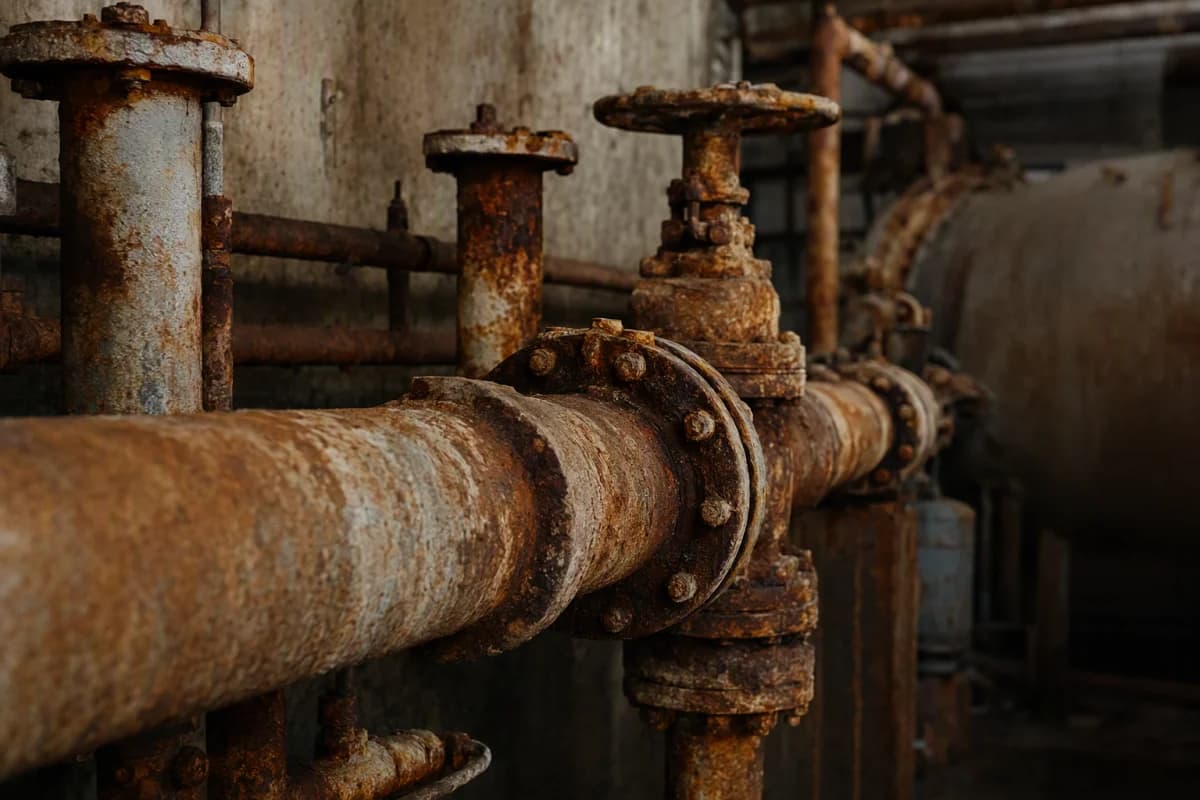
Chloride ions attack the passive oxide film that protects stainless steel and aluminium, and they do it at local points rather than uniformly. The result is a pit: a small, deep penetration that leaves the surrounding surface looking healthy. A tube wall can be sound by every general measurement and still perforate at one site.
Three consequences follow:
- General corrosion surveys under-report the risk. The loop may be losing almost no mass while one location is failing.
- The failure is sudden. A pitted tube goes from service to leak without a long visible decline.
- Stainless is not automatically safe. Alloy selection changes the resistance, but chloride pitting affects stainless grades too, especially as temperature rises.
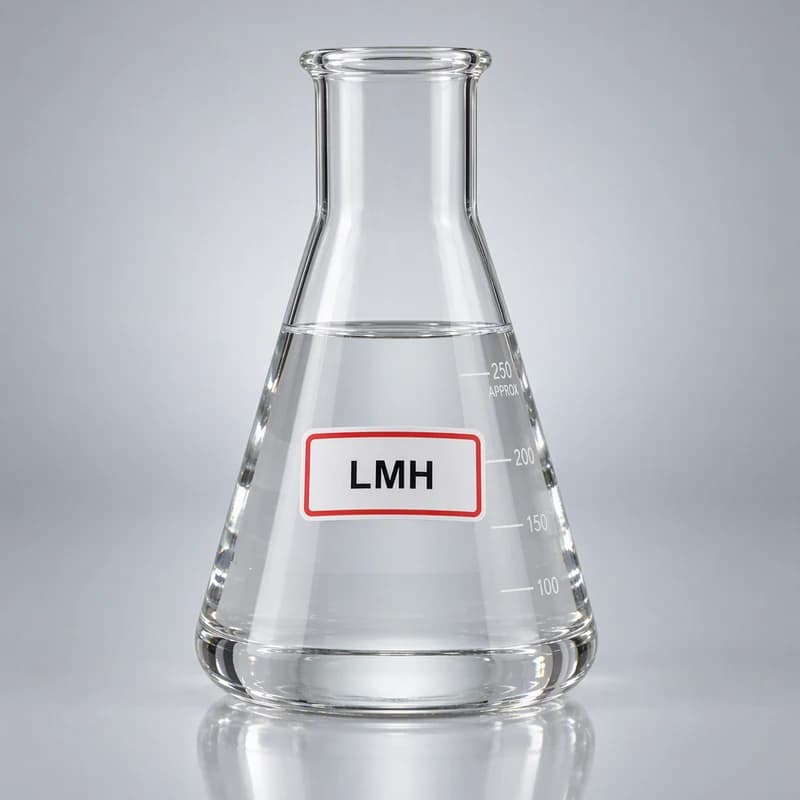
LMH is described specifically against this mechanism: it is said to form three layers of protective film on the metal surface, slowing the pitting corrosion damage of chloride ions. That is a targeted response to a targeted failure.
The comparison at a matched freezing point
The most useful dataset for anyone weighing brine against a modern coolant is a comparison at a matched freezing point of −20 °C, which corresponds to an operating temperature around −10 °C. LM-1 is the alcohol-based grade and LM-4 the glycol-type one:
| Secondary refrigerant | Calcium chloride | Ethylene glycol | Alcohol | LM-1 | LM-4 |
|---|---|---|---|---|---|
| Concentration (wt%) | 21 | 38 | 38 | 25 | 35 |
| Freezing point | −20 °C | −20 °C | −20 °C | −20 °C | −20 °C |
| Density (g/cm³ at 20 °C) | 1.20 | 1.05 | 0.97 | 0.96 | 1.05 |
| Specific heat (cal/g·°C) | 0.721 | 0.825 | 0.90 | 0.950 | 0.837 |
| Thermal conductivity (W/m·K) | 0.527 | 0.391 | 0.36 | 0.435 | 0.429 |
| Viscosity (cP) | 5.07 | 7.63 | 12.82 | 5.54 | 6.73 |
| Corrosivity | Severe corrosive | Corrosive | Severe corrosive | Non-corrosive | Non-corrosive |
Holding the freezing point constant is what makes this comparison usable — the alternative, comparing stock fluids, answers a different question. What it shows:
Brine wins on thermal conductivity and loses on everything to do with the metal. At the same duty, calcium chloride needs the lowest concentration and delivers the best conductivity, but it is described as severely corrosive. Ethylene glycol, at nearly double the concentration, is described as corrosive. Both Glacier fluids are described as non-corrosive, and LM-1 achieves that at 25 wt% — lower than either of the fluids it is being compared against.
LM-1 carries more heat per degree than brine. Its specific heat of 0.950 cal/g·°C against brine's 0.721 means a smaller flow rate for the same duty, which partly offsets brine's conductivity advantage at the system level.
One caveat on reading the table: the thermal and physical columns are stated data, while the corrosivity column is a descriptor rather than a measured rate. If you need a number, quantitative weight-loss measurements by the Institute of Metals are reported, Chinese Academy of Sciences — the figures discussed in what corrosion protection means.
Route one: maintain the brine
If the loop is staying on brine, the inhibitor programme is the whole defence, and it is a programme rather than a purchase.
LMH is added to the brine itself:
- Initial dose: approximately 1% of the total brine volume, weighed and added directly, with the system circulating.
- Monitoring: pH and anti-corrosion performance tested every three months.
- Correction: pH adjusted and LMH replenished according to the technical standard, generally around 0.5%.
The pairing of adjustment and replenishment is the part most often skipped. Adding inhibitor to a brine whose pH has drifted does not necessarily restore protection, because the film-forming chemistry depends on the pH window — LMH is stated at pH 7 to 11. Monitoring the inhibitor level without correcting pH leaves the loop under-protected while the records look complete.
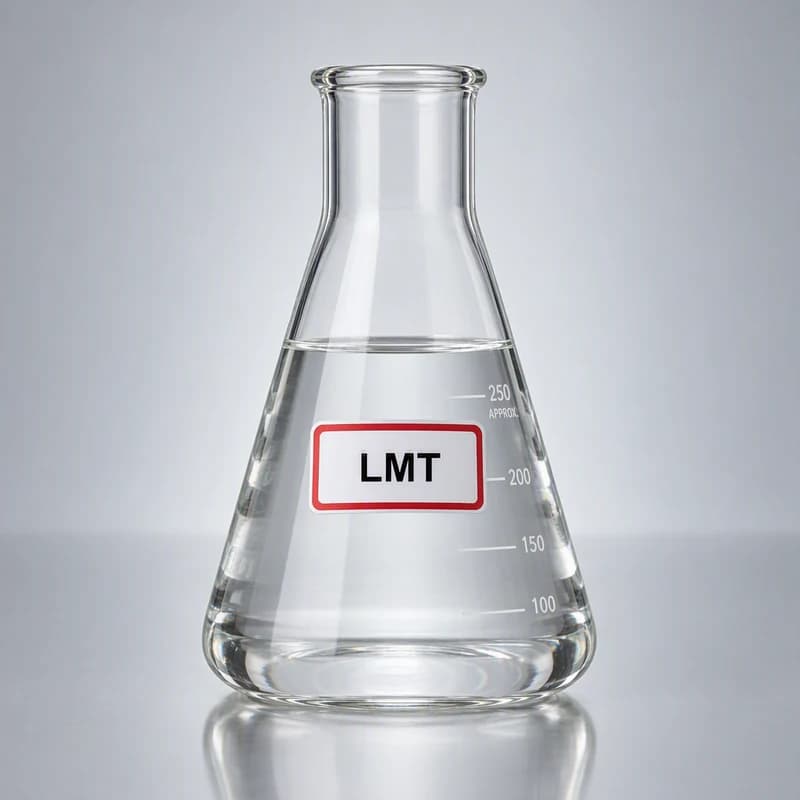
For circulating cooling water rather than brine, the corresponding product is the LMT series, whose replenishment is proportional to make-up water added rather than set on a calendar. Two different circuits, two different dosing logics — the system protection programmes set out which applies to existing brine, alcohol-water and circulating-water systems.
Route two: replace the charge
Where the plant is being refurbished, or the corrosion cost has exceeded the fluid cost, the alternative is a modern secondary coolant. Two families are relevant:
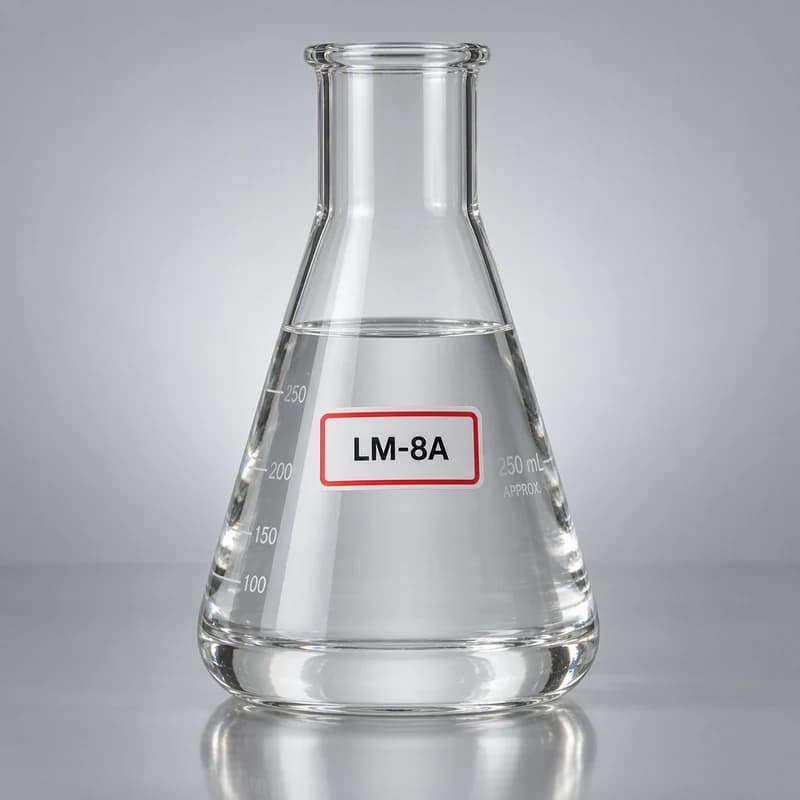
- Salt-based secondary refrigerants such as LM-8A, an inorganic salt solution described for industrial secondary refrigeration in the range −40 °C to ambient. Salt-based, but with an inhibitor package rather than raw brine.
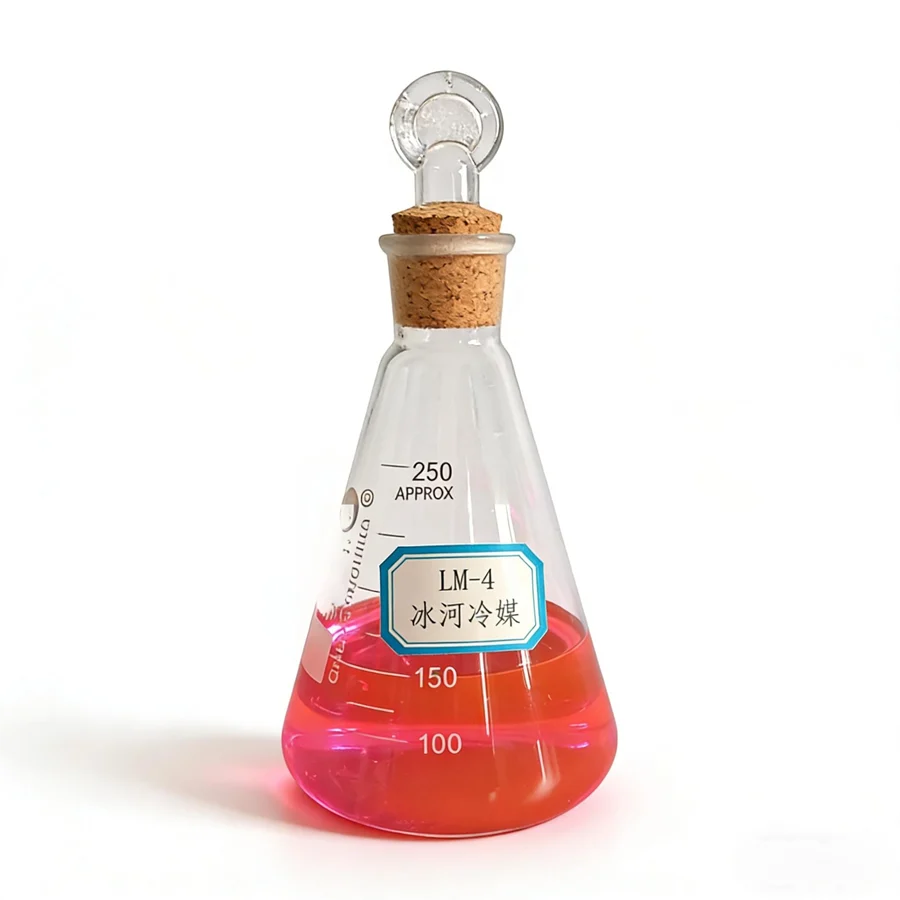
- Glycol-type and diol coolants such as the LM-4 family, which the comparison above places at non-corrosive with a higher specific heat than brine.
A changeover from brine brings its own requirements — the existing charge has to be removed, the loop cleaned of chloride residue, and the new fluid's material compatibility confirmed against the actual alloys. Chloride left in a dead leg is a corrosion site that survives the changeover. The sequence is covered in the changeover checklist.
Deciding between them
The question is not which fluid is better. It is which route costs less over the remaining life of the plant:
| Consideration | Favours maintaining brine | Favours changeover |
|---|---|---|
| Plant life remaining | Short | Long |
| Corrosion history | Stable, monitored | Recurring tube or valve failures |
| Monitoring capability | Site can test pH quarterly | Site cannot sustain the programme |
| Downtime cost | Low | High |
| Refurbishment planned | No | Yes — natural changeover point |
Whichever route you choose, the loop needs the same things: a baseline record, a monitoring interval, and someone accountable for acting on the readings. That is the substance of the maintenance programme, and it applies to brine as much as to a modern charge.
Deciding between maintaining and replacing
Whether to keep your brine system or replace it, and the inhibitor dose for your loop, both depend on the plant's age, its materials, its corrosion history, the volume and the cost of a failure. Bring the loop volume, the wetted materials and the current brine analysis to your supplier, and ask for the dose and monitoring interval that apply to the circuit you actually have.
QUICK CLARIFICATIONS
Common questions.
Brine is cheap and it works. Why change a loop that is running?
Thermally, there is no argument against brine. The manufacturer's own comparison shows calcium chloride leading on thermal conductivity. The case for change is the corrosion cost: replacing tubes, valves and pump bodies, and the downtime when a pitted line fails. Whether that justifies a changeover depends on the age of the plant, how well the brine is being maintained and the cost of an unplanned stop — which is an asset decision, not a fluid decision.
Can I just add inhibitor and keep the existing brine indefinitely?
A documented inhibitor programme is a legitimate route, and one is set out here: an initial dose of about 1% of the brine volume, pH and corrosion performance tested every three months, with pH adjusted and inhibitor replenished at roughly 0.5%. What it is not is a one-off addition. If pH is not corrected, replenishment alone does not restore protection, which is why the two are instructed together.
Is that corrosivity comparison an independent test?
The comparison table is the manufacturer's section on secondary refrigerants at matched freezing points. Its thermal figures are stated data; the corrosivity column is a description rather than a measured rate. Separate quantitative weight-loss measurements by the Institute of Metals are reported, Chinese Academy of Sciences, and a three-year comparison — those are the figures to use when you need a number rather than a descriptor.
What is the difference between LMH and LMT?
They treat different circuits. LMH is the brine corrosion inhibitor, described for indirect refrigeration systems using calcium chloride or sodium chloride solution, and it is dosed as a percentage of the brine volume. LMT is the corrosion and scale inhibitor series for circulating cooling water systems, with proportional replenishment according to make-up water volume. Confirm the right programme for the circuit you actually have.
CHECK THE SOURCE
References & scope.
- Glacier catalogue — comparison of secondary refrigerants at the same freezing point (Section Eight)
- Glacier catalogue — LMH corrosion inhibitor of brine, composition and dosage (printed page 29)
- Glacier catalogue — LMH replenishment and three-month test interval (printed page 30)
- Glacier catalogue — LMT series corrosion and scale inhibitors for circulating water (printed page 30)
Obtain the relevant TDS, SDS and technical approval before use.
How we prepare our content