Spill and fire response: two coolant families, two procedures
Not every heat transfer fluid responds to a spill the same way. See why one group is diluted with water and the other needs detergent, and what to check first.
THE SHORT ANSWER
What you need to know.
Heat transfer fluids do not all respond to a spill the same way, and there are two response groups rather than one. Spills of the water-miscible grades — LM-1, LM-3 and LM-5 — are diluted with water. Spills of the water-insoluble and other grades — including the LM-6, LM-7, LM-11, LM-15, LM-16 and LM-17 series — are rinsed with detergent-containing water instead. The reason is straightforward: adding water to a fluid that does not mix with it spreads the spill rather than diluting it. Fire response and the combustible-materials list differ in the same way.
- There are two spill procedures, not one: dilute with water for the miscible grades, detergent wash for the insoluble ones.
- Flash point separates the families far more than the 'coolant' label does — LM-6 is rated at −25 °C, LM-1 and LM-6A at +16 °C.
- Storage for the combustible grades is directed away from ignition sources, with static and leakage control and ventilation.
One word, two very different responses
A plant room stores "coolant". The word suggests a benign, water-like fluid. Heat transfer fluids do not all respond to a spill the same way, and the two procedures that apply illustrate why.
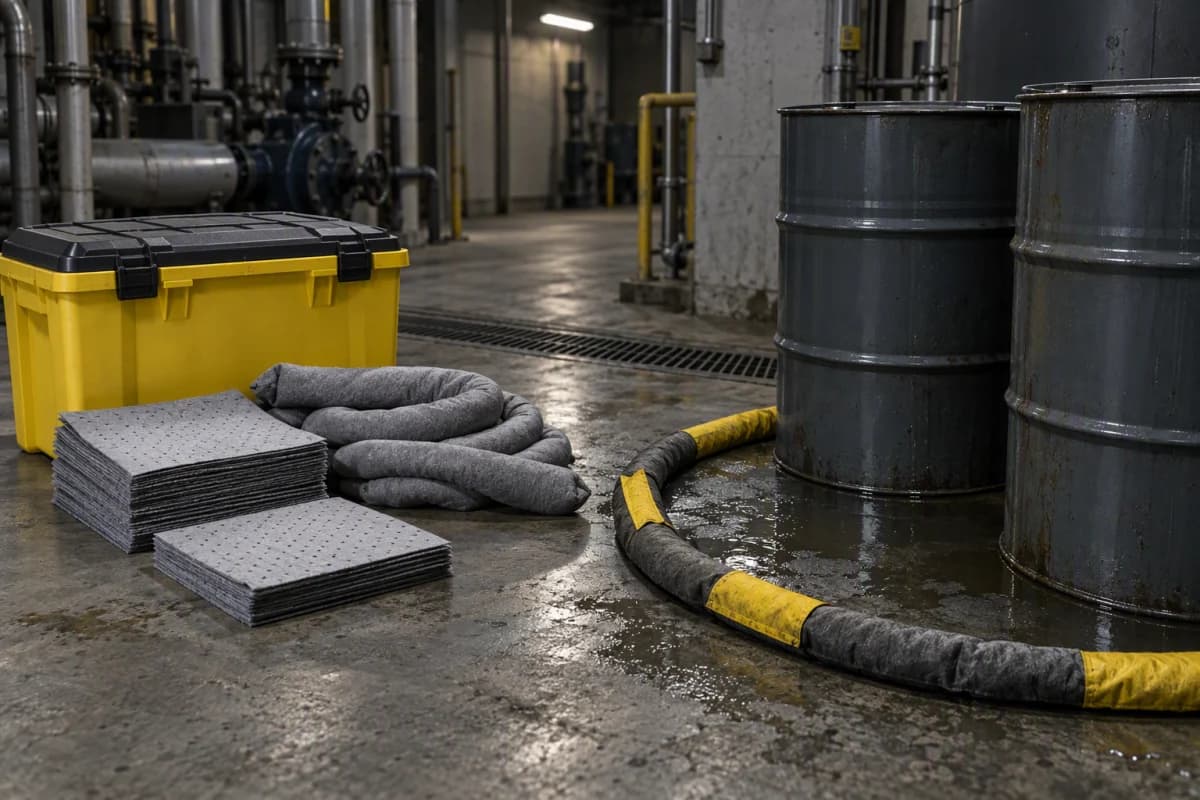
For leaks of LM-1, LM-3 or LM-5 — the alcohol-based and mixed-alcohol coolants — the instruction is to evacuate personnel, open doors and windows, and dilute with water.
For leaks of LM-6, LM-6A, LM-6B, LM-9D, LM-9E, LM-7, LM-11, LM-11A, LM-11B, LM-11C, LM-11D, the LM-15 series, the LM-16 series or the LM-17 series — the anhydrous, silicone, thermal-oil and dielectric grades — the instruction is to evacuate personnel, open doors and windows, and rinse with detergent-containing water.
Two procedures, and the difference is not arbitrary.
Why detergent for one group and water for the other
The dividing line is miscibility.
Several families are water-insoluble — the LM-6, LM-7 and LM-11 series among them, along with the silicone LM-15 range. These are designed for loops where water is a contaminant, not a diluent.
That design decision has a spill consequence. Water dilutes a miscible fluid: the concentration drops, the volume is easier to handle, and the material can be washed away. Water does not dilute an insoluble fluid. It sits on top, runs underneath, or carries the fluid with it — spreading the spill across a wider floor area and potentially into drains. A detergent-containing wash does something different: it helps lift and emulsify the residue so it can actually be collected.
It is the same property that governs commissioning. The reason those loops need a dry, closed system with nitrogen protection is the reason their spills need a different response — see why anhydrous coolants need a dry loop.
Fire response follows the same split
The extinguishing guidance separates the same way:
| Group | Approach on fire |
|---|---|
| LM-1, LM-3, LM-5 | Evacuate; extinguish with foam or other suitable agents |
| LM-6/6A/6B, LM-7, LM-11 series, LM-15, LM-16, LM-17 series | Evacuate at once; foam, dry chemical, carbon dioxide or soil |
Two differences are worth noting. The second group adds dry chemical, CO₂ and soil as options — media suitable for combustible liquids and for situations where water would be undesirable. And the instruction to evacuate at once is stated more firmly for that group.
The non-combustible grades have no flash point. That is a meaningful property, not a marketing line: the salt-based LM-8 family is described as non-combustible with no flash point, and LM-8A likewise. Where a fluid cannot form a flammable vapour layer, the fire risk changes character.
Flash point is the number that matters, not the label
If a plant handles several grades, the flash point column is the one to read across the range.
| Grade | Flash point |
|---|---|
| LM-6B | −32 °C |
| LM-6 | −25 °C |
| LM-1, LM-6A | +16 °C |
| LM-8 series (salt-based) | No flash point |
A flash point of −32 °C means the fluid produces ignitable vapour below any ambient temperature a plant will ever see. A flash point of +16 °C is a different problem again. And "no flash point" describes a fluid that does not form a flammable vapour at all under the test.
The practical consequence is that the storage and handling rules cannot be uniform. A specific set — LM-1, LM-2, LM-3, LM-5, LM-6, LM-6A, LM-6B, LM-7, LM-11 and LM-11F — is classified as combustible and explosive hazardous materials, and the storage precautions follow from that classification.
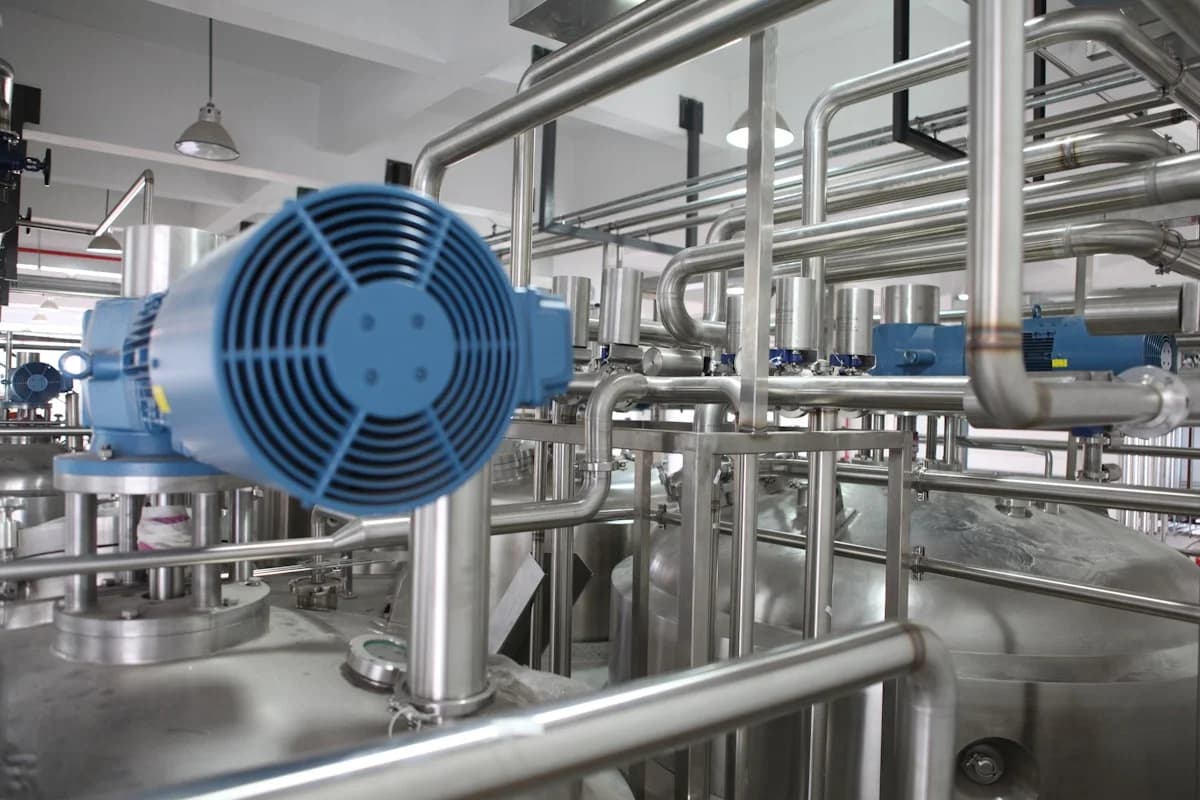
What a storage area needs
The storage precautions apply across the combustible list and are short enough to state directly:
- Keep away from sources of fire.
- Prevent static electricity.
- Prevent leakage.
- Maintain ventilation.
Ventilation is repeated in the general precautions for all products, not only the combustible ones: storage and use areas must be well ventilated. That is a requirement on the room, not on the drum.
Two more statements apply across the whole range and are easy to lose in a plant's procedures. All LM series coolants and their performance enhancers are described as harmful if ingested and are not to be inhaled in large quantities. And the products must not be used for any purpose other than as heat-transfer fluids — a line that matters in plants where a drum of fluid is available and someone finds a second use for it.
The document that actually governs your site
These figures are for reference, and the contract and related technical agreements prevail. Detailed storage, handling and safety requirements are set out in the product's enterprise standards, safety data sheet and safety labels.
That is the right hierarchy to work with:
- The current SDS for the exact model is the controlling document for your site's procedures.
- The enterprise standard and safety labels carry the detailed requirements.
- The product classification — water-miscible or water-insoluble — tells you which response group applies.
The common failure is treating a spill procedure written for a glycol-type fluid as if it covered an anhydrous one, or the reverse. Both are in the same product range and neither is interchangeable.
What to do with this
If your site handles more than one grade, check the spill kit and the emergency procedure against the family, not the product label. The two questions to answer in advance are whether the fluid in the drum mixes with water, and what its flash point is.
The system protection page covers the maintenance programmes that reduce the chance of a spill in the first place, and the documentation request is the route to the current SDS for the exact grade.
Where the safety data sheet governs
Your site's emergency procedures stand, and not every product safety requirement is covered here. The figures quoted here are reference values, and detailed handling requirements sit in the safety data sheet and enterprise standard for each product. Use the current SDS for the grade on site as the governing document, and confirm your procedures against it.
QUICK CLARIFICATIONS
Common questions.
Why would a coolant spill be treated with detergent instead of water?
Because water does not dilute a fluid that does not dissolve in it. Several families are water-insoluble, including the LM-6, LM-7 and LM-11 series. Pouring water onto a spill of that kind does not reduce its concentration — it spreads the fluid over a wider area and can carry it into drains. A detergent-containing wash helps lift and emulsify the residue so it can be collected. For the water-miscible grades, dilution with water is the instructed response.
Are all heat transfer fluids combustible?
No. A specific set is classified as combustible and explosive hazardous materials — LM-1, LM-2, LM-3, LM-5, LM-6, LM-6A, LM-6B, LM-7, LM-11 and LM-11F — and gives storage precautions for them. Other grades in the range, including the non-combustible salt-based and some high-temperature fluids, are not on that list. What the label 'coolant' tells you about fire risk is very little; the flash point and the safety data sheet do.
What does the flash point difference actually look like?
It is large enough to change how a plant handles the product. The LM-6 base grade has a flash point of −25 °C, LM-6B −32 °C and LM-6A +16 °C. LM-1 is also 16 °C. A fluid that flashes below ambient is a different handling problem from one that flashes at 16 °C, and both are different from a fluid with no flash point at all — the salt-based grades are described as non-combustible with no flash point.
Where do I find the procedure that applies to my product?
In the current safety data sheet and the manufacturer's enterprise standard, not in a general guide. These figures are for reference, and the contract and technical agreements prevail. Detailed storage and handling requirements are provided in the product's enterprise standards, safety data sheet and safety labels. Use the questions above to know what to look for, and the SDS to answer them for the exact grade.
CHECK THE SOURCE
References & scope.
- Glacier catalogue — Safety Precautions, combustible materials and the two spill procedures (printed page 41)
- Glacier catalogue — LM-6 series flash points (Table 8)
- Glacier catalogue — LM-1 flash point and stock properties (Table 1)
- Glacier catalogue — LM-15, LM-16 and LM-17 series parameters (Tables 13–15)
Obtain the relevant TDS, SDS and technical approval before use.
How we prepare our content