Why do anhydrous coolants need a dry loop, nitrogen and no mixing?
Anhydrous coolant families need a dry, closed loop, nitrogen protection and no mixing. What those three instructions mean — and what they do not specify.
THE SHORT ANSWER
What you need to know.
Anhydrous coolants are specified for systems where water is a contaminant, not a diluent. They therefore require a cleaned, dried loop, a nitrogen-closed atmosphere against moisture ingress, and no mixing with other secondary refrigerants. Those are manufacturer preparation requirements for the named families — not a site dryness specification, a residual-moisture limit or permission to skip a current TDS and SDS.
- Water-insoluble coolants do not absorb residual water into a homogeneous charge; leftover moisture stays as a second phase.
- Nitrogen blanketing is moisture control. The dew-point target and residual-water limit are specification items you set for your loop.
- The single-model operating limit and the fire-safety documentation are grade-specific.
Three instructions that look like footnotes
Aqueous coolants are designed around water. Dilution, make-up water quality and inhibitor top-up are part of the specification. Anhydrous coolants are designed around the opposite condition: water is not a working fluid, and it is not a permitted contaminant.
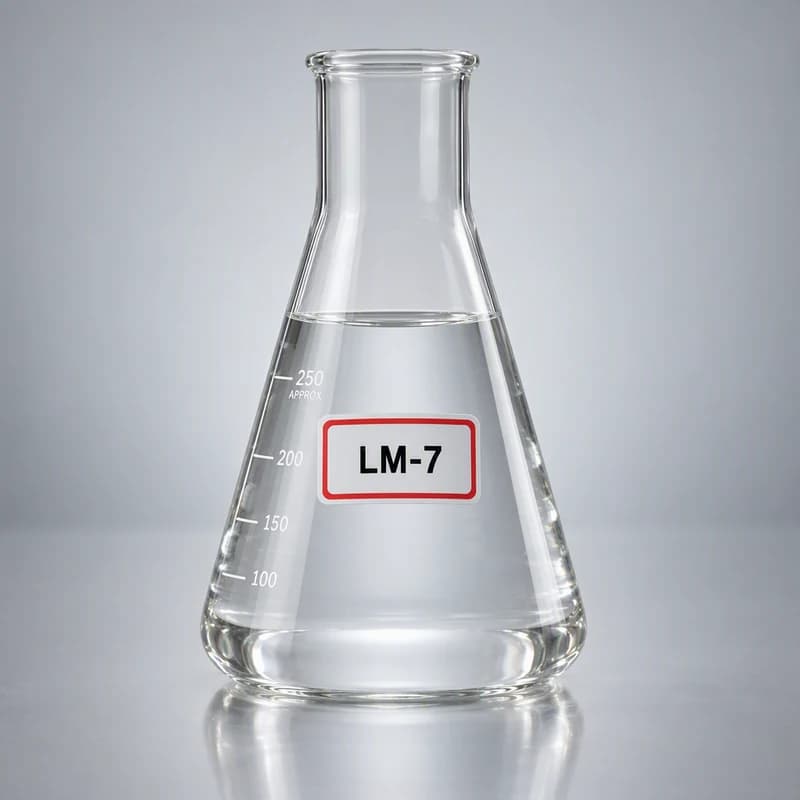
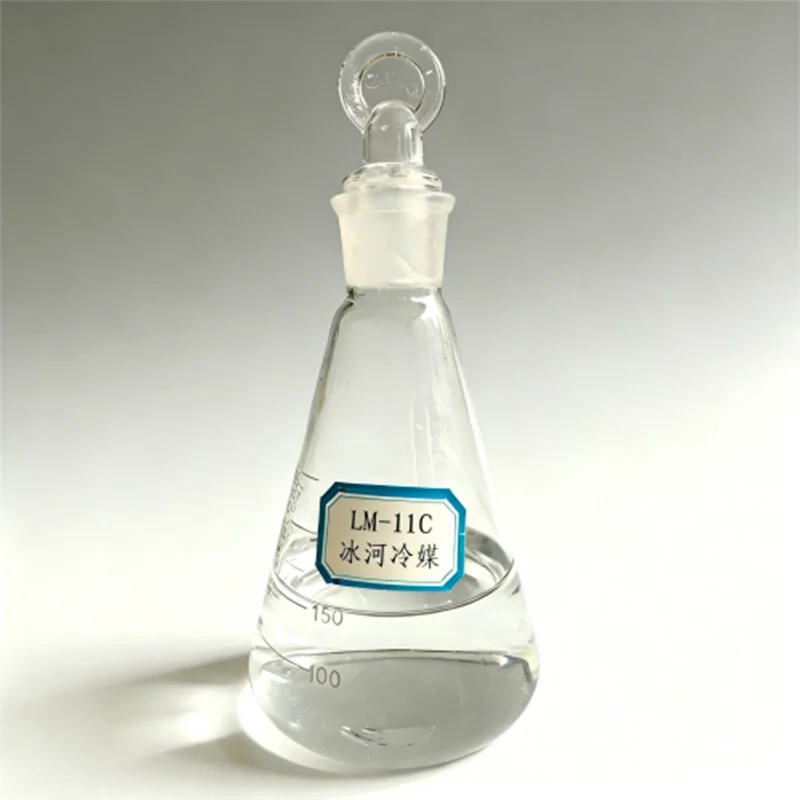
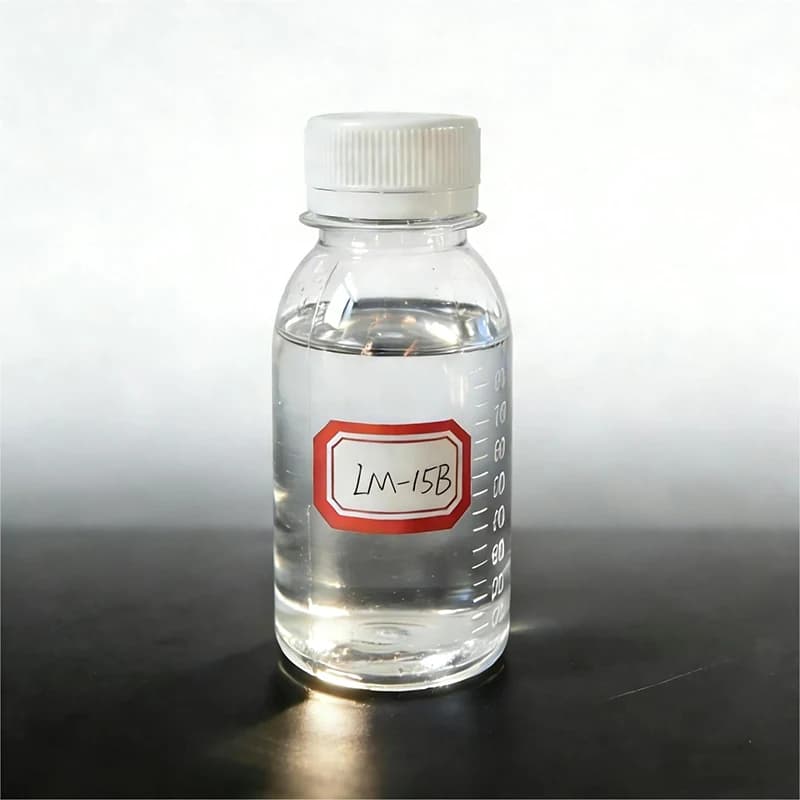
That is why the same three instructions apply across several families — the hydrocarbon and alkane grades LM-6, LM-7 and LM-11, and the silicone LM-15 range:
- Clean and dry the system before filling.
- Keep the system closed, with nitrogen protection against moisture ingress.
- Add the product directly. Do not mix it with other secondary refrigerants.
Those lines are easy to treat as installation notes. They are the selection criteria. If a loop cannot be dried, cannot stay closed, or already contains another coolant that cannot be removed, an anhydrous family is the wrong shortlist — regardless of how well its freeze point or viscosity matches the process.
The three instructions answer a specific problem. Those belong in a project specification, confirmed against the current TDS and SDS for the exact model.
Dry first — water is a contaminant, not a diluent
The LM-6 and LM-11 series are water-insoluble. That single property changes the meaning of leftover water.
In a glycol or salt-based loop, make-up water dissolves into the charge. Concentration drifts, freeze protection changes, and the problem is dilution. In a water-insoluble charge, residual water does not disappear into the bulk fluid. It remains as a second phase: droplets, films in low points, ice at the coldest surfaces, or vapour that condenses when the system is opened.
The practical consequence is that a loop which was "mostly drained" of an aqueous coolant is not ready for an anhydrous fill. The residual film is water. Heating it, circulating it or hoping it will be carried out with the first flush does not turn it into a compatible fluid. The manufacturer instruction for LM-7 is specific: dry the system with inert gas or dry hot air, then inject the product directly.
Those three acceptance criteria — a dew-point target, a residual-water limit and a blow-dry duration — are yours to write, against the actual volume, geometry and lowest operating temperature. A system specified to −100 °C does not have the same residual-moisture tolerance as one that never goes below −20 °C, and no single figure covers both. Put the target in the project specification and have commissioning verify the loop against it.
Nitrogen blanketing keeps moisture out
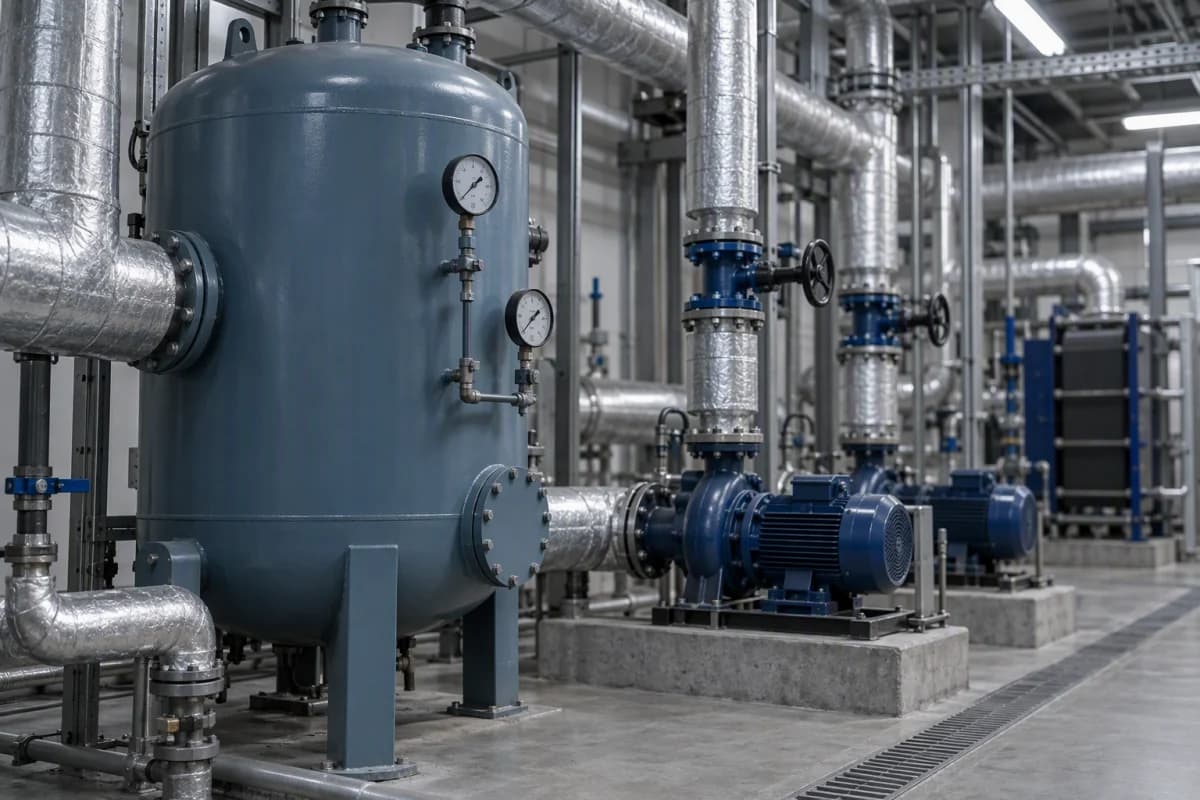
Drying the loop once is not enough if the next opening of a vent, expansion tank or sample point lets humid air back in. The answer is a closed system with nitrogen protection.
For LM-6 the product description is a dry, closed circuit with nitrogen protection against moisture ingress. For LM-7 the printed requirement is a nitrogen-closed system after the dry fill. For LM-11 the original product notes call for cleaning and drying before filling, then measures to prevent moisture ingress; the LM-11E reference also discusses nitrogen sealing.
Those statements are about atmosphere control, not a claim that nitrogen improves heat transfer. The nitrogen is there so that the charge stays the fluid that was specified. Several of these families are classified as hazardous chemicals; LM-6 prints a flash point of −25 °C for the base grade and +16 °C for LM-6A, both at a stated 20 °C property condition. Those figures describe flammability of the named stock fluids.
A nitrogen blanket that is applied at first fill and then vented, or a tank that is opened for routine top-ups without a drying step, is not the closed, dry condition the manufacturer describes. How the blanket is maintained — pressure, purge rate, analyser, who is allowed to open the system — is an engineering decision for the site. The requirement is stated plainly. It does not design the nitrogen system.
Mixing is prohibited because the residual fluid stays
The third instruction follows from the first two. If the new fluid is water-insoluble, any leftover aqueous coolant is residual water. If the new fluid is a different anhydrous chemistry, the leftover charge is a second organic phase whose inhibitors, flash point and material compatibility were never assessed as a blend.
The instructions are direct. LM-6: do not dilute or mix with other fluids. LM-7: add directly; do not mix with other secondary refrigerants. LM-15: use the fluid directly and do not mix it with other secondary refrigerants. The coolant changeover article covers the same problem from the other direction: it is virtually impossible to drain a loop completely, and a few percent of residual fluid is enough to matter.
The anhydrous-specific reason is different. Aqueous changeovers can sometimes be recovered by flush volume and inhibitor adjustment, subject to both suppliers. An anhydrous fill cannot treat leftover water as a concentration problem. The leftover water is a phase-separation problem, and at the lowest published temperatures — LM-6 is rated −130 °C to +30 °C for the base grade, LM-11F −100 °C to +90 °C — that second phase can freeze while the intended charge is still liquid.
Do not infer that two anhydrous families can be blended because both are "oil-like" or both are alkanes. LM-6 is a modified hydrocarbon, LM-7 and LM-11 are modified alkanes, LM-15 is a modified polysiloxane. Those are formulation descriptions, not permission to mix grades, and not a complete ingredient disclosure.
What each family requires
Hold the application constant before comparing properties. The table maps preparation requirements; a family envelope covers several models.
| Family | Formulation | Preparation requirement | What not to assume |
|---|---|---|---|
| LM-6 series | Modified hydrocarbons; water-insoluble | Dry, closed system with nitrogen protection; do not dilute or mix | That LM-6B's operating limit is settled — the published ranges conflict |
| LM-7 | Modified alkanes; anhydrous | Dry with inert gas or dry hot air, fill directly, keep nitrogen-closed; no mixing | That the −70 °C to +150 °C window is a bidirectional heating fluid — LM-7 is presented as a low-temperature secondary refrigerant |
| LM-11 series | Modified premium alkanes; water prohibited | Clean and dry, then prevent moisture ingress; nitrogen sealing is discussed for LM-11E | That every grade has the same flash point or the same hazardous-chemical designation |
| LM-15 series | Modified polysiloxane | Clean and dry, use directly, prevent moisture ingress; mixing prohibited | That a family ceiling of +200 °C applies to every model, or that flash point is independent of grade |
The numbers behind those rows stay on the product pages and in the linked data tables. LM-6 and LM-6A properties are quoted at 20 °C. The six LM-11 grades carry flash points from 41 °C (LM-11F) to 105 °C (LM-11C). LM-11, LM-11A and LM-11F are identified as hazardous chemicals; obtain the current SDS for the exact model. LM-11D's upper limit is +100 °C in the table and +120 °C on an earlier manufacturer page — the difference is unresolved, so do not specify from the higher figure.
LM-9 belongs in the same preparation conversation even though it is a bidirectional heat-transfer family rather than a dedicated low-temperature coolant: the LM-9E reference also calls for cleaning and drying before a direct fill. It does not make LM-9 interchangeable with LM-7.
Writing the dryness criteria
A dryness acceptance test, a nitrogen pressure, a purge procedure and a flush volume all have to be written for your loop. The requirement is that the system be dry, closed and unmixed. The measurements that prove those conditions for a given loop are project-specific.
It does not turn a family temperature envelope into an operating limit for one drum. LM-6B is the explicit example: one table entry gives −145 °C to −100 °C while a series statement gives −140 °C to +30 °C. LM-6B's operating limit awaits written clarification from the manufacturer.
Flash points, hazardous-chemical classifications and nitrogen use around flammable liquids are SDS and site-safety questions. A published flash point is a reference value, not an approval to install.
If the loop cannot be dried and kept dry, start from a water-dilutable family instead and read the secondary coolant versus refrigerant article before treating the two circuits as interchangeable. If the loop can be prepared, take the exact model, the wetted-material list and the proposed drying method to the industrial-process guide and the technical-document request page. Selection is confirmed against the current TDS, SDS and technical agreement — not against a generic instruction to "keep it dry."
QUICK CLARIFICATIONS
Common questions.
Can I top up an anhydrous loop with a water-glycol coolant if the levels drop?
No. The anhydrous families are water-insoluble and prohibit mixing with other secondary refrigerants. A water-glycol top-up introduces a second, immiscible phase and defeats the reason the anhydrous fluid was specified. Confirm the exact model and the approved make-up fluid before any addition.
What dryness or dew-point target should I use before filling?
That target comes from your own loop, not from the product. What the manufacturer requires is that the system be cleaned and dried — for LM-7, with inert gas or dry hot air — then filled directly and kept nitrogen-closed. The dew-point figure, residual-moisture limit and blow-dry duration are acceptance criteria you write for the actual volume, geometry and coldest operating temperature, and verify at commissioning.
Is a nitrogen blanket only needed at first fill?
No. The requirement is about keeping the system closed against moisture ingress during use, not only during commissioning. A blanket that is applied once and then vented, or a tank that is opened for routine top-ups without a drying step, is not the closed, dry condition the manufacturer describes.
CHECK THE SOURCE
References & scope.
- Glacier catalogue — LM-6 series ultra-low-temperature anhydrous coolants (Table 8)
- Glacier catalogue — LM-7 wide-temperature alkane coolant (printed page 20)
- Glacier catalogue — LM-11 series anhydrous alkane fluids (Table 11)
- Glacier catalogue — LM-15 series silicone heat transfer fluids (Table 13)
Obtain the relevant TDS, SDS and technical approval before use.
How we prepare our content