
Consider the complete duty cycle
Discuss startup viscosity, heat demand and temperature-control precision as well as the maximum process temperature. The catalogue lists separate LM-15A, B and C operating windows.
Heat transfer fluids
Silicone-based fluids for anhydrous, wide-temperature indirect refrigeration and heat transfer in pharmaceutical, chemical and new-energy applications.
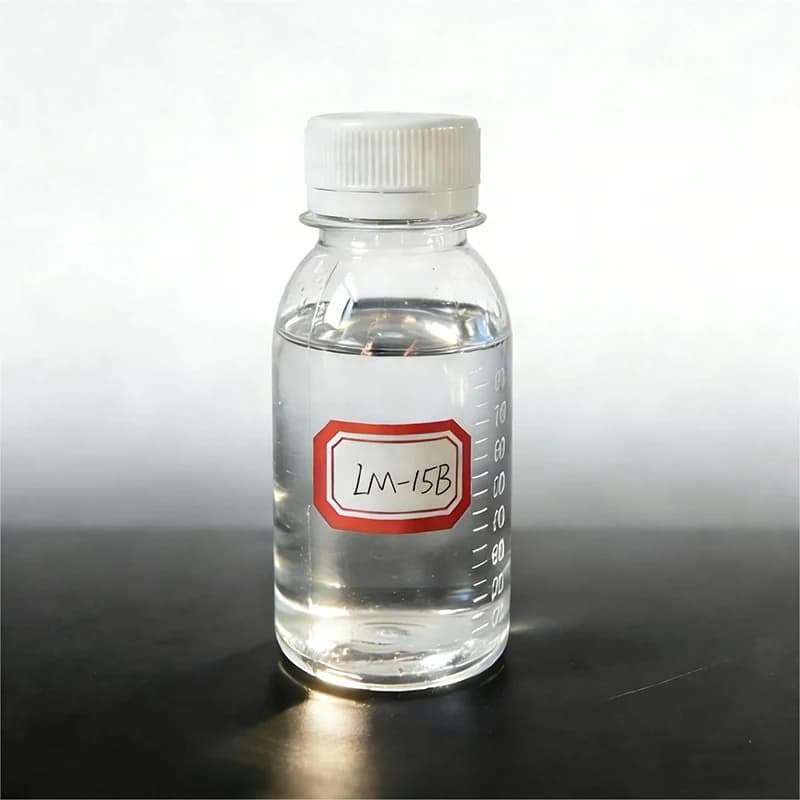
Modified polysiloxane
| Model | Temperature range (°C) | Viscosity (cP) | Density (g/cm³) | Specific heat (cal/g·°C) | Thermal conductivity (W/m·K) | Flash point (°C) |
|---|---|---|---|---|---|---|
| LM-15A | −70 to +180 | 5.63 | 0.919 | 0.418 cal/(g·°C) = 1.75 kJ/(kg·K) | 0.126 | 80 |
| LM-15B | −50 to +200 | 10.40 | 0.942 | 0.407 cal/(g·°C) = 1.70 kJ/(kg·K) | 0.136 | 148 |
| LM-15C | −30 to +200 | 21.71 | 0.953 | 0.420 cal/(g·°C) = 1.76 kJ/(kg·K) | 0.145 | 170 |
All properties are printed at 20°C. The catalogue lists no freezing point for this series; the temperature range is the operating envelope, not a freezing point.
Reference values from the Chaoyang Guangda LM catalogue — typical figures rather than guaranteed limits. Confirm the exact model and concentration on the current model TDS before specifying.
View source: catalogue p.26 (PDF p.30)Flash points vary by model. Clean and dry the system, use the fluid directly and prevent moisture ingress. Mixing with other secondary refrigerants is prohibited.
FROM FORMULATION TO APPLICATION
The polysiloxane-based LM-15 references describe heat-carrier use in oil baths and thermostatic systems for steel, glass, ceramics and scientific research.
Discuss startup viscosity, heat demand and temperature-control precision as well as the maximum process temperature. The catalogue lists separate LM-15A, B and C operating windows.
The original product page includes temperature-dependent properties and a non-metal compatibility table. Request a current compatibility assessment for the seals, hoses and polymers in your system.
LM-15 series
Application notes are adapted from Glacier’s original product information. Unless a table states otherwise, numeric specifications follow the supplied catalogue. For the confirmed specification, obtain the current model-specific TDS and SDS. Links below point to the original source pages, not new technical documents.

Anhydrous coolant families need a dry, closed loop, nitrogen protection and no mixing. What those three instructions mean — and what they do not specify.

Industrial heat pumps are commercialised to about 200 °C. For processes above that, thermal oils and silicone fluids are still the default heat transfer route.
CONTINUE EXPLORING
Low-temperature, alcohol-based coolant
Low-temperature coolant for mixed-metal systems
Application-specific alcohol coolants