Coolant maintenance: what to test, how often, and when to top up
Brine inhibitors, cooling-water treatment and alcohol-coolant additives follow different schedules. See what applies to each and what to confirm first.
THE SHORT ANSWER
What you need to know.
Maintenance additives extend the life of a charge; their reference dosages are starting points rather than site instructions. Separate programmes apply to brine systems, circulating cooling water and alcohol-based coolants, each with its own monitoring interval and its own hazard classification. Confirm the programme against your water chemistry and recent test results.
- Brine, cooling-water and alcohol-coolant treatments are three different programmes, not one additive.
- Reference dosages assume a system volume and condition that only your survey can establish.
- A monitoring interval is only useful when target limits and a responsible person are agreed beforehand.
Maintenance is a programme, not a product
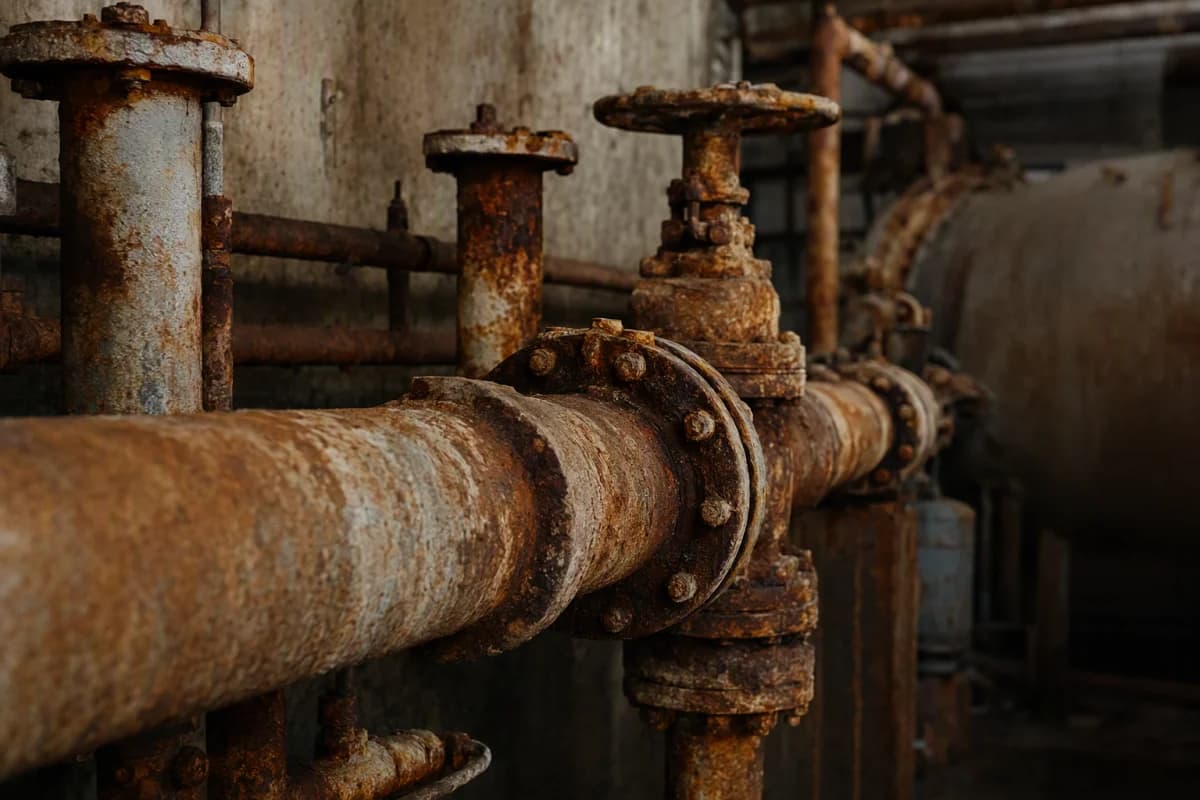
Secondary cooling systems rarely fail because someone chose the wrong fluid on day one. They fail because a system that was correctly filled was then left alone for years, topped up with whatever was available, and inspected only after a leak appeared.
That matters more now than it did a decade ago. Refrigerant phase-down rules have pushed industrial and commercial refrigeration towards indirect architectures with a smaller primary charge and a larger circulating secondary loop. The secondary fluid is no longer a minor design detail; it is the part of the system a maintenance team actually touches. More circulating volume means more places for water chemistry, contamination and inhibitor depletion to matter.
Three maintenance product lines are easy to confuse because they all arrive in drums and all claim to reduce corrosion. They address different systems, different failure mechanisms and different schedules. Each has its own programme, and each leaves something to a site survey.
Brine systems: LMH
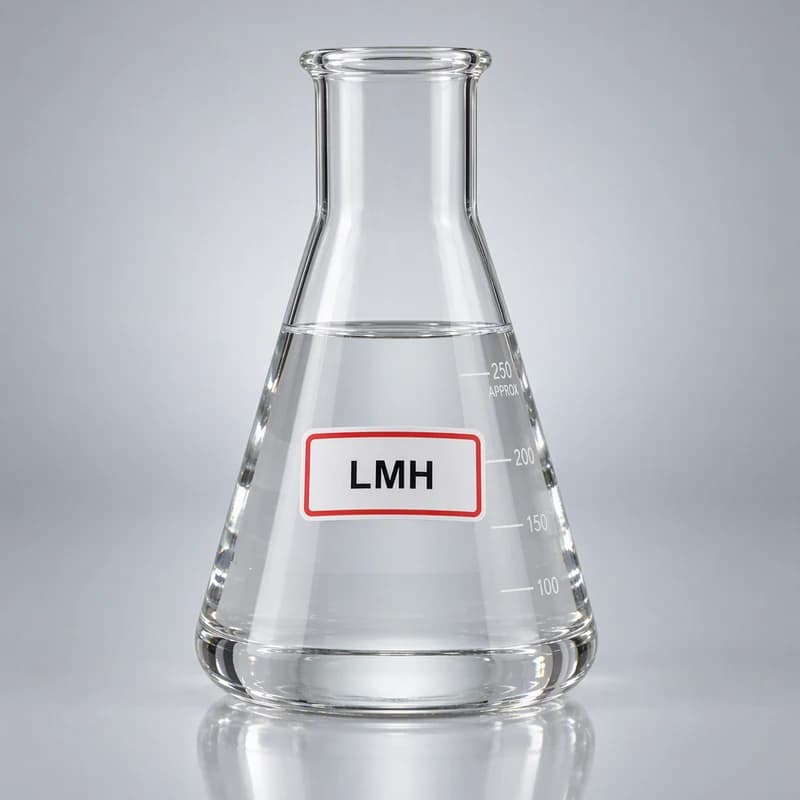
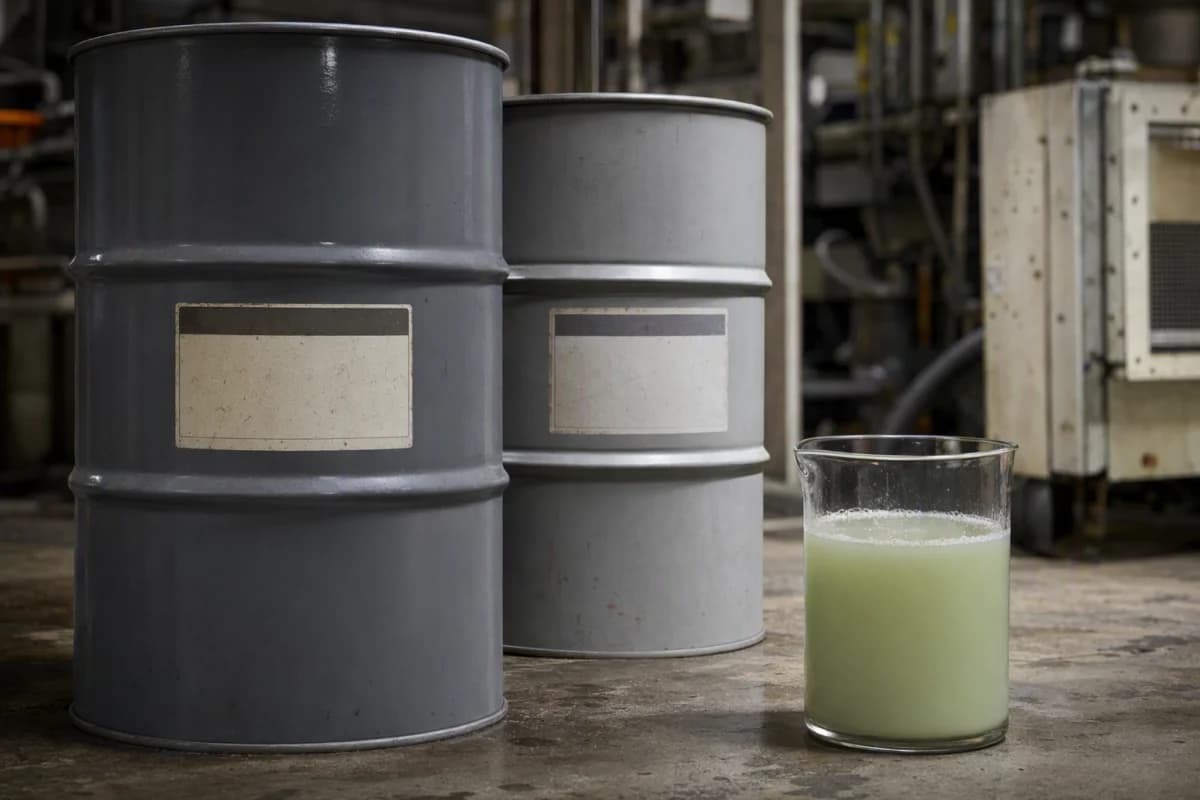
LMH is described as a corrosion inhibitor for brine, composed of film-forming agents, stabilizers, antioxidants and corrosion inhibitors, and stated not to contain chromium salts. Its pH is stated as 7 to 11 and its density as 1.020 to 1.080 g/cm³. It is described as non-flammable, non-volatile and non-corrosive, and is said to form three layers of protective film on metal surfaces to slow pitting corrosion from chloride ions.
Its stated application is indirect refrigeration systems using calcium chloride or sodium chloride solution as the secondary refrigerant, and other situations where brine contacts metal, including brine drilling fluid. It is described as resisting corrosion of carbon steel, stainless steel and copper.
The usage instructions are the part worth reading closely. For first use, the dosage is about 1% of the total brine volume, weighed and added directly with the system circulating. During use, the pH value and anti-corrosion performance of the brine should be tested every three months, with pH adjusted and LMH replenished according to the technical standard — generally about 0.5%.
Note the structure of that instruction. The initial dose and the replenishment dose are different numbers, and the replenishment is conditional on a measurement. It is not a fixed annual top-up. LMH is also classified as a hazardous chemical, with the safety data sheet as the reference, which is a reminder that an additive used to protect metal is still a chemical requiring handling controls.
Circulating cooling water: LMT
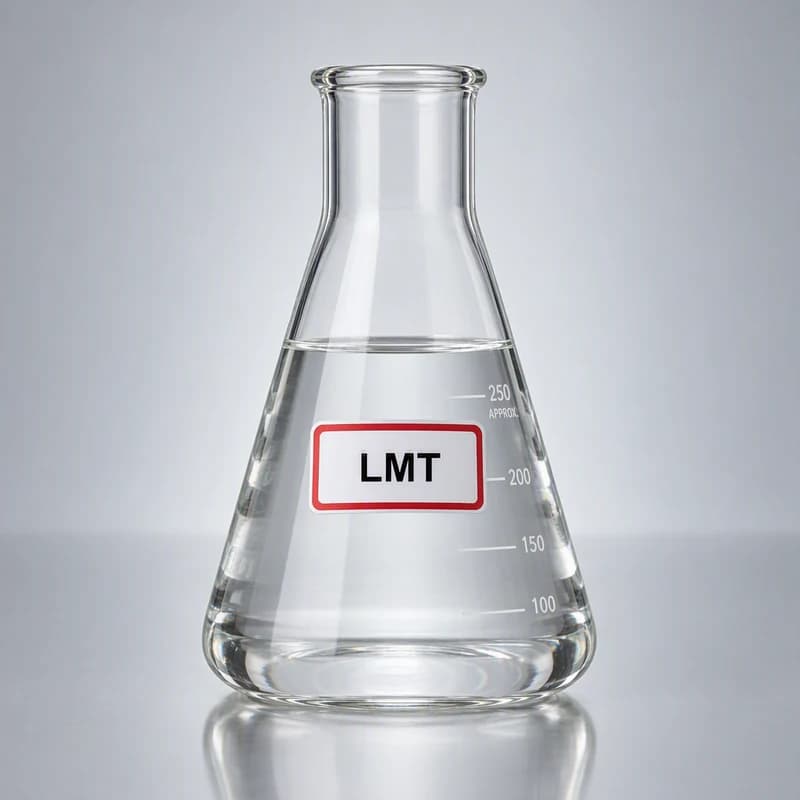
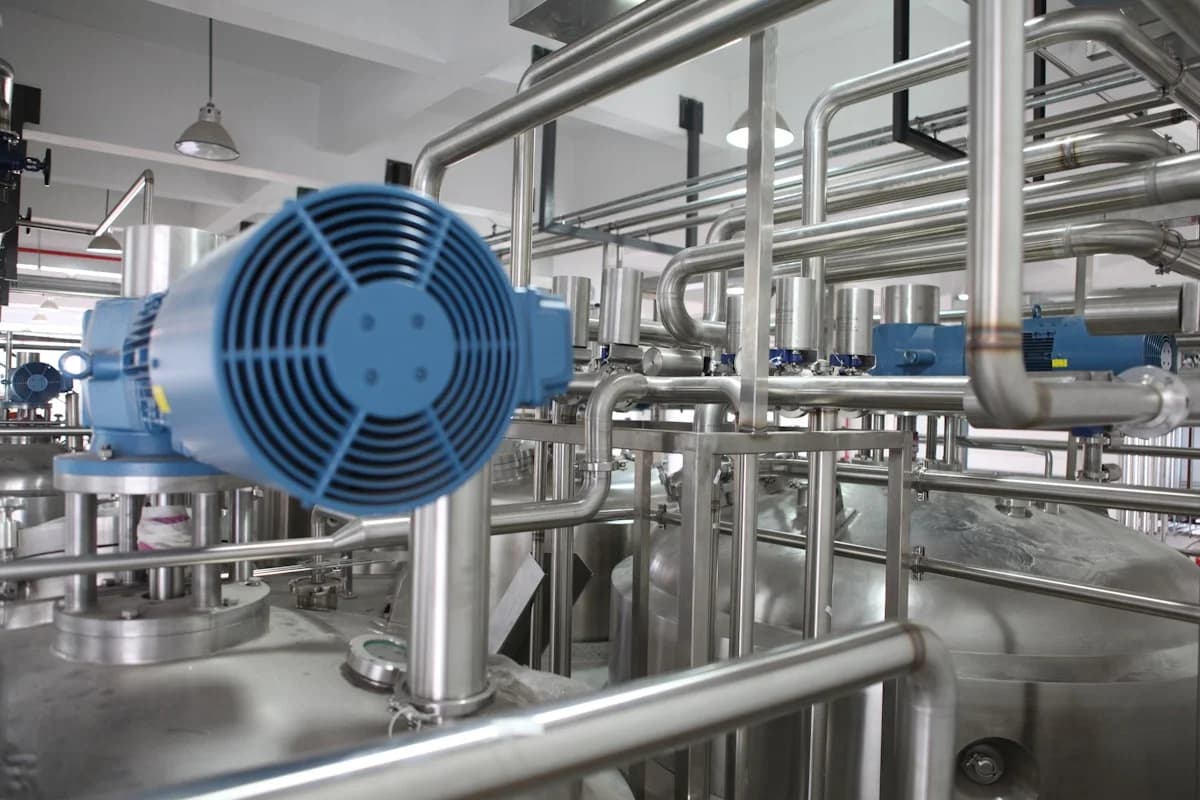
LMT is a different product for a different loop. The series is composed of rust inhibitor, corrosion inhibitor, scale inhibitor, bactericide and algaecide, supplied as light yellow non-combustible liquids for circulating cooling water systems in chemical, pharmaceutical and other industries. It addresses scale and biological growth alongside corrosion, which brine inhibitors do not.
Two grades are available:
| Model | Appearance | Solubility | pH | Performance | Additive quantity | Packaging |
|---|---|---|---|---|---|---|
| LMT | Light-coloured liquid | Non-stratified | >7.0 | Good | 1% | 25/200 kg drum |
| LMT-1 | Light-coloured liquid | Non-stratified | >7.0 | Excellent | 0.5%–1% | 25/200 kg drum |
The products can be added directly during use at approximately 1% of the system's water capacity, with proportional replenishment carried out regularly according to the amount of make-up water added later.
That last clause is the design principle. In an open circulating system, additive concentration is diluted by make-up water, so the replenishment rate tracks water loss rather than calendar time. A site with high evaporation or frequent topping up needs a different rhythm from one that is tightly closed. LMT is also classified as a hazardous chemical.
Alcohol-based systems already in service: LMZ
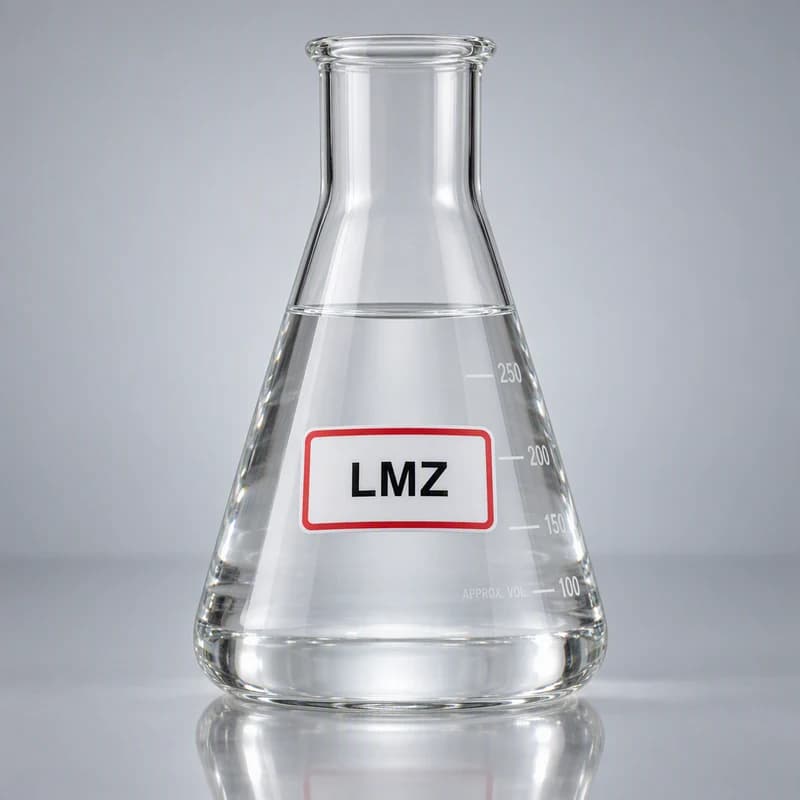
The third line solves a different problem. LMZ synergists are described as concentrated additives for manufacturers who have already installed a large volume of alcohol-based secondary refrigerant and either cannot conveniently add Glacier coolant directly or face transport constraints. They are added directly to the alcohol-based aqueous cooling medium at a dosage of 0.5% to 2%.
Four grades differ in form and composition:
| Model | Appearance | Additive quantity | Packaging | Main ingredients |
|---|---|---|---|---|
| LMZ | Solid particles | 0.5%–1% | 25 kg bag | Inorganic |
| LMZ-1 | Light-coloured liquid | 1%–2% | 25/200 kg drum | Inorganic |
| LMZ-2 | Light-coloured liquid | 1% | 25/200 kg drum | Inorganic, organic |
| LMZ-4 | Light-coloured liquid | 2% | 25/200 kg drum | Organic |
A comparative corrosion test is also described: one gram of LMZ added to 100 mL of a 25% ethylene glycol solution in a conical flask with a polished carbon steel test piece and a copper test piece, against a control flask of the same glycol solution and the same test pieces, with corrosion observed the following day and over a longer period.
That comparator is a useful model for a site trial, and it is worth being explicit about what it is not. It is a small, short check of whether an additive changes visible corrosion behaviour in one specific fluid. Three of the four grades — LMZ, LMZ-1 and LMZ-2 — are classified as hazardous chemicals.
What the intervals have in common
Read together, the three programmes share a shape that is more useful than any individual figure:
- The first dose and the ongoing dose are different. LMH is about 1% initially and about 0.5% for replenishment.
- Replenishment is tied to a measurement, not to a date. Brine pH and anti-corrosion performance every three months; cooling-water treatment matched to make-up water volume.
- The measurement comes before the decision. Without a baseline reading taken before treatment starts, a later result cannot tell you whether the programme is working.
- Every one of these products carries a hazard classification. Protection chemistry is still chemistry; the safety data sheet governs handling, storage and disposal.
From a reference dosage to a site dose
A dosing instruction for your system has to come from a site survey. Reference dosages are calculated against an assumed system volume and an assumed fluid condition, and neither is known until someone surveys the plant. Nor does it diagnose a specific corrosion problem: pitting from chloride ions, general corrosion from low pH, scale from hard make-up water and microbiological growth have different causes and different remedies.
What it should prompt is a short list of questions for the next maintenance review. What is actually circulating, at what concentration? When were pH, conductivity or inhibitor levels last recorded, and against what limits? How much make-up water does the system take, and what is in it? Who acts when a reading drifts, and how quickly?
If the answers are unclear, the useful next step is a fluid condition review rather than a drum of additive. The system protection solution page sets out that workflow, and the technical document request page covers obtaining current product documentation.
QUICK CLARIFICATIONS
Common questions.
Can I add an inhibitor instead of replacing the fluid?
Sometimes, and the decision depends on the fluid's condition rather than its age. Compare recent pH, conductivity or corrosion measurements against the fluid's specification. If the base fluid has degraded beyond its limits, treatment will not restore it.
Are the reference dosages safe to follow directly?
Treat them as reference values. Actual dosing depends on system volume, brine type and concentration, make-up water and the results of on-site testing. Agree the programme with the supplier and record the basis for each dose.
How do I know whether treatment is working?
Set the measurement and the limit before you start. pH is used for brine and cooling-water programmes, and recommends periodic corrosion review. Without a baseline reading taken before treatment, there is nothing to compare against.
CHECK THE SOURCE
References & scope.
- Glacier catalogue — LMH brine corrosion inhibitor
- Glacier catalogue — LMT corrosion and scale inhibitors (Table 16)
- Glacier catalogue — LMZ secondary refrigerant synergists (Table 17)
- European Commission — Climate-friendly alternatives to F-gases in refrigeration
Obtain the relevant TDS, SDS and technical approval before use.
How we prepare our content