Capturing waste heat from a liquid-cooled facility
Warm liquid cooling produces heat at a temperature worth recovering. See what that asks of the fluid, the loop architecture and the storage medium.
THE SHORT ANSWER
What you need to know.
Liquid cooling raises the temperature at which a facility's heat leaves the building. At a return temperature in the forties or fifties, that heat is warm enough to be useful — to a district heating network, a greenhouse, a swimming pool or a process pre-heat duty. Recovering it asks three things: a fluid that can carry heat at that temperature, a second circuit to take it, and a heat buyer whose demand coincides with the facility's output. The storage grades in the range, spanning +7 to +55.5 °C, sit exactly across those temperatures.
- Warm liquid cooling makes the rejected heat a usable temperature rather than a low-grade stream.
- The fluid is the interface: what it can carry at temperature decides how much of the heat is recoverable.
- Recovery needs a buyer whose demand coincides with the load — otherwise the heat still has to be rejected.
The temperature is the whole story
Heat is only worth recovering if something can use it. That single constraint explains why waste heat from computing has historically gone to the atmosphere: a chilled-water loop running at 7 to 12 °C produces a heat stream too cool to be useful for almost anything, and lifting it to a useful temperature costs more energy than the heat is worth.
Warm liquid cooling changes the arithmetic at the source. A loop supplying fluid at around 40 to 45 °C and returning it warmer is producing heat at the low end of what district heating, space heating and process pre-heat can accept. The heat did not get more valuable; it got warmer, and warmth is what determines usability.
That is also why this has become a design conversation rather than a sustainability footnote. As of September 2026, high-density compute is moving to liquid cooling, and the rejected heat arrives at a temperature where the question "what could use this?" has answers — and in at least one major market, a legal obligation to find them.
Germany's Energy Efficiency Act requires new data centres to demonstrate that a defined share of their waste heat is reused: 10 % from July 2026, rising to 15 % in 2027 and 20 % in 2028. That converts heat recovery from an optional efficiency measure into a design requirement for any new facility in that market, and it creates the heat buyer that the rest of this section assumes.
What the fluid has to do at those temperatures
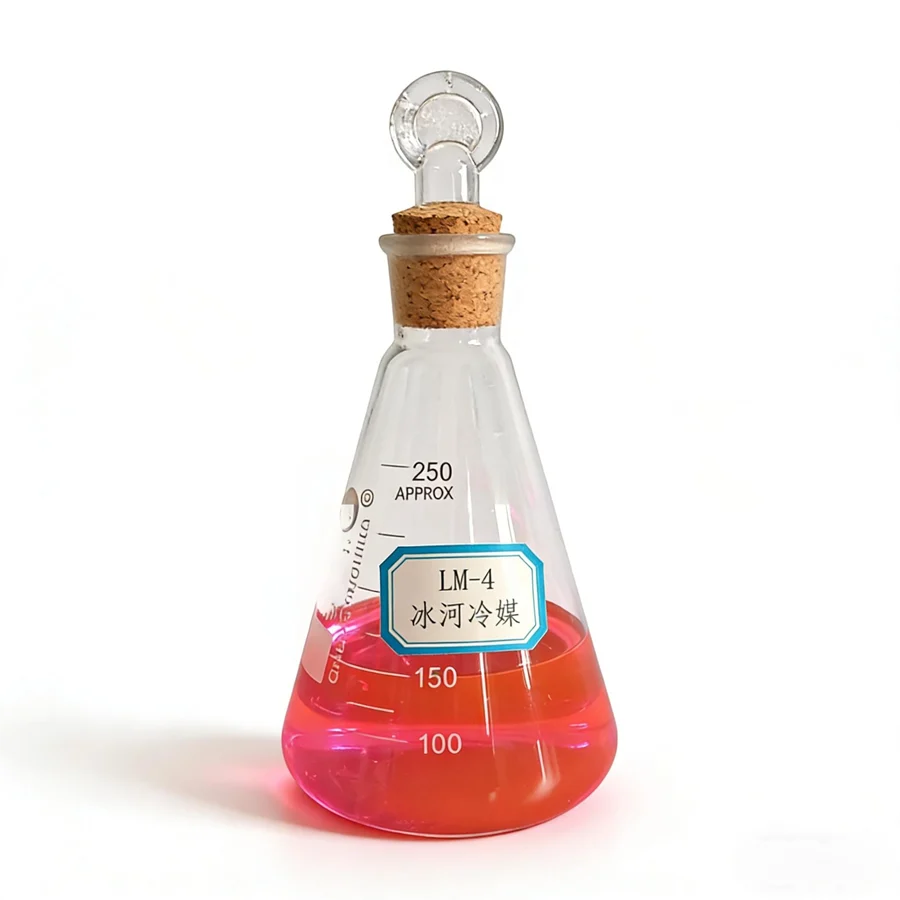
The loop fluid's role in a recovery scheme is to move heat without losing it and without degrading faster because it is warm.
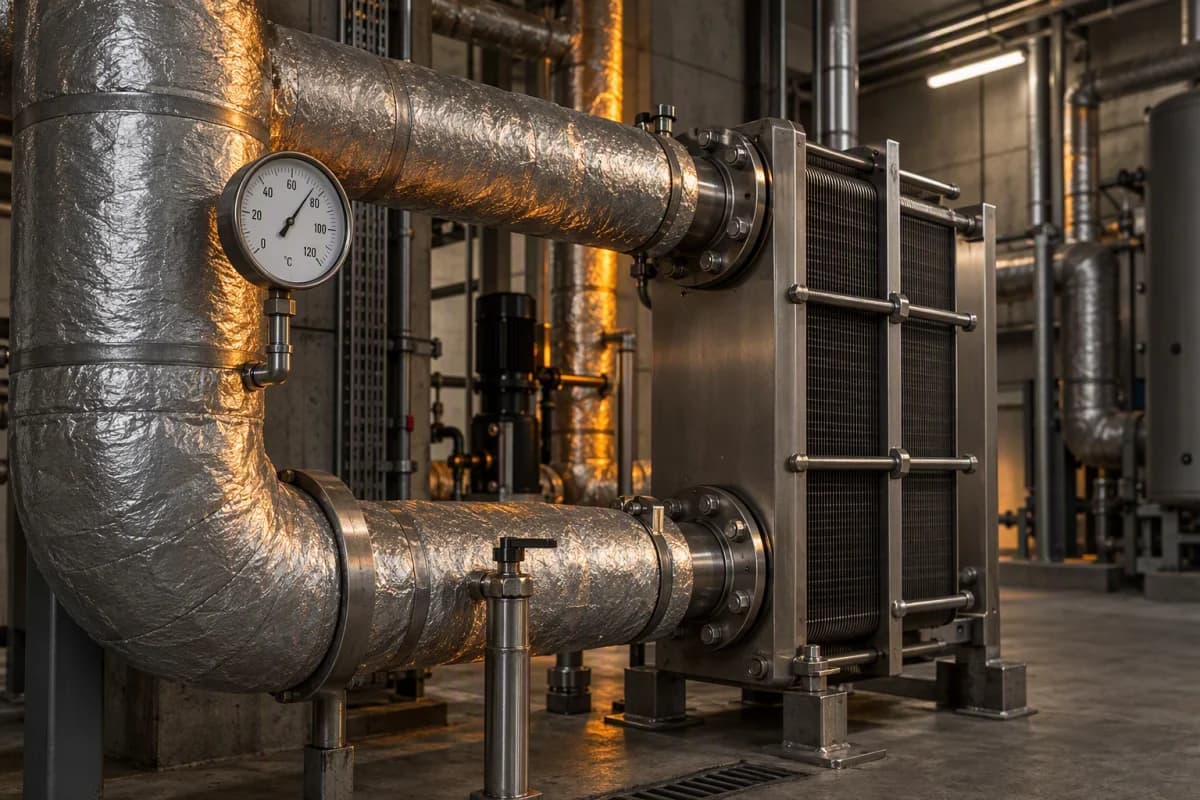
It has to operate at the recovery temperature, not just the cooling temperature. That is the point most easily missed. A loop designed to reject heat may never need to run above 45 °C. The same loop serving a recovery circuit may be asked to run hotter in order to deliver useful heat — and the fluid, the seals, the hoses and the heat exchanger all have to be rated for that higher figure.
Its stability has to hold at that temperature. Corrosion and oxidation rates rise with temperature, and inhibitor consumption rises with them. A fluid that would hold its specification for years in a cool loop is working harder in a warm one.
It has to be compatible with both circuits. If the recovery side is a separate circuit — which it usually should be, so that building-side water quality cannot contaminate the compute loop — then there is a heat exchanger between them, and its materials are in contact with both fluids.
The data-centre grades in the range are designated across 0 to +80 °C, which leaves headroom above the temperatures a warm-water loop normally reaches. The full operating window, including any period when the loop runs hotter to serve recovery, is what the selection has to cover.
Storing the heat to match supply with demand
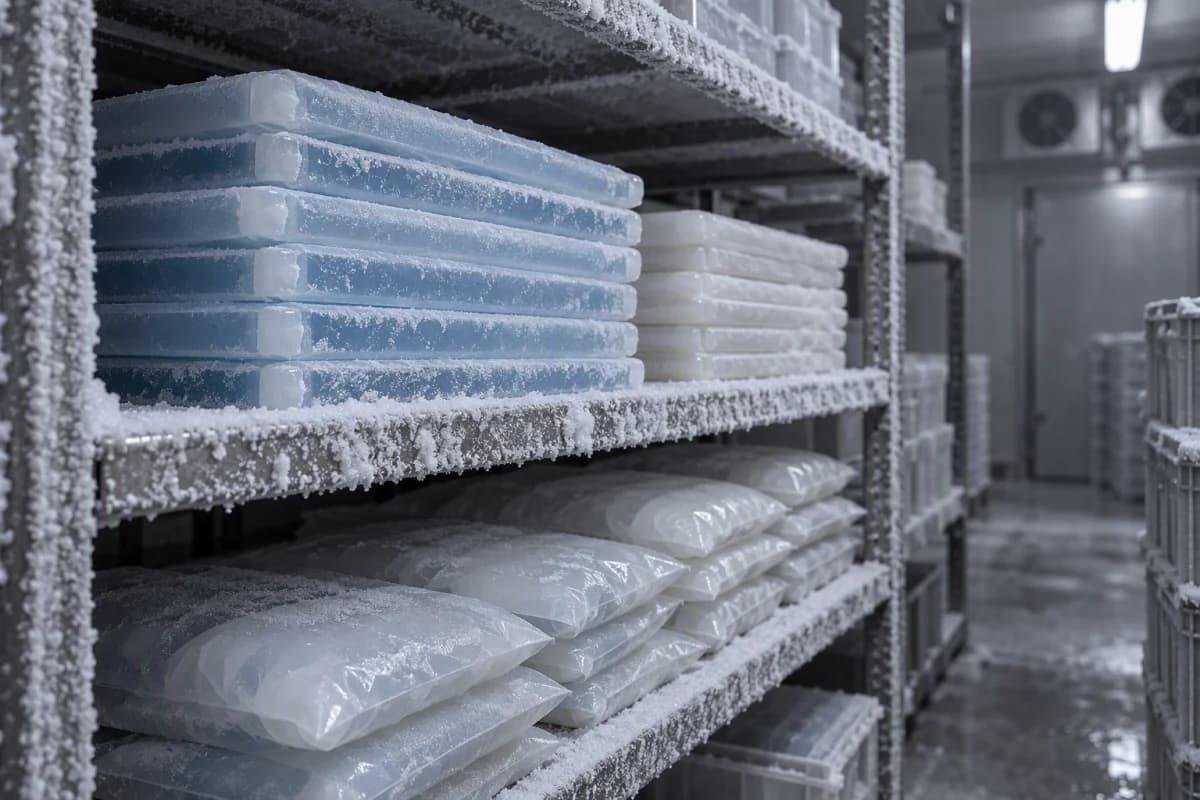
A facility produces heat continuously. Most heat buyers do not want it continuously. That mismatch is what a thermal store addresses, and it is why phase-change materials appear in these schemes at all.
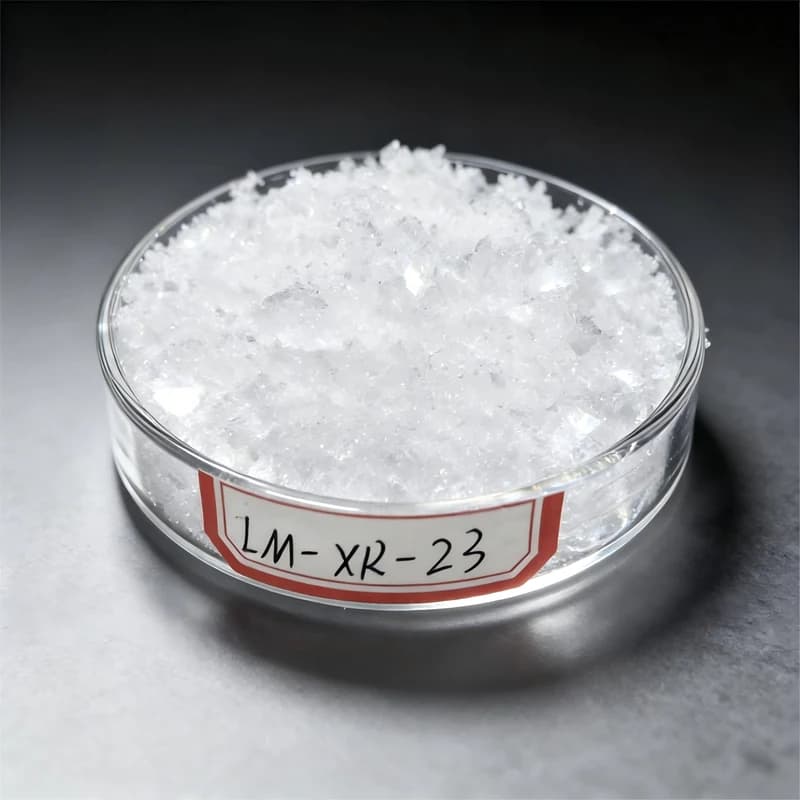
The heat-storage grades in the range transition between +7 and +55.5 °C — which brackets the temperatures a liquid-cooled facility produces:
| Grade | Transition temperature | Latent heat (kJ/kg) |
|---|---|---|
| LM-XR-7 | +7 °C | 154.0 |
| LM-XR-36 | +36 °C | 294.1 |
| LM-XR-53 | +53 °C | 268.9 |
| LM-XR-55 | +55.5 °C | 206.4 |
Note the spread in latent heat across the series. The +7 °C grade stores less than half what the +36 °C grade does, which means a store at the low end of the range needs substantially more material for the same energy. That is a sizing consequence, not a quality judgement — the transition temperature still has to suit the duty. The arithmetic for arriving at a mass is set out in how much phase-change material do I need.
The question that decides the project
Every recovery scheme comes down to one question that has nothing to do with the fluid: is there a buyer, and does their demand coincide with your output?
Three situations recur, and they are not equally favourable:
- A nearby continuous demand — a district heating network, a greenhouse, a swimming pool with steady draw. The best case, because supply and demand track each other and little storage is needed.
- An intermittent demand — a process that needs heat in batches. Workable, but it needs either storage or a rejection path that carries the load in between.
- No demand, or a distant one — the heat is available and there is nowhere for it to go. This is the common case, and no amount of fluid or material selection changes it.
That third case is why the rejection path has to stay sized for the full load. A recovery circuit is an addition to heat rejection, and a scheme designed on the assumption that recovery will always be available will underperform in exactly the conditions it was built for.
What to establish before specifying anything
Four figures, and three of them come from outside the cooling system:
- The facility's return temperature at the point where heat would be extracted, across the load profile rather than at one operating point.
- The receiving system's required temperature, and how much of the year it needs it.
- The timing overlap between the two, which decides whether a store is needed and how large.
- The full-load heat rejection capacity that remains necessary for the hours when recovery cannot take the heat.
Those four decide whether a recovery scheme is worth building, what the fluid has to tolerate, and whether a thermal store earns its place. The fluid selection follows from them — it is the medium, not the decision, and the same thermal storage principles apply to sizing the store as to any other.
QUICK CLARIFICATIONS
Common questions.
At what temperature does waste heat become worth recovering?
It depends entirely on what the other end can accept. Domestic hot water and low-temperature district heating networks can take heat in the fifties or above; older district networks designed around higher supply temperatures can take less of it usefully; process pre-heat and space heating have their own thresholds. The number that matters is not the facility's return temperature in isolation but the gap between it and what the receiving system needs — a warm loop at 45 °C and a network that wants 70 °C is not a match without a heat pump in between.
Does recovering heat change the cooling fluid?
It can, because it raises the top of the temperature window the fluid has to survive. A loop that only rejects heat may never exceed 45 °C; the same loop serving a recovery circuit may be asked to run hotter to deliver useful heat, and it may sit at temperature for long idle periods when the compute load is low but the recovery demand is not. Neither of those is a reason to avoid recovery, but both belong in the specification rather than being discovered afterwards.
What is the phase-change material for in a heat-recovery scheme?
It decouples the two sides in time. A facility produces heat continuously; many heat buyers want it on a schedule. A store that charges when heat is available and discharges when it is wanted bridges that mismatch, and the grades that transition between +7 and +55.5 °C sit across the temperatures a liquid-cooled facility produces. Whether a store earns its capital cost depends on how badly the timing mismatch hurts — which is a site question, not a materials one.
What happens to the heat when nobody wants it?
It is rejected, exactly as before. That is why a recovery scheme is an addition to the heat-rejection path rather than a replacement for it: the dry cooler or chiller still has to handle the full load whenever the recovery circuit cannot take it. Sizing the rejection path on the assumption that recovery will always be available is one of the ways these projects underperform.
CHECK THE SOURCE
References & scope.
- Glacier catalogue — LM-XR heat-storage grades, phase transition temperatures, latent heat and density (Table 19)
- Glacier catalogue — LM-4 series models designated for data centres (Table 4)
- Network World — warm-water liquid cooling at a 45 °C supply temperature and dry-cooler heat rejection
- NYSERDA — sector coupling between data centres and district energy, including European waste-heat reuse requirements
Obtain the relevant TDS, SDS and technical approval before use.
How we prepare our content