How much phase-change material do I need?
Phase-change material is sized from the energy it must hold, divided by its latent heat. See how the arithmetic runs, and where the usable capacity is lost.
THE SHORT ANSWER
What you need to know.
Start from the energy the store has to hold, then divide by the material's latent heat. A store that must absorb 2 kW for 12 hours needs 86,400 kJ; a material with a latent heat of 307 kJ/kg needs about 281 kg of it, before any allowance for containment or losses. Two things follow that are easy to miss: the amount is set by the duty, not by the material's quality, and not all of the nominal latent heat is recoverable in a real container.
- Energy required is load multiplied by hold time; mass is that energy divided by latent heat.
- Ice has a higher latent heat than most formulated materials — the reason to choose one is its transition temperature, not its energy density.
- Nominal latent heat is a property of the material, not of the packaged unit. Containment and incomplete discharge both reduce what you get.
The arithmetic is short
Sizing a phase-change store comes down to two steps, and neither needs software.
First, work out the energy the store must hold. Multiply the load by the time it has to be carried. A store absorbing 2 kW for 12 hours holds:
2 kW × 12 h = 24 kWh = 86,400 kJ
Second, divide by the material's latent heat. For a grade with a latent heat of 307 kJ/kg:
86,400 ÷ 307 = about 281 kg
That is the quantity of material. Two conversions turn it into something you can specify: the volume it will occupy, and the allowance for everything that is not the material.
Volume. Divide the mass by the density. At 1.07 g/cm³, 281 kg of LM-XL-18 occupies about 263 litres — that is the figure that has to fit inside the container, and it is usually the constraint that decides a transport or cold-room design rather than the mass.
Allowance. The rest of this section is about what the allowance covers, and why its size is a property of the container rather than of the material.
The transition temperature decides the shortlist
Latent heat is the number that sets the mass. Transition temperature is the number that decides which materials are even candidates.
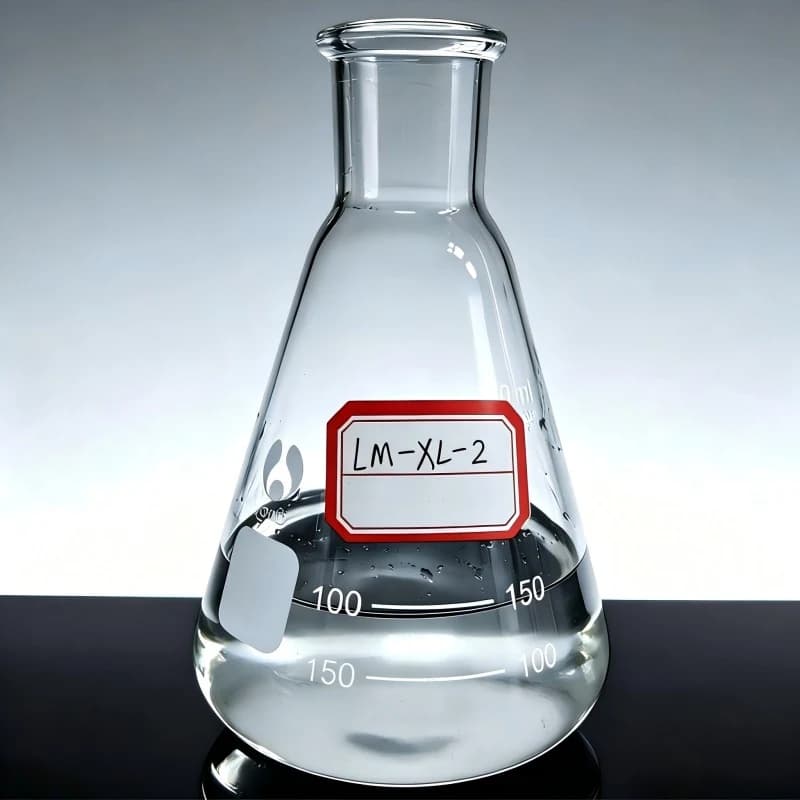
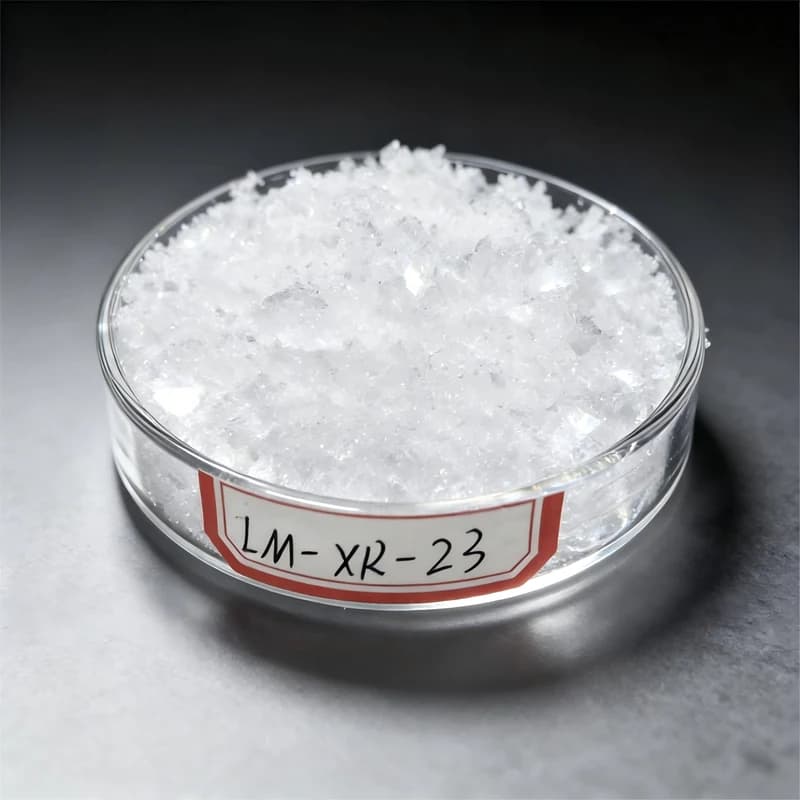
Two families cover the two directions. The cold-storage grades — LM-XL (phase-change materials for cold storage) — span nominal transition temperatures from about −24 °C to −2 °C. The heat-storage grades — LM-XR (phase-change materials for heat storage) — run from about +7 °C to +55 °C. They store in opposite directions and are not interchangeable.
Within the cold-storage series, the grades and their latent heats sit close together:
| Grade | Transition temperature (freezing) | Latent heat (kJ/kg) | Density (g/cm³) | Energy per litre (kJ/L) |
|---|---|---|---|---|
| LM-XL-2 | −2 °C | 317.4 | 1.06 | 336 |
| LM-XL-5 | −3.5 °C | 324.9 | 1.07 | 348 |
| LM-XL-10 | −11 °C | 310.7 | 1.11 | 345 |
| LM-XL-15 | −16 °C | 317.3 | 1.04 | 330 |
| LM-XL-18 | −18 °C | 307.1 | 1.07 | 329 |
| LM-XL-21 | −23 °C | 322.7 | 1.13 | 365 |
| LM-XL-24 | −26 °C | 298.1 | 1.17 | 349 |
Latent heat spans 298 to 325 kJ/kg — about nine per cent across the whole series. Density moves in the opposite direction to latent heat, so the energy carried per litre is tighter still. Choose the grade whose transition temperature suits the duty; the quantity it implies will be similar whichever one you pick.
The comparison with ice, done properly
Ice is the reference point everyone reaches for, and it has a genuinely high latent heat: about 334 kJ/kg. Higher than every grade in the table above.
That comparison is usually made on the wrong basis, though, because a store is constrained by the space it occupies rather than by its mass. Ice is light for a solid at 0.92 g/cm³, so a litre of it carries about 306 kJ. The cold-storage grades run from 329 to 365 kJ/L — all of them ahead, because they are between four and twenty-seven per cent denser than ice.
So the picture depends on which constraint binds:
| Basis | Ice | LM-XL grades |
|---|---|---|
| Energy per kilogram | 334 kJ/kg | 298–325 kJ/kg |
| Energy per litre | 306 kJ/L | 329–365 kJ/L |
On mass, ice is slightly ahead. On volume — the constraint that usually decides how much fits in a transport container or a cold room — the formulated grades win.
There is a second difference, and for most applications it settles the matter before the energy figures do. Ice transitions at 0 °C. If the application must hold at −18 °C, ice cannot do the job at all, and no quantity of it will change that. Any latent-heat comparison is only meaningful between materials that transition at a temperature the application can use.
That is the case for a formulated material: it puts the phase change where the product needs it, and it does so at a competitive energy density per litre. See choosing a phase-change material for cold-chain temperature control for how the temperature target is established.
Where the usable capacity goes
The 281 kg figure above assumes every joule of nominal latent heat is available. In a real installation, some of it is not.
The container's mass stores nothing useful. Material has to be held in something — trays, panels, pouches, a tank. That containment has its own heat capacity and its own mass, and it counts against the payload. In a well-designed unit the penalty is small; in a poorly designed one it is not.
Discharge is rarely complete. A material that subcools can sit below its transition temperature without releasing its stored energy, which is why formulated grades carry anti-subcooling agents. Phase separation, where components of a mixture separate over cycles, has the same effect. Both are the failure modes that the composition of these materials is designed around.
Heat has to reach the material. A store that is thermally thick, or whose container has poor conductivity, will not discharge at a useful rate regardless of its capacity. The rate matters as much as the total, and it is a property of the unit rather than the material.
Cycling changes the answer over time. Capacity can decay over repeated cycles in some material classes. That is not a reason to avoid the technology, but it is a reason to ask for cycling data and to test the actual unit rather than assuming the first-cycle figure persists.
The practical consequence: size against the nominal figure, then verify against the real unit. A discharge test on the actual container, at the actual load, in the actual ambient, is what converts a calculated mass into a validated hold time.
The other side: charging
A store has to be recharged, and how that happens sets constraints the sizing calculation does not show.
A unit charged by a refrigeration plant during off-peak hours is limited by the plant's capacity and the length of the off-peak window. A unit charged by a process stream is limited by that stream's availability. Either way, the available charging time and rate may be the binding constraint on how small the store can be — and a store sized only for the discharge duty may turn out to need more capacity than the arithmetic first suggested.
That is why the load profile matters more than a single worst-case number. A profile tells you both what has to be carried and how long the store has to recharge between events.
Proving the hold time
A calculated mass is a starting point. What confirms a design is a discharge test on the actual unit, under the temperature and load the application will impose, reporting the hold time achieved rather than the capacity claimed.
Ask for the material's latent heat at the transition temperature you need, the mass of the containment, the discharge rate the unit can sustain, and any cycling data for the grade. Then test it. Thermal storage is a performance claim that is easy to make and straightforward to verify — so verify it before the store is built into a process that depends on it.
QUICK CLARIFICATIONS
Common questions.
Should I pick the grade with the highest latent heat?
Not as a first criterion. The transition temperature has to suit the application, and only grades that meet it are candidates. Among those, latent heat decides how much material you need — but the spread across a series is usually modest, and the difference is often outweighed by how completely the unit discharges and how much the container weighs.
Ice has a higher latent heat. Why use anything else?
Because ice transitions at 0 °C. If the application needs to hold at −18 °C, ice is the wrong material regardless of its energy density, and the useful comparison is between materials that transition near the temperature you need. The value of a formulated material is that it puts the phase change where the application requires it.
Is the published latent heat the capacity I can rely on?
It is the material's capacity under stated conditions, not the unit's. A packaged store adds the mass of its containment, which does not store useful energy, and it may not discharge fully — subcooling, phase separation and thermal resistance inside the container all leave some capacity unused. Size against the duty, then confirm with a discharge test on the actual unit.
Does the hold time have to be continuous?
No. If the store is recharged between events, it only has to carry the interval it actually covers. That is why the design question is the load profile rather than a single worst case: a store covering a demand peak for two hours may be far smaller than one sized for a twelve-hour outage, and both may be valid depending on what the site is protecting against.
CHECK THE SOURCE
References & scope.
- Glacier catalogue — LM-XL cold-storage grades, phase transition temperature and latent heat (Table 18)
- Glacier catalogue — LM-XR heat-storage grades, phase transition temperature and latent heat (Table 19)
Obtain the relevant TDS, SDS and technical approval before use.
How we prepare our content