Phase-change temperature is not an operating temperature
Phase-change materials are specified by a transition temperature, not a working setpoint. See how the grades differ and what to verify first.

THE SHORT ANSWER
What you need to know.
A phase-change material is described by the temperature at which it transitions, not by the temperature it will hold in your system. Freezing and melting points are printed separately for each grade, and those pairs are not identical. Confirm containment, thermal cycling behaviour, contact suitability and the required hold time before treating any transition temperature as a design setpoint.
- Freezing and melting are listed separately, because the two are not the same value.
- Latent heat figures describe the material, not the usable capacity of your containment.
- Phase-change materials serve thermal storage; circulating heat transfer fluids serve the loop.
A transition temperature describes a material, not a setpoint
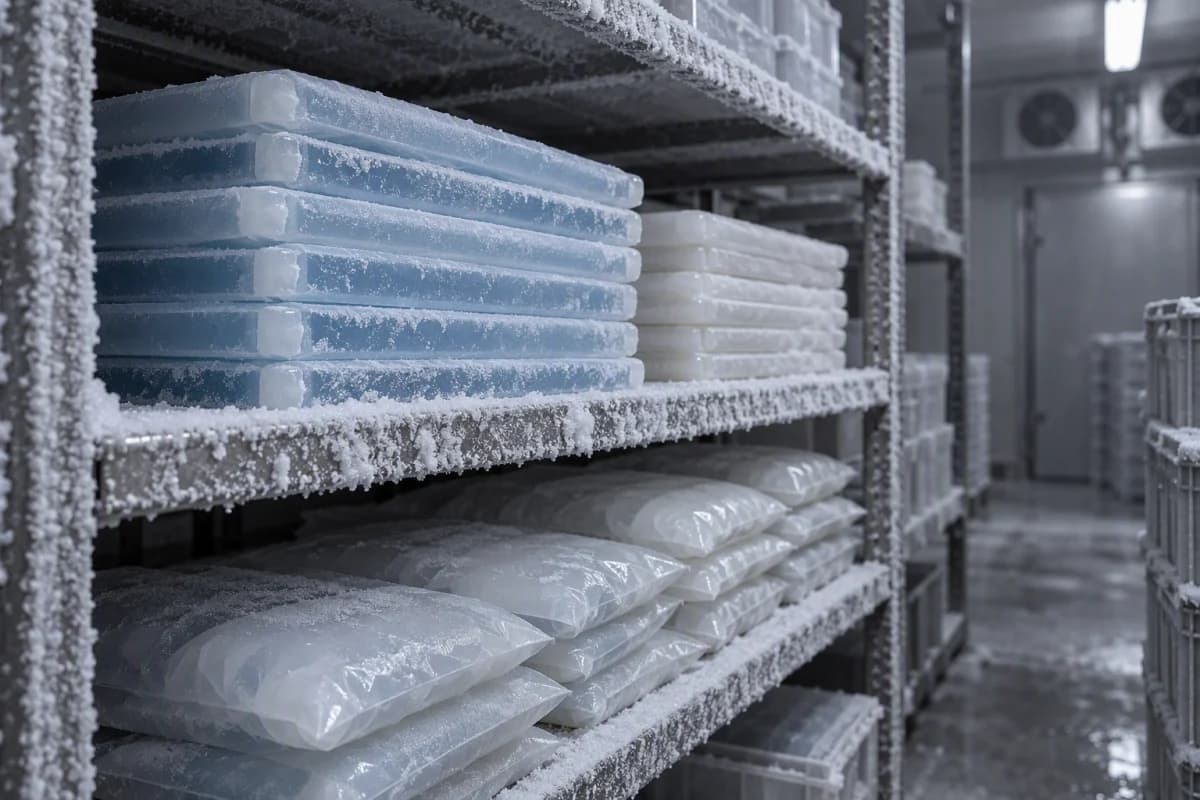
Phase-change materials have become a standard answer to two different problems at once: holding a temperature steady without continuous refrigeration, and shifting electrical load away from a peak. The appeal is genuine — a material that absorbs and releases energy at a near-constant temperature stores far more usable cooling per unit volume than simply chilling water.
The misreading that follows is almost as standard. A data sheet says a material transitions at 5°C, the project needs 2°C to 8°C, and the transition temperature gets written into the specification as though it were a thermostat setting. It is not. A transition temperature is a property of the material. The temperature your product or your room actually holds is a property of the whole system: the containment, the load, the surface area available for heat exchange, and how far the working temperature has to move to drive the energy in and out.
The practical consequence is that phase-change storage has to be verified as a system, not selected from a table. The two phase-change families differ in direction, and the questions below decide whether a grade will do the job.
What the data actually shows
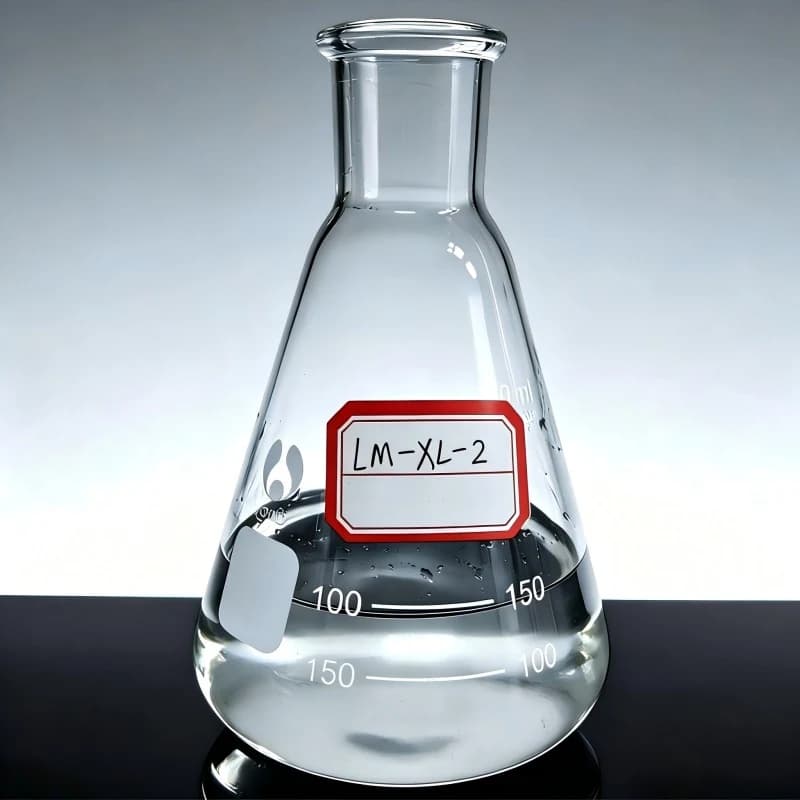
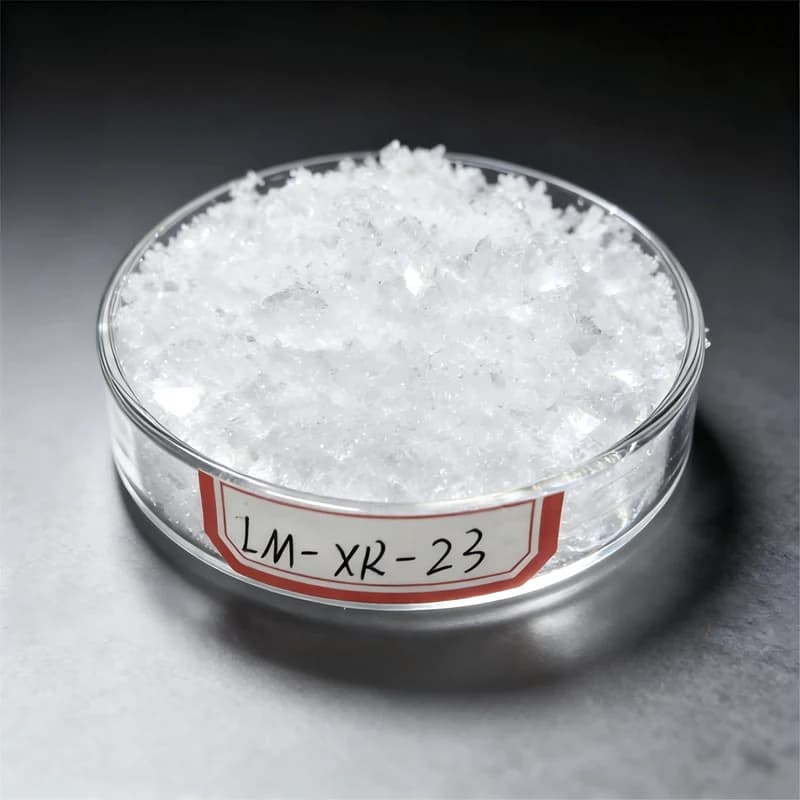
The phase-change range splits by direction. The LM-XL series is described for cold storage, controlling phase change at temperature nodes between −24°C and −2°C. The LM-XR series is described for heat storage between 7°C and 55°C. Both are described as composed of main energy storage agents, phase-change adjusting agents, anti-subcooling agents, anti-phase-separation agents and inducing agents — a composition list that itself tells you what the material class struggles with.
The cold-storage grades are listed with freezing point and melting point as separate columns:
| Model | Freezing (°C) | Melting (°C) | Latent heat (kJ/kg) |
|---|---|---|---|
| LM-XL-2 | −2 | −2 | 317.4 |
| LM-XL-10 | −11 | −10.5 | 310.7 |
| LM-XL-15 | −16 | −15.5 | 317.3 |
| LM-XL-18 | −18 | −18 | 307.1 |
| LM-XL-21 | −23 | −21.5 | 322.7 |
| LM-XL-24 | −26 | −24 | 298.1 |
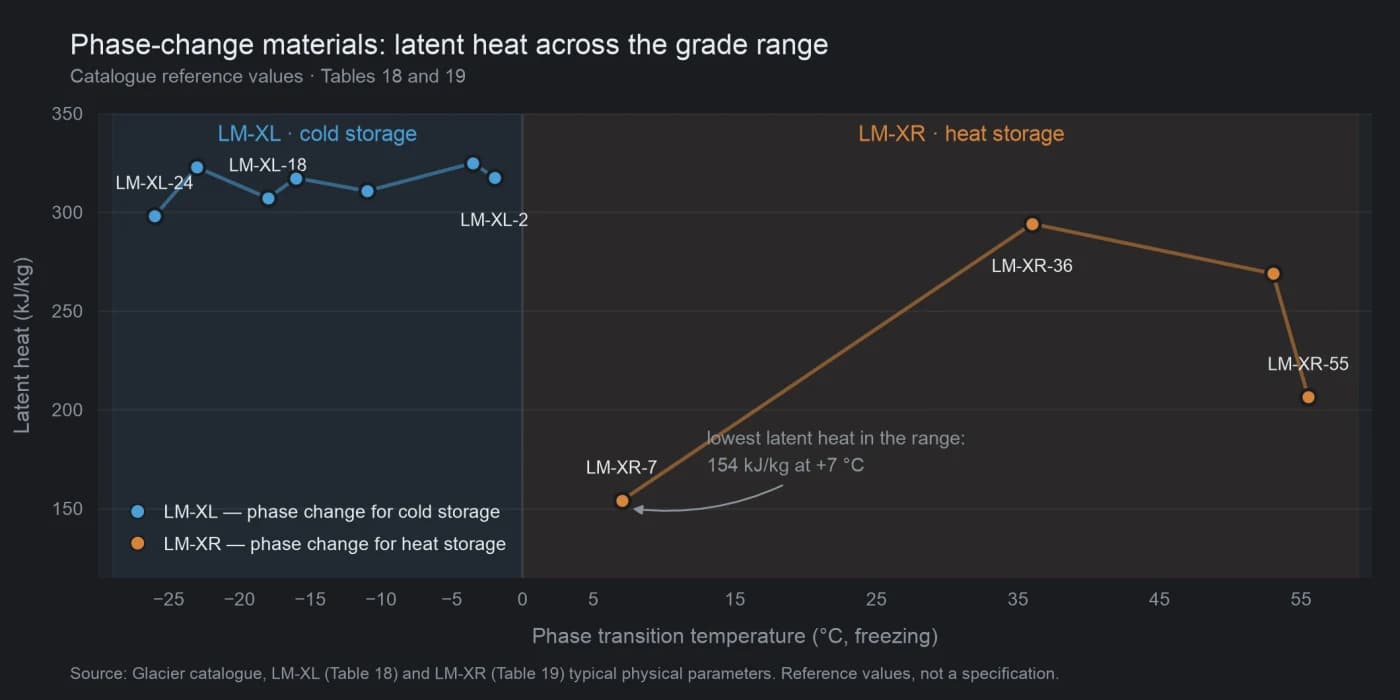
Look at the gaps rather than the headline numbers. LM-XL-24 freezes at −26°C and melts at −24°C. LM-XL-21 freezes at −23°C and melts at −21.5°C. Those two-degree spreads are ordinary behaviour for this class of material, and they are exactly why charging and discharging conditions cannot both be set to a single number.
The heat-storage grades follow the same layout:
| Model | Freezing (°C) | Melting (°C) | Latent heat (kJ/kg) |
|---|---|---|---|
| LM-XR-7 | 7 | 7 | 154.0 |
| LM-XR-36 | 36 | 36 | 294.1 |
| LM-XR-53 | 53 | 52 | 268.9 |
| LM-XR-55 | 55.5 | 55.5 | 206.4 |
Two things stand out here. First, LM-XR-53 shows a one-degree gap while its neighbours do not, so the series is not uniform in behaviour. Second, latent heat varies by nearly a factor of two across the range — from 154.0 to 294.1 kJ/kg. A grade chosen for its transition temperature may be a materially poorer energy store than a neighbour a few degrees away.
Plotted together, both series show the spans they cover and how latent heat moves across them:
Reading the tables without over-reading them
Two details in the footnotes are worth more attention than the main figures.
The LM-XR table states thermal conductivity and specific heat at 25°C, while the LM-XL table states them at 20°C. Comparing a column across the two series therefore compares measurements taken at different temperatures. That is not a criticism of the data; it is a reminder that a property table is a set of conditions, and copying a number out of its column is the easiest way to misuse it.
The second detail concerns a grade that is printed but not published. LM-XL-5 appears in the full data with a freezing point of −3.5°C and a melting point of −5.5°C — the only grade in the series where freezing is recorded as warmer than melting. Every other grade behaves the other way. That pattern is more consistent with a transcription or definition problem than with a genuine material property, so the grade is held out of the published tables until the discrepancy is clarified with the manufacturer.
That decision is the useful precedent for a buyer. When a data point does not fit the behaviour of everything around it, the right response is a written question to the supplier, not an assumption about which value is correct.
What to ask instead of a transition temperature
The materials-science literature on this class of material explains why the questions below matter. Published work on salt-hydrate phase-change composites has documented subcooling — a freezing point that can sit tens of degrees below the melting point in an unmodified material — alongside measurable decay in energy storage capacity over repeated cycles, and phase separation in some formulations. The Glacier compositions list anti-subcooling and anti-phase-separation agents, which is precisely the industry response to those two failure modes.
None of that establishes how a specific Glacier grade behaves over 1,000 cycles. Cycling behaviour has to be confirmed for the grade you intend to use. The questions to put to the supplier:
- What is the achievable hold, not the transition point? Describe the load, the containment and the ambient profile, and ask for the working temperature range the system will actually hold.
- What is the freezing-to-melting spread? It is printed, and it governs how you set charging and discharging conditions.
- How does the grade behave over repeated cycles? Ask for cycling data and the test conditions behind it.
- What containment is specified, and what does it contact? These are storage materials held in a vessel, not circulating fluids. Material compatibility, corrosion and sealing need confirming for the vessel and anything it touches.
- Can a short comparative trial be run? A small test in your own containment, with a temperature logger, answers more than a datasheet comparison.
- What is the hazard classification and transport requirement? Phase-change materials have their own handling and transport obligations.
Establishing the hold time
No grade recommendation and no hold time can be given without the application details. Hold time depends on the load profile, the containment, the ambient conditions and how the unit is charged — all four specific to your installation, and all four to be established in the design.
It also does not claim that phase-change storage will save a given percentage of energy, shift a given peak, or pay back in a given period. Deployed installations exist in cold storage, ice-and-snow facilities and valley-power cooling, and the payback case varies enormously with the local tariff. If you are building that case, treat the transition temperature as one input among several, and confirm the system-level performance with the containment supplier before committing to a specification. The food and cold chain solution page sets out where these materials fit alongside dedicated secondary coolants.
QUICK CLARIFICATIONS
Common questions.
Can I design a 2°C to 8°C hold using a material that transitions at 5°C?
Not from the transition temperature alone. The material has to be charged and discharged across a temperature difference, so the working temperature drifts away from the transition point. Confirm the achievable hold with the containment and load your project actually uses.
Why are freezing and melting printed as two columns?
Because they differ. Several grades show a gap of up to two degrees between the two, which is normal behaviour for this class of material and directly affects how you set charging and discharging conditions.
Are Glacier phase-change materials circulating fluids?
No. They are described for storing and releasing thermal energy through phase change, held in a containment system. The LM circulating heat transfer fluids serve the loop.
CHECK THE SOURCE
References & scope.
- Glacier catalogue — LM-XL phase-change materials for cold storage (Table 18)
- Glacier catalogue — LM-XR phase-change materials for heat storage (Table 19)
- PMC — Thermal properties and stability of sodium sulfate decahydrate phase-change composites
- US Department of Energy / Oak Ridge National Laboratory — Phase-change material cost and energy-density review
Obtain the relevant TDS, SDS and technical approval before use.
How we prepare our content