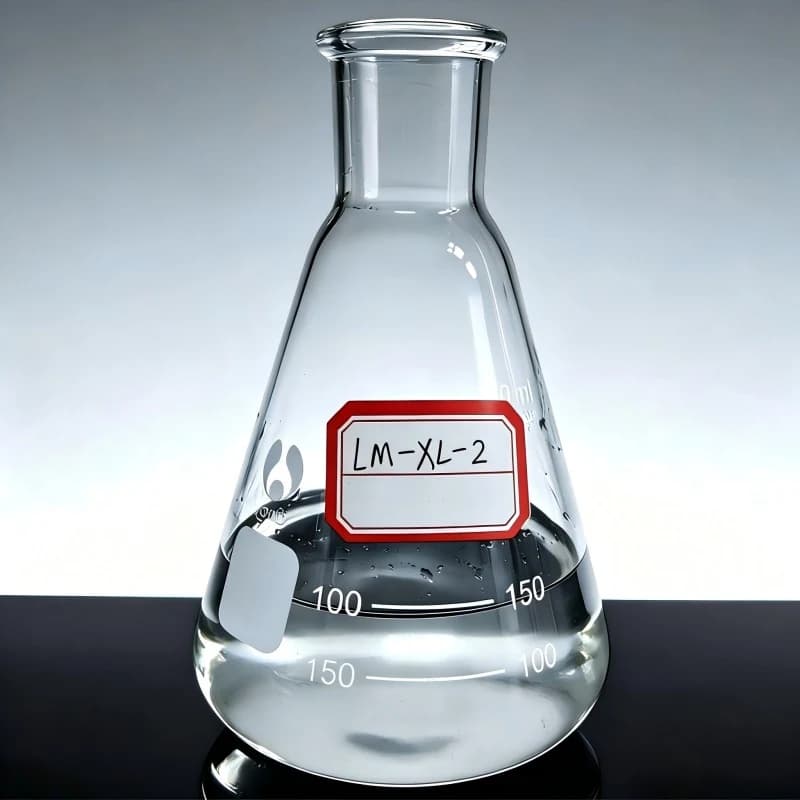
Select the phase-change grade
Start with the required temperature band, then review latent heat and charging conditions. LM-XR-7, 36, 53 and 55 are distinct material options, not one continuous fluid range.
Phase-change materials
Materials for storing and releasing thermal energy through solid-liquid phase change, with applications including waste-heat recovery, solar thermal storage and building temperature control.
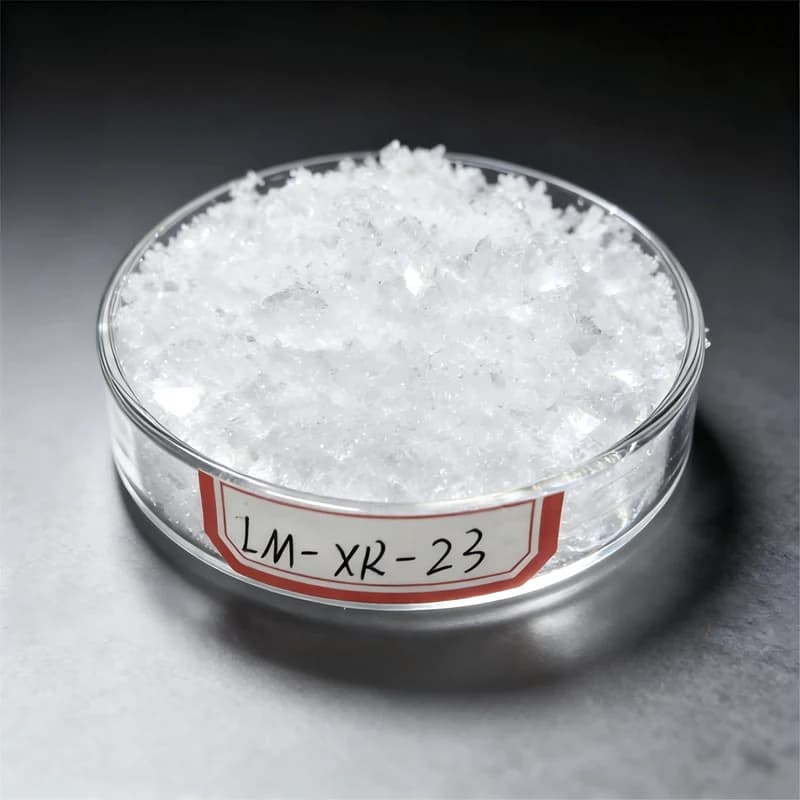
Formulated phase-change energy storage materials
| Model | Freezing point (°C) | Melting point (°C) | Latent heat (kJ/kg) | Density at 20°C (g/cm³) | Thermal conductivity at 25°C (W/m·K) | Specific heat at 25°C (cal/g·°C) |
|---|---|---|---|---|---|---|
| LM-XR-7 | 7 | 7 | 154.0 | 1.40±0.10 | 0.609 | 0.802 cal/(g·°C) = 3.36 kJ/(kg·K) |
| LM-XR-36 | 36 | 36 | 294.1 | 0.75±0.05 | 0.913 | 0.504 cal/(g·°C) = 2.11 kJ/(kg·K) |
| LM-XR-53 | 53 | 52 | 268.9 | 0.80±0.05 | 0.474 | 0.400 cal/(g·°C) = 1.67 kJ/(kg·K) |
| LM-XR-55 | 55.5 | 55.5 | 206.4 | 0.80±0.05 | 0.401 | 0.496 cal/(g·°C) = 2.08 kJ/(kg·K) |
Thermal conductivity and specific heat are printed at 25°C for this series, not at 20°C as for the other tables.
Reference values from the Chaoyang Guangda LM catalogue — typical figures rather than guaranteed limits. Confirm the exact model and concentration on the current model TDS before specifying.
View source: catalogue p.34 (PDF p.38)Confirm containment, thermal cycling and system compatibility for the thermal-storage duty.
FROM FORMULATION TO APPLICATION
The LM-XR product references describe solid–liquid thermal storage for cold-chain logistics, air conditioning and electronic-component temperature control, depending on the grade.
Start with the required temperature band, then review latent heat and charging conditions. LM-XR-7, 36, 53 and 55 are distinct material options, not one continuous fluid range.
Discuss encapsulation, material compatibility and cycling requirements. Confirm the storage-system design and supporting test data before making performance commitments.
LM-XR-7 · LM-XR-36 · LM-XR-53 · LM-XR-55
Application notes are adapted from Glacier’s original product information. Unless a table states otherwise, numeric specifications follow the supplied catalogue. For the confirmed specification, obtain the current model-specific TDS and SDS. Links below point to the original source pages, not new technical documents.
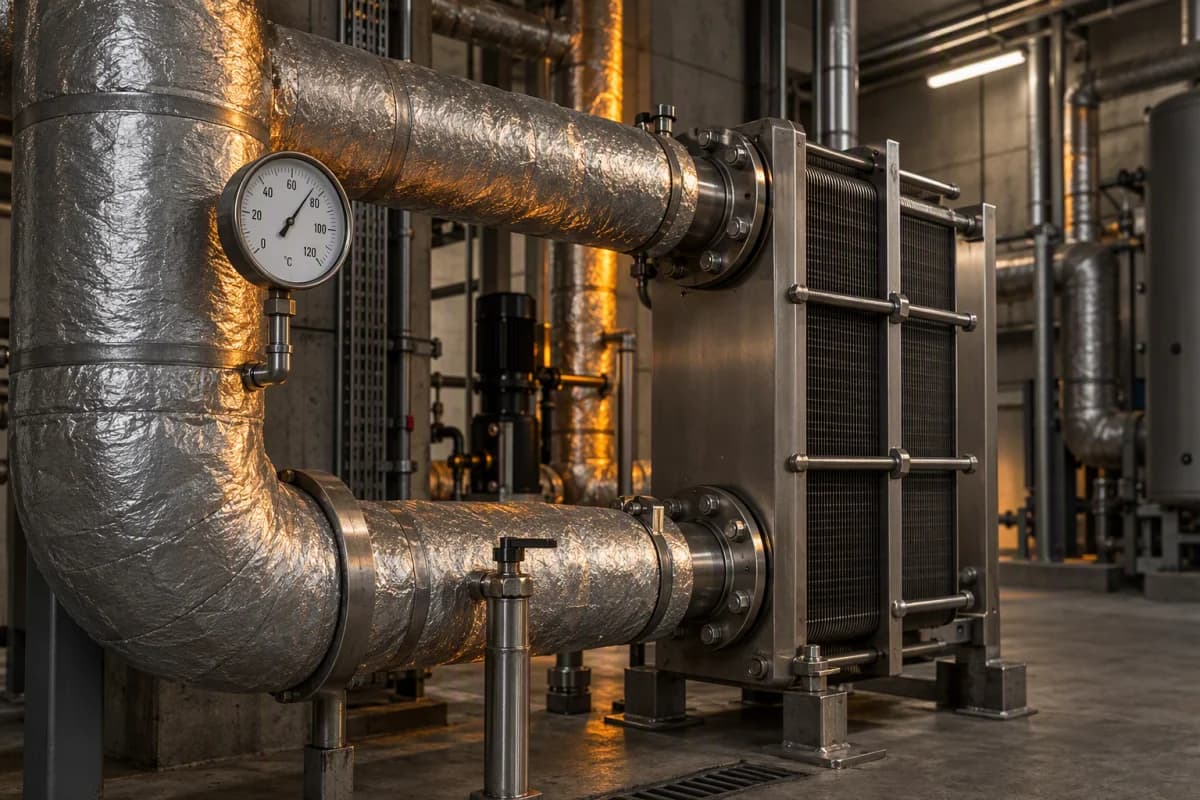
Warm liquid cooling produces heat at a temperature worth recovering. See what that asks of the fluid, the loop architecture and the storage medium.
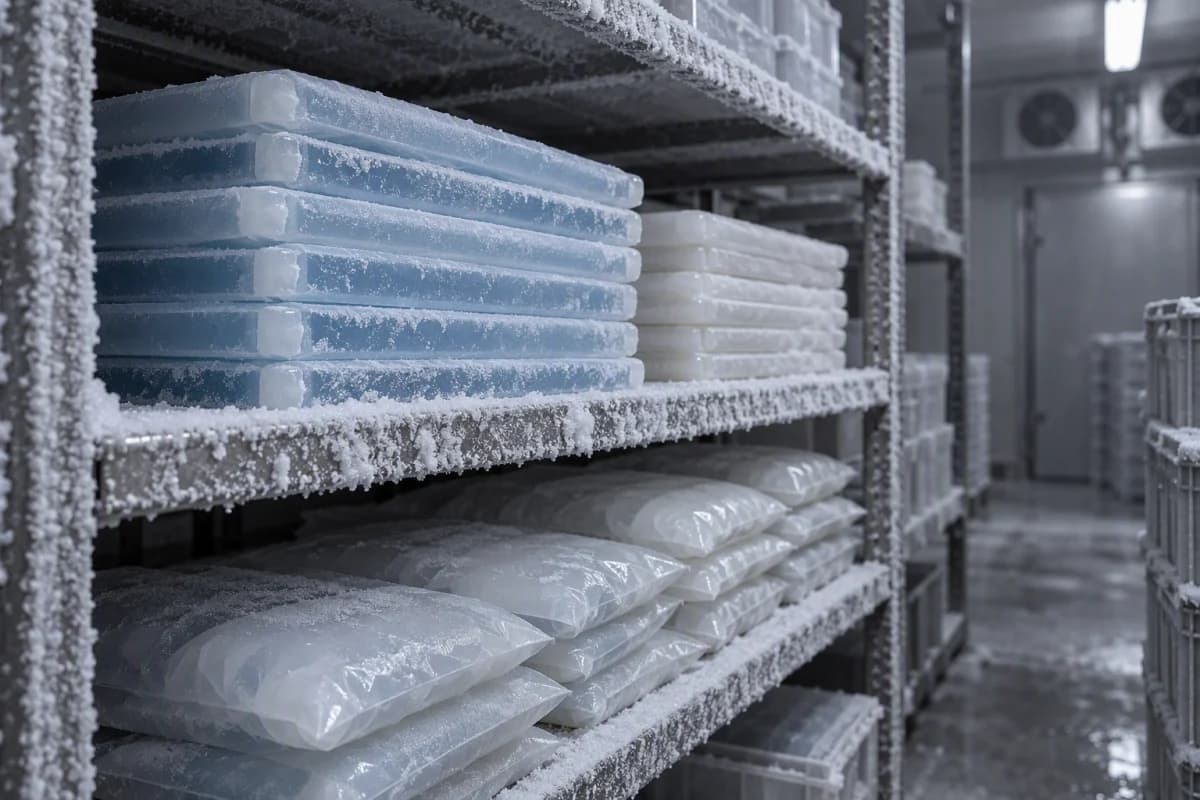
Phase-change material is sized from the energy it must hold, divided by its latent heat. See how the arithmetic runs, and where the usable capacity is lost.
CONTINUE EXPLORING