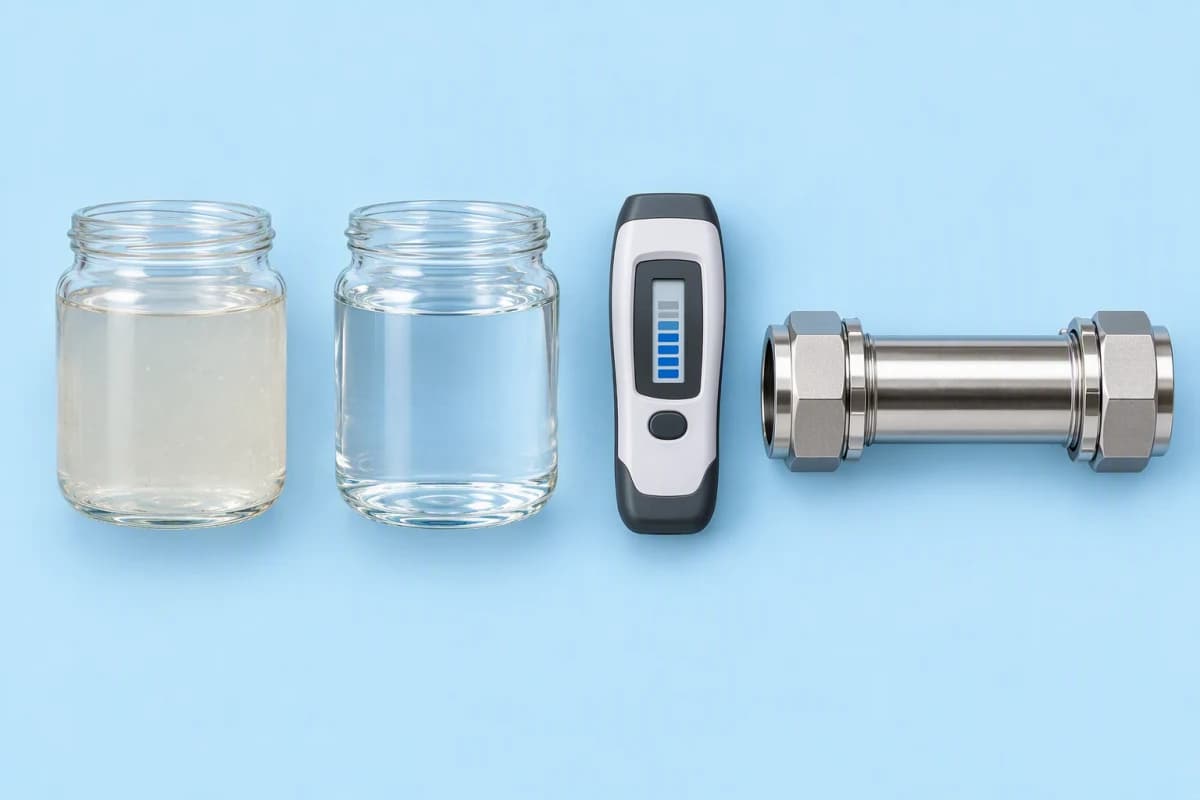
Immersion cooling fluids: what to confirm beyond breakdown voltage
A dielectric fluid's datasheet leads with breakdown voltage, but pour point, viscosity, flash point and material compatibility are the properties that decide whether it works.
THE SHORT ANSWER
What you need to know.
Breakdown voltage confirms that a fluid can insulate, but it does not confirm that the fluid will circulate at the tank's lowest temperature, remain stable over thousands of hours of contact with server materials, or meet the flash-point requirements of the facility. Compare pour point, viscosity, flash point, material compatibility and the system's atmosphere before shortlisting an immersion coolant.
- Breakdown voltage is one electrical property among several; equipment approval comes from the equipment vendor.
- Pour point describes the lowest temperature at which the fluid will flow, not the lowest temperature at which the system should operate — a margin is required.
- A two-phase boiling system and a single-phase immersion system each take a fluid specified for that duty.
The number on the first page of the datasheet
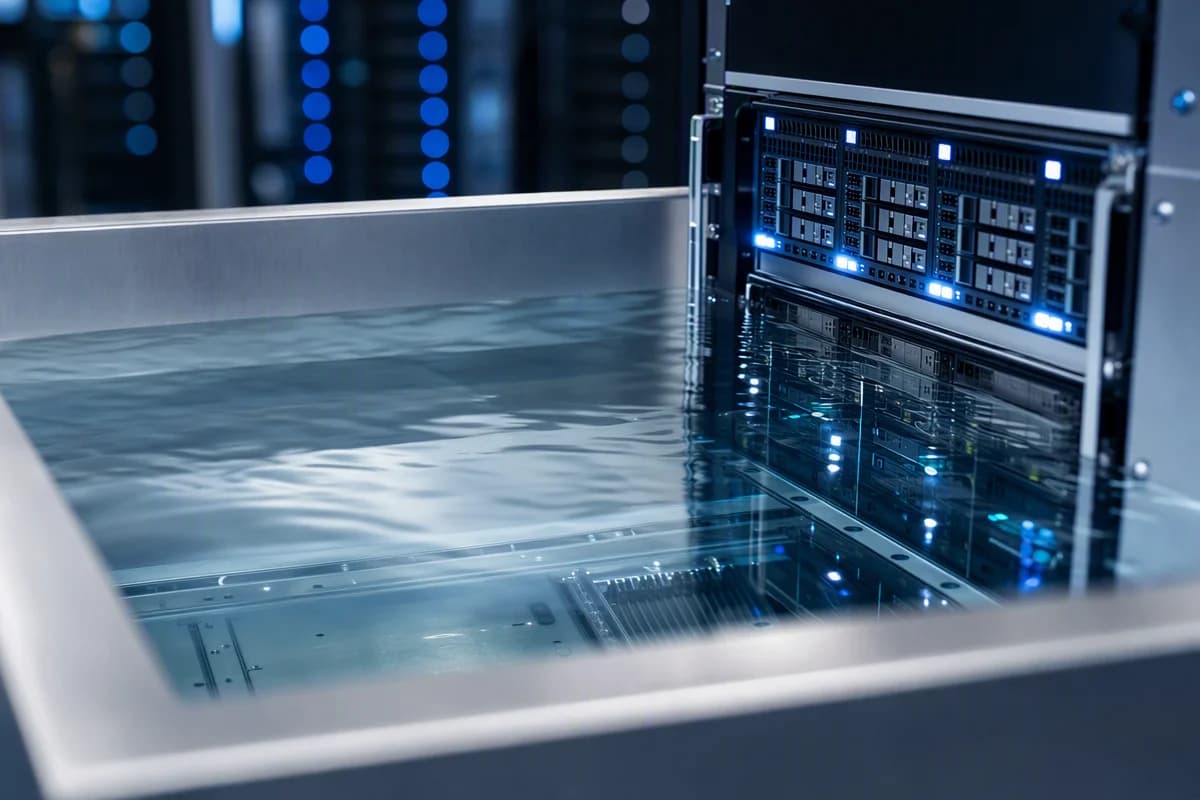
An immersion cooling tank is filled with a dielectric liquid, and the term for it varies by supplier and by site: immersion cooling fluid, immersion cooling liquid, dielectric coolant. Whichever name is used, the properties that decide whether it works are the same, and the first property that usually gets compared is the breakdown voltage. It is easy to understand — a higher number means better insulation — and it appears prominently on every dielectric fluid datasheet.
The problem is that a breakdown voltage figure, taken in isolation, tells you almost nothing about whether the fluid will work in a real tank over a real service life. It is one electrical property measured under one set of laboratory conditions. It does not tell you whether the fluid will circulate at the tank's cold-start temperature. It does not tell you whether it will remain chemically stable after two years of contact with server materials at operating temperature. And it does not tell you whether it meets the fire-safety requirements of the facility in which the tank sits.
Breakdown voltage is only one of the properties that decide whether a fluid works, and the two electronics-cooling families differ on the rest. It does not claim either family is approved by any equipment vendor, and it does not recommend a fluid for a specific tank design.
Three properties that belong in the same comparison
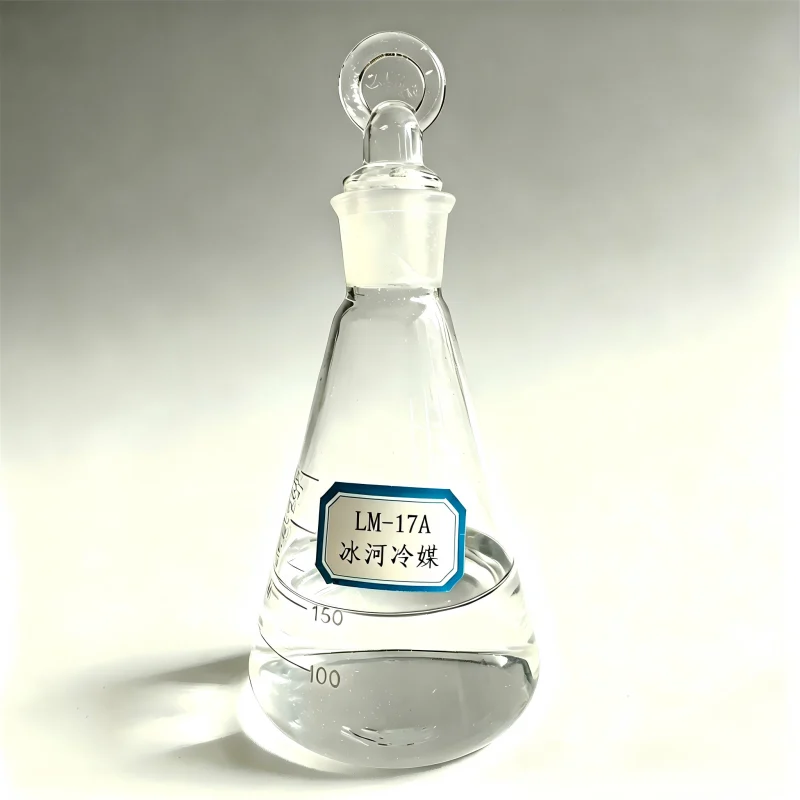
The LM-17 series consists of modified hydrocarbons, developed for server immersion cooling. The fluids are stated to have high breakdown voltage, high DC resistivity, good thermal and oxidative stability, resistance to yellowing and no corrosive sulfur. Three models are offered:
| Model | Breakdown voltage | Pour point | Viscosity at 20 °C | Flash point |
|---|---|---|---|---|
| LM-17A | 65.6 kV | ≤ −50 °C | 21.13 cP | 136 °C |
| LM-17B | 74.5 kV | ≤ −47 °C | 14.97 cP | 138.5 °C |
| LM-17C | 84.3 kV | ≤ −40 °C | 3.42 cP | 107 °C |
If the comparison is made on breakdown voltage alone, LM-17C is the obvious choice. If viscosity at the tank's circulating temperature is included, the picture changes.
The three models differ in viscosity by a factor of more than six — 21.13 cP for the base model against 3.42 cP for LM-17C — and that difference directly affects pumping power, flow distribution within the tank and the uniformity of server temperatures. The model with the highest breakdown voltage also has the lowest flash point, at 107 °C, which determines whether the fluid satisfies the fire-safety requirements of the facility. And the model with the highest breakdown voltage has the warmest pour point, at −40 °C, which limits cold-start margin.
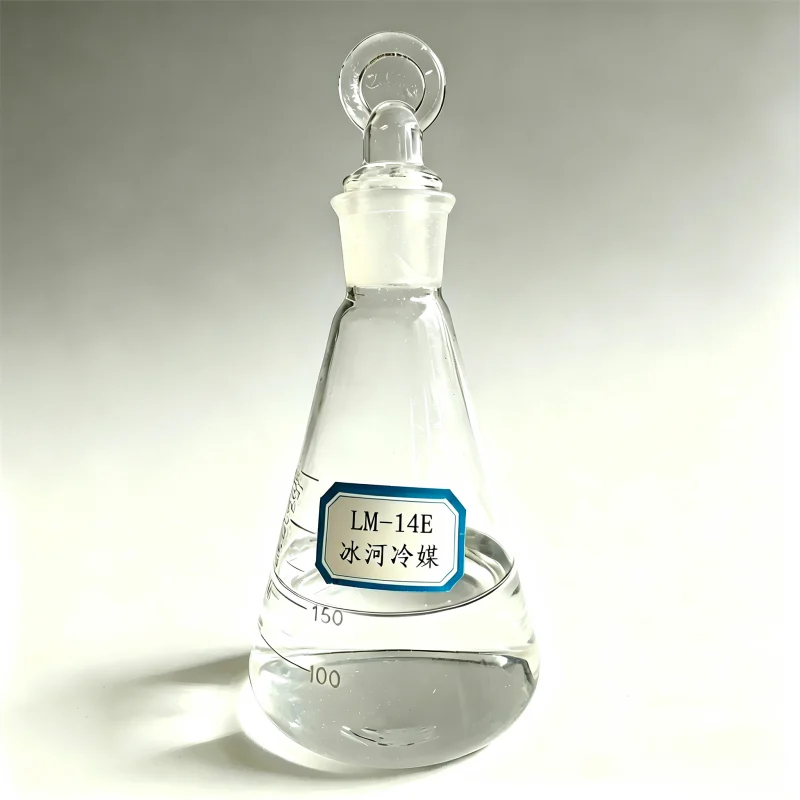
The LM-14 series takes a different chemistry route altogether, described as modified perfluorinated compounds. Six models span temperature ranges from −110 °C to +135 °C, with viscosities from 1.03 cP to 6.32 cP at 20 °C. These fluids are described for electrical insulation, chemical inertness and precision temperature control, with applications including electronics and semiconductor equipment. The comparison between LM-14 and LM-17 is therefore not a comparison of two immersion fluids; it is a comparison of two different approaches to electronics cooling, and the architecture — indirect precision loop versus direct immersion tank — decides which family applies.
Pour point is not an operating limit
The figures are pour points, not operating-temperature minima. A pour point of ≤ −50 °C for LM-17A means the fluid will flow at that temperature in a laboratory test. It does not mean the fluid will pump efficiently through a distribution manifold at −50 °C, or that the tank can be started from cold at that temperature without a pre-heat cycle.
The industry practice is to apply a margin — typically 10 °C to 15 °C above the pour point — as the practical minimum circulating temperature. Below that margin, viscosity rises to a point where pump power, flow distribution and heat transfer become unacceptable before the fluid actually stops moving. The viscosity figures, given at 20 °C, are a reference point for selection; they do not describe the fluid's behaviour at the cold end of the tank's operating envelope without additional data.
Single-phase versus two-phase — a fluid designed for one is not designed for the other
The distinction matters because the physical demands differ. A single-phase immersion fluid circulates as a liquid, removing heat by sensible temperature rise. A two-phase fluid boils at the heat source, and the condenser is designed around that boiling point.
A single-phase immersion tank and a two-phase tank each take a fluid specified for that duty. LM-17 is specified as a single-phase immersion fluid for closed systems: clean and blow-dry the system before filling, add the product directly, and keep the system closed during use to prevent moisture ingress. Treat it as single-phase only. A two-phase design needs boiling-point data and a different specification route, and it should be confirmed with the manufacturer rather than inferred from an immersion label.
The LM-14 series, by contrast, lists boiling points from 50 °C for LM-14A to 150 °C for LM-14G. Those are boiling points under the stated test conditions, and a two-phase system would need to be designed around them. LM-14 is a fluorinated heat-transfer fluid rather than an immersion fluid, and its boiling-point data should not be treated as a two-phase design specification without confirming the test conditions, pressure and single-phase versus two-phase operating mode with the manufacturer.
What to confirm before you fill the tank
- The complete electrical specification, not just breakdown voltage. DC resistivity, dielectric constant and dissipation factor matter for the components that are submerged. Confirm the test methods and the conditions under which the values were measured.
- Viscosity at the tank's lowest circulating temperature, with a margin below that for cold-start conditions.
- The flash point against the facility's fire-safety requirements. Single-phase immersion practice typically requires a flash point above the facility's maximum credible temperature, and some facility standards set a minimum above 130 °C.
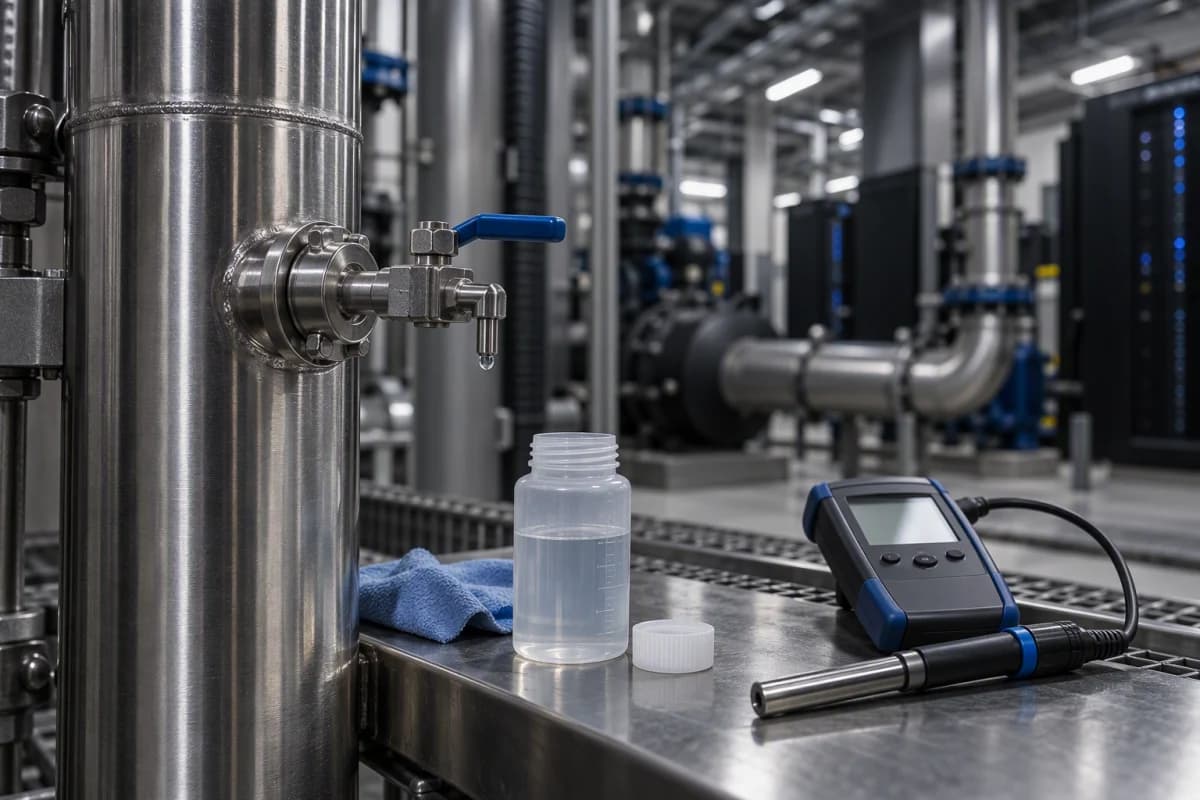
- Material compatibility with every wetted component. This includes server boards, solder, conformal coatings, connectors, cables, pump seals, tank materials, gaskets and any instrumentation in contact with the fluid. The statement that LM-17 does not contain corrosive sulfur is one compatibility claim; the full list requires the manufacturer's written confirmation.
- Thermal and oxidative stability under the tank's operating conditions. The LM-17 series is described as having good thermal and oxidative stability and resistance to yellowing. Confirm the expected service life and the monitoring programme for acid number, viscosity and appearance.
- The regulatory position of the fluid's chemistry. Fluorinated fluids are currently the subject of active regulatory proposals in multiple jurisdictions, and a fluid that is available today may be subject to reporting obligations or substitution requirements during the life of the tank. The PFAS regulation summary sets out the current state of the proposals; confirm the exact product's status before committing to a multi-year fill.
- The disposal path. Immersion fluids are a waste stream at end of life. Confirm the disposal route and cost with the supplier and the site's environmental permit.
Who decides the tank and the fluid
The fluid, the tank architecture and the operating temperature are decisions for the server vendor, the tank designer and the facility operator, and they depend on the specific hardware and operating conditions.
It also does not claim that any Glacier fluid is approved by any equipment vendor, or that a breakdown voltage figure establishes dielectric suitability for a specific server design. Equipment approval, warranty and safety certification rest with the hardware vendor, not the fluid supplier. Product data provides reference properties; the decision to use a fluid in a specific tank requires the equipment vendor's written confirmation and the manufacturer's current technical data sheet and safety data sheet.
The electronics cooling solution page sets out how these fluid families map onto the different architectures, and the indirect liquid cooling versus immersion article covers how the architecture decides which fluid questions apply.
QUICK CLARIFICATIONS
Common questions.
Is a higher breakdown voltage always better?
Not necessarily. The LM-17 series offers three models with breakdown voltages from 65.6 kV to 84.3 kV, but those three models also differ in viscosity by a factor of more than six and in pour point by ten degrees. A fluid chosen for the highest breakdown voltage may be too viscous to circulate efficiently at the tank's operating temperature.
Can I use the pour point as the minimum operating temperature?
No. Pour point is the temperature at which the fluid will just flow under laboratory conditions. The practical minimum operating temperature is higher — typically at least 10 °C to 15 °C above the pour point — to provide a pumpable viscosity and a safety margin against cold spots in the tank. Confirm the pumpable range, not just the pour point.
Can an indirect cooling fluid be used as an immersion fluid?
No. An indirect-loop fluid, even one with low conductivity, has not been assessed for long-term contact with printed circuit assemblies, solder, conformal coatings, connectors and the full range of server materials. Immersion fluids are designed and tested for that contact. LM-17 is described specifically for server immersion, separately from the indirect-loop LM-4 models.
CHECK THE SOURCE
References & scope.
- Glacier catalogue — LM-17 series immersion fluids, properties and usage (Table 15)
- Glacier catalogue — LM-14 series fluorinated fluids (Table 12)
- Alliance Chemical — Post-Novec Immersion Fluid Alternatives 2026
Obtain the relevant TDS, SDS and technical approval before use.
How we prepare our content