
Single-phase is not two-phase
Define whether the system relies on sensible heat or controlled boiling. Boiling point, electrical properties and equipment compatibility must be confirmed for the exact fluid and architecture.
Specialty coolants
Specialty fluids described for electrical insulation, chemical inertness and precision temperature control, with applications including electronics and semiconductor equipment.
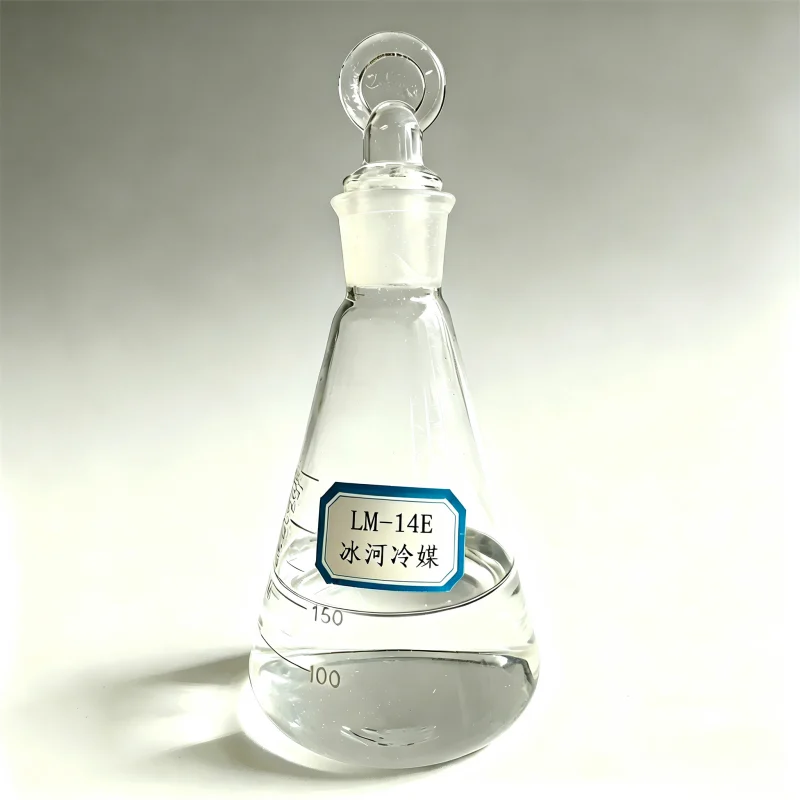
Modified perfluorinated compounds
| Model | Temperature range (°C) | Freezing point (°C) | Boiling point (°C) | Viscosity (cP) | Density (g/cm³) | Specific heat (cal/g·°C) | Thermal conductivity (W/m·K) |
|---|---|---|---|---|---|---|---|
| LM-14A | −110 to +40 | <−120 | 50 | 1.03 | 1.611 | 0.267 cal/(g·°C) = 1.12 kJ/(kg·K) | 0.060 |
| LM-14C | −110 to +50 | <−120 | 75 | 2.53 | 1.735 | 0.223 cal/(g·°C) = 0.93 kJ/(kg·K) | 0.060 |
| LM-14D | −80 to +80 | <−95 | 90 | 1.84 | 1.791 | 0.243 cal/(g·°C) = 1.02 kJ/(kg·K) | 0.067 |
| LM-14E | −55 to +100 | <−95 | 109 | 4.01 | 1.830 | 0.241 cal/(g·°C) = 1.01 kJ/(kg·K) | 0.060 |
| LM-14F | −50 to +105 | <−95 | 115 | 2.99 | 1.831 | 0.240 cal/(g·°C) = 1.00 kJ/(kg·K) | 0.063 |
| LM-14G | −25 to +135 | <−80 | 150 | 6.32 | 1.814 | 0.235 cal/(g·°C) = 0.98 kJ/(kg·K) | 0.065 |
All properties are printed at 20°C. The catalogue prints an operating range for LM-14C and lists a +60°C boiling point for LM-14B.
| Property | LM-14A | LM-14B | LM-14C | LM-14D | LM-14E | LM-14F | LM-14G |
|---|---|---|---|---|---|---|---|
| Operating range (°C) | −110 to +40 | −110 to +50 | −110 to +65 | −80 to +80 | −55 to +100 | −50 to +105 | −25 to +135 |
| Density at 20°C (g/cm³) | 1.611 | 1.721 | 1.735 | 1.791 | 1.830 | 1.831 | 1.814 |
| Boiling point (°C) | 50 | 60 | 75 | 90 | 108.5 | 115 | 150 |
| Freezing point (°C) | −120 | −120 | −120 | <−95 | <−95 | <−95 | <−80 |
| Dynamic viscosity at 20°C (cP) | 1.03 | 1.05 | 2.53 | 1.84 | 4.01 | 2.99 | 6.32 |
| Specific heat at 20°C (kJ/(kg·K)) | 1.1054 | 0.6888 | 0.9227 | 1.019 | 1.0073 | 1.0036 | 0.983 |
| Thermal conductivity at 20°C (W/(m·K)) | 0.0601 | 0.05889 | 0.05948 | 0.06648 | 0.06012 | 0.06257 | 0.06527 |
| Saturated vapour pressure at 20°C (kPa) | 32.27 | 17.748 | 16.36 | 11.09 | 5.646 | 5.641 | 8.837 |
| Dielectric constant | 1.89 | 1.82 | 1.89 | 2.03 | 2.07 | 1.92 | 3.82 |
| Dielectric strength, 0.1 in gap (kV) | 55 | >40 | 55 | >39 | >32 | >39 | 40 |
| Volume resistivity (Ω·m) | 10¹¹ | 10¹¹ | 10¹⁵ | 10¹⁵ | 10¹⁵ | 10¹⁵ | 10¹⁵ |
| Surface tension (mN/m) | 12.2 | 13.4 | 12 | 14.2 | 15 | 12 | 16.5 |
| ODP | 0 | 0 | 0 | 0 | 0 | 0 | 0 |
| Metal corrosion, as stated by the manufacturer | No corrosion to copper, carbon steel or aluminium |
From the manufacturer's data-centre application document. The operating ranges for LM-14B and LM-14C differ from the catalogue: the data-centre document pairs LM-14B with −110 to +50°C and LM-14C with −110 to +65°C, and the catalogue prints −110 to +50°C for LM-14C with a +60°C boiling point for LM-14B. Values are stated at 20°C.
Reference values from the Chaoyang Guangda LM catalogue — typical figures rather than guaranteed limits. Confirm the exact model and concentration on the current model TDS before specifying.
View source: catalogue p.25 (PDF p.29)Confirm composition, material compatibility and the electrical test method for the model you specify. Equipment approval is established by the equipment vendor.
FROM FORMULATION TO APPLICATION
The LM-14 reference discusses fluorinated fluids for electronic thermal management, including immersion and phase-change cooling concepts.
Define whether the system relies on sensible heat or controlled boiling. Boiling point, electrical properties and equipment compatibility must be confirmed for the exact fluid and architecture.
Request current technical, safety and environmental documentation. Generic website energy-saving, GWP and equipment-compatibility claims are not used as validated specifications here.
LM-14 series
Application notes are adapted from Glacier’s original product information. Unless a table states otherwise, numeric specifications follow the supplied catalogue. For the confirmed specification, obtain the current model-specific TDS and SDS. Links below point to the original source pages, not new technical documents.
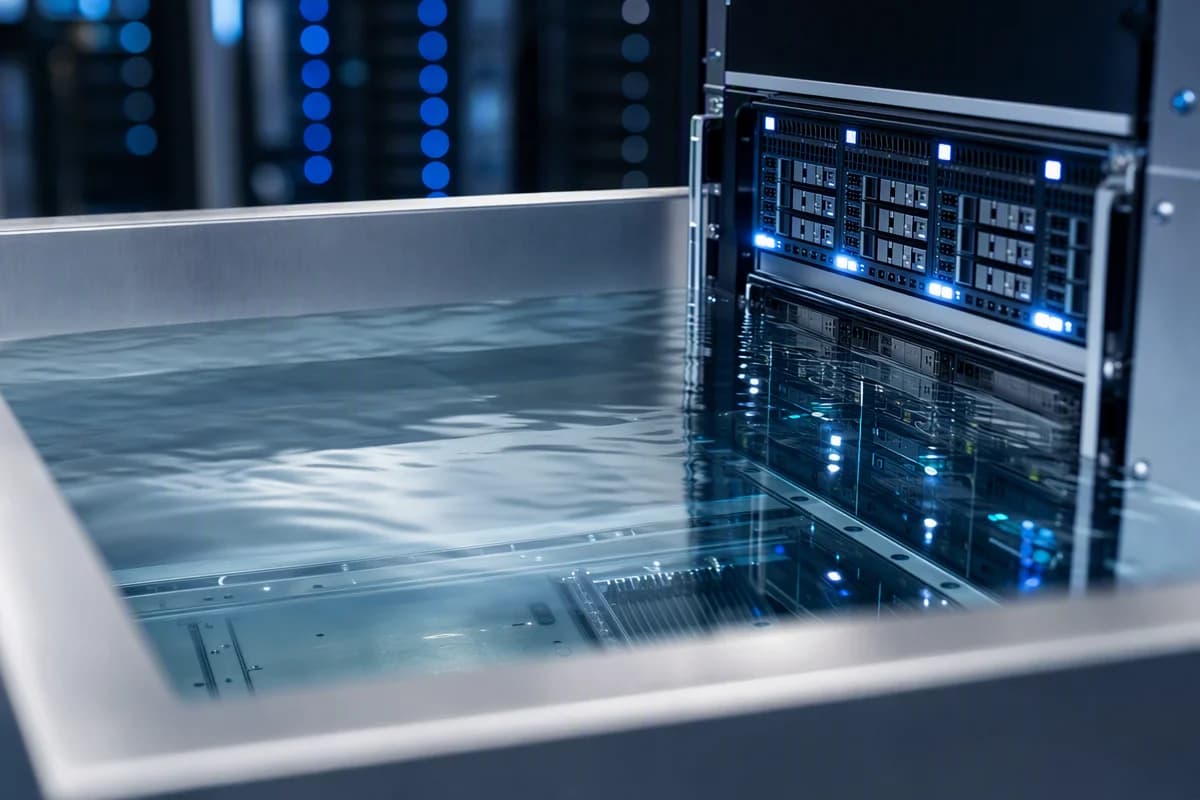
A dielectric fluid's datasheet leads with breakdown voltage, but pour point, viscosity, flash point and material compatibility are the properties that decide whether it works.

Separate indirect-loop, fluorinated and immersion fluid requirements for electronics cooling. Learn what to confirm before shortlisting LM-4, LM-14 or LM-17.
CONTINUE EXPLORING
Ultra-low-temperature, anhydrous coolants
Dielectric immersion cooling fluids