Heat transfer fluids

LM-16 series

High-temperature heat transfer fluids

Dedicated high-temperature fluids for pharmaceutical, chemical, solar-thermal and oil-and-gas processes. Choose the model against the complete process temperature window.

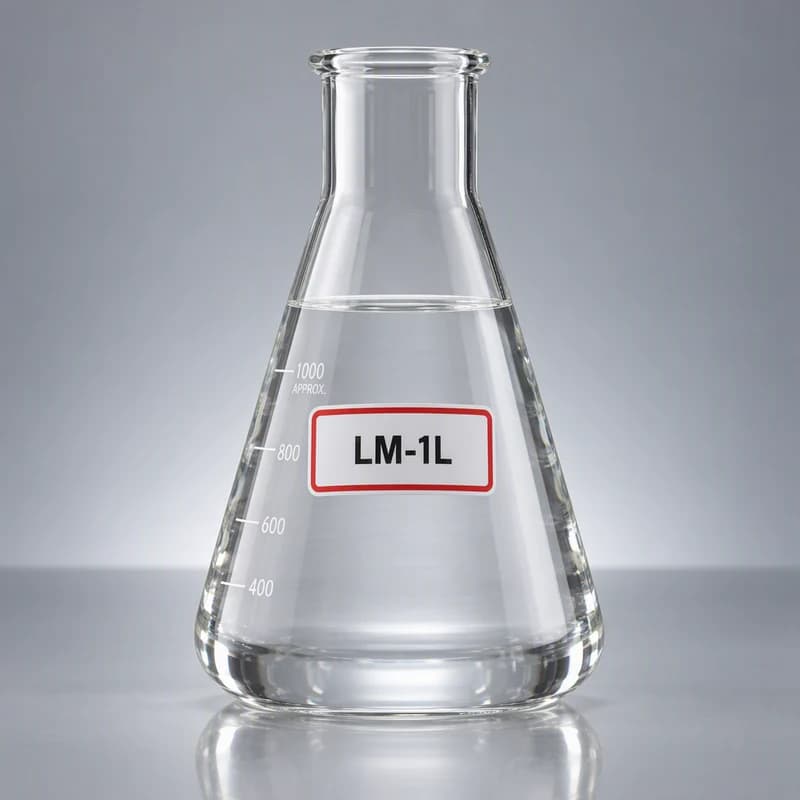
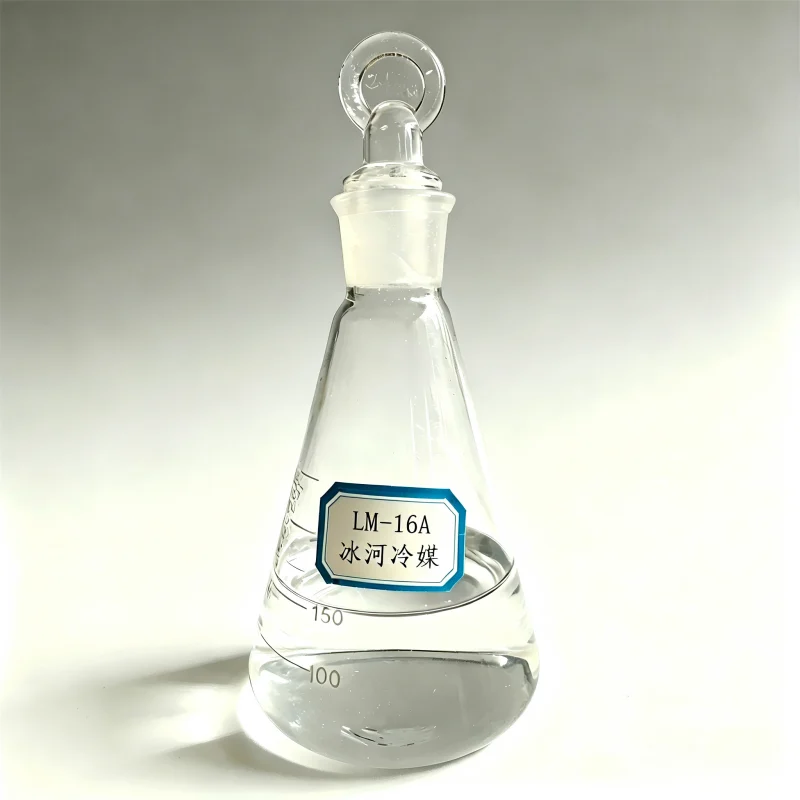
GLACIER / PRODUCT SAMPLELM-16 series product photograph
Manufacturer product photograph.
CATALOGUE TEMPERATURE REFERENCEUp to +350°C · LM-16D
Formulation

Synthetic hydrocarbons (mfr. LM-16D product description, 2025)

A closer look.

  • High-temperature circulation
  • Single-component formulation
  • Closed-loop process heating
  • Virtually non-corrosive to metals (mfr. LM-16D product description)

Model and property references

LM-16A
+20 to +280°C
LM-16B
+10 to +320°C
LM-16C
−30 to +340°C
LM-16D
+20 to +350°C, pour point ≤−30°C, open-cup flash point ≥+207°C (mfr. product description)

LM-16 series catalogue reference values (Table 14)

ModelTemperature range (°C)Viscosity (cP)Density (g/cm³)Specific heat (cal/g·°C)Thermal conductivity (W/m·K)
LM-16A+20 to +28085.390.88–0.920.478 cal/(g·°C) = 2.00 kJ/(kg·K)0.143
LM-16B+10 to +32036.280.99–1.030.411 cal/(g·°C) = 1.72 kJ/(kg·K)0.123
LM-16C−30 to +3405.750.98–1.010.389 cal/(g·°C) = 1.63 kJ/(kg·K)0.131

All properties are printed at 20°C. The catalogue states flash points above +120°C for this series and gives no per-model freezing point. For LM-16D the manufacturer's own product description states an open-cup flash point of not less than +207°C.

LM-16D manufacturer reference values by temperature (mfr. product description, 2025)

Temperature (°C)Density (g/cm³)Dynamic viscosity (cP)Specific heat (kJ/kg·K)Thermal conductivity (W/m·K)
201.046451.59490.1455
501.02110.51.68690.1420
1000.9863.01.82510.1397
2000.9160.682.13070.1269
3000.8460.292.42790.1106
3500.8050.202.57860.1013

Reference values from the manufacturer's LM-16D product description, not from the catalogue. LM-16D: use range +20 to +350°C, open-cup flash point not less than +207°C, average boiling point +370°C, pour point ≤−30°C, density at 20°C 1.046 ± 0.003 g/cm³. Closed-loop systems only.

Reference values from the Chaoyang Guangda LM catalogue — typical figures rather than guaranteed limits. Confirm the exact model and concentration on the current model TDS before specifying.

View source: catalogue p.27 (PDF p.31)

Before you specify

Operating limits require model-specific system design. The manufacturer specifies closed-loop systems only. Prevent moisture ingress and obtain the current SDS and approved technical specification before commissioning. The manufacturer states that where LM-16D is used for indirect heating in food or drug production, the relevant national food and drug safety standards must be met — this is a condition of use, not an approval.

FROM FORMULATION TO APPLICATION

High-temperature service needs a system view.

LM-16 references describe synthetic-hydrocarbon heat-transfer media for pharmaceutical, chemical, solar-thermal, oil and gas applications.

01 / APPLICATION NOTE

Select the grade for the duty

A, B, C and D grades have different operating windows. The catalogue covers A, B and C; LM-16D comes from the manufacturer's own product description and runs to +350°C. Review startup conditions, process temperature and equipment limitations rather than applying a family maximum to every grade.

02 / APPLICATION NOTE

Keep the circuit dry

The source references call for cleaning and drying before filling and recommend a closed system. Discuss moisture exclusion, ventilation and safe handling with the technical team.

REFERENCED MODELS

LM-16A · LM-16B · LM-16C · LM-16D

About these product references

Application notes are adapted from Glacier’s original product information. Unless a table states otherwise, numeric specifications follow the supplied catalogue. For the confirmed specification, obtain the current model-specific TDS and SDS. Links below point to the original source pages, not new technical documents.

THE RIGHT FLUID STARTS WITH A CONVERSATION

Your process is specific.
Your coolant should be, too.

Share your temperatures, materials and application.
Let’s work through the right formulation together.

Discuss your application